


Anish Kapoor
Oct 13 - Nov 28, 2026
Mennour, 6 Rue du Pont de Lodi
Since the end of the 1970s, Anish Kapoor hasn’t stopped questioning sculpture from the the same paradox basis: how can matter produce immateriality?
From his first sculptures covered in pigments to the cavities whose depth appears to be endless, from the blocks of marble sculpted to the point of transparency to reflective surfaces, his oeuvre relentlessly explores the mutability of our perception, blurring the boundaries between solid and void, surface and depth, matter and space.
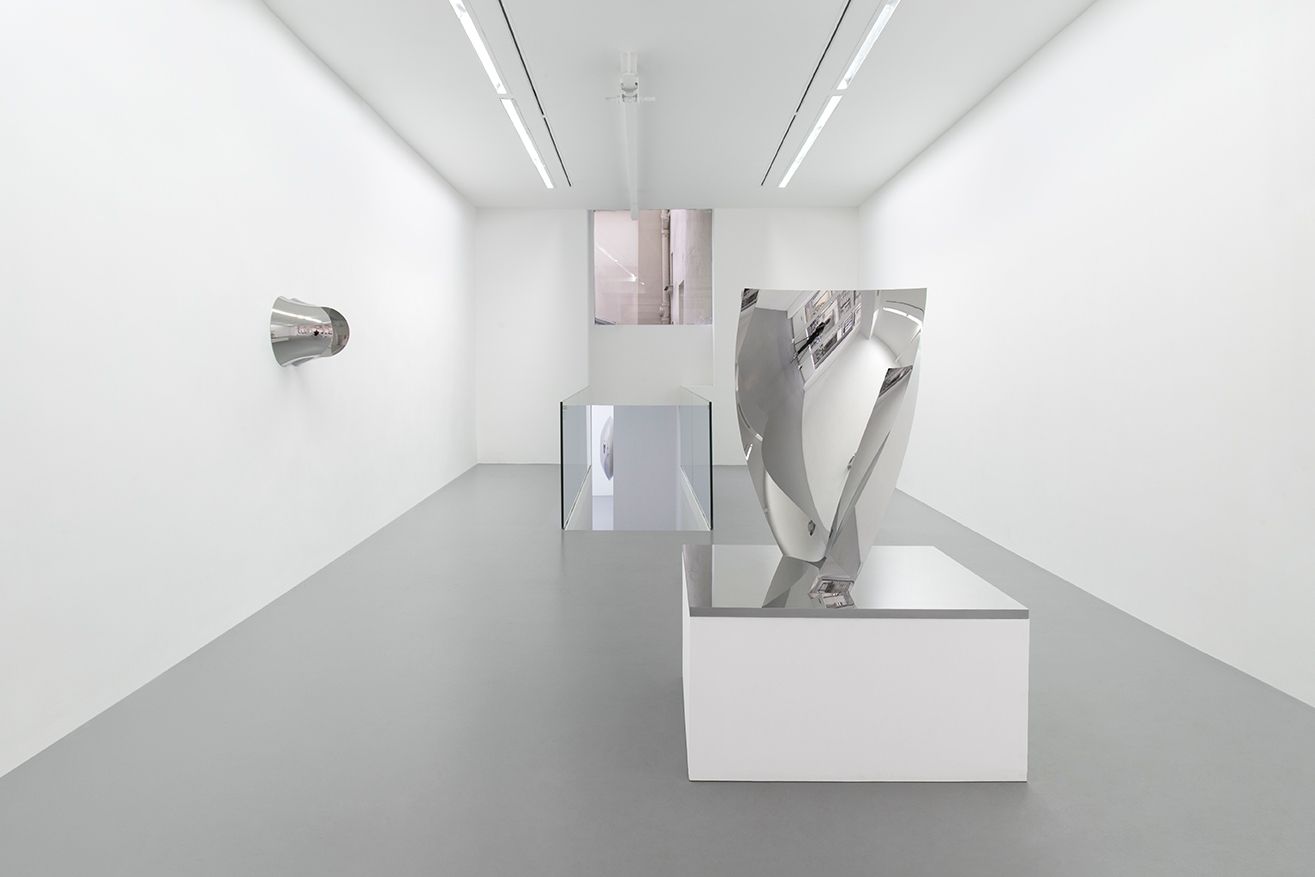
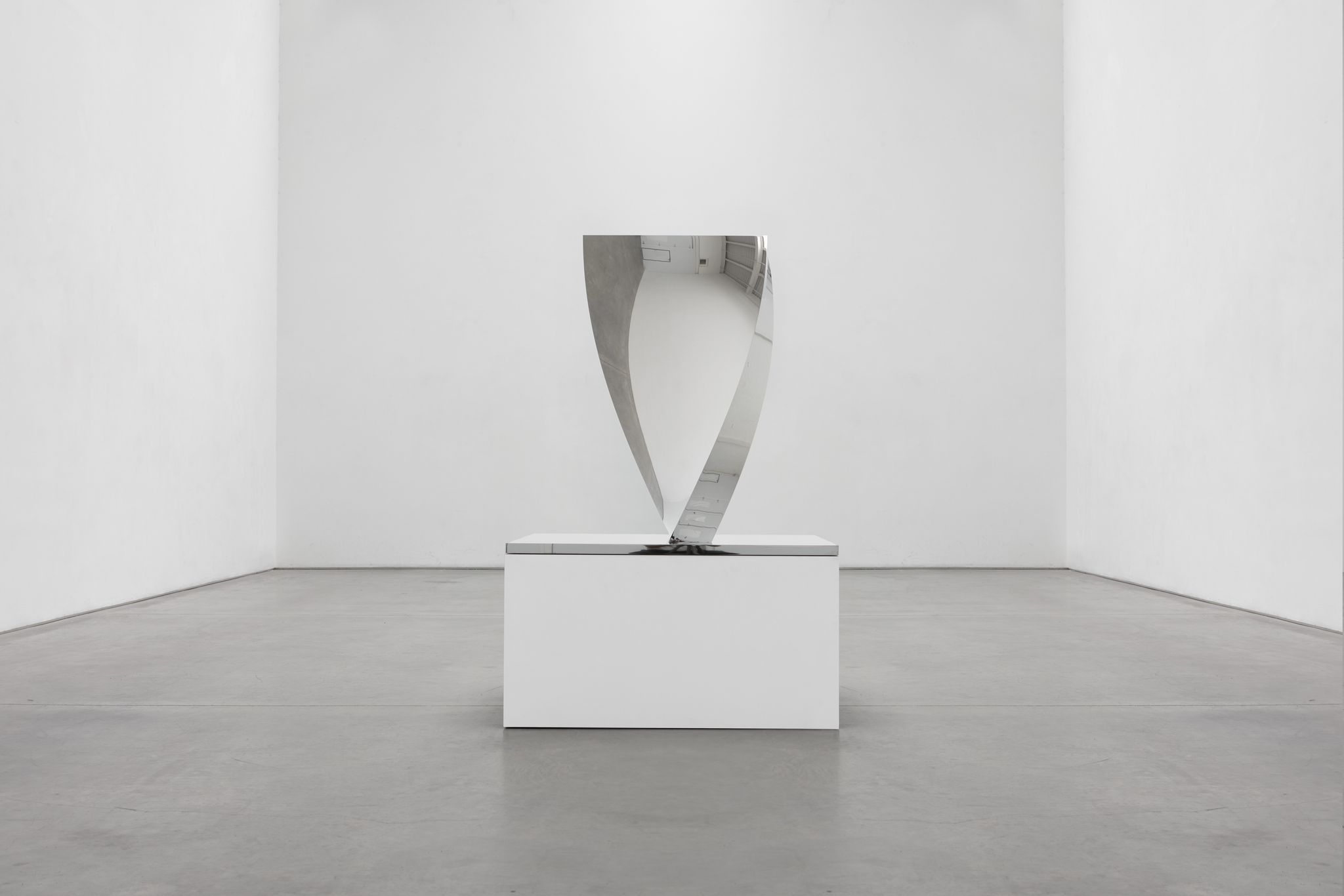
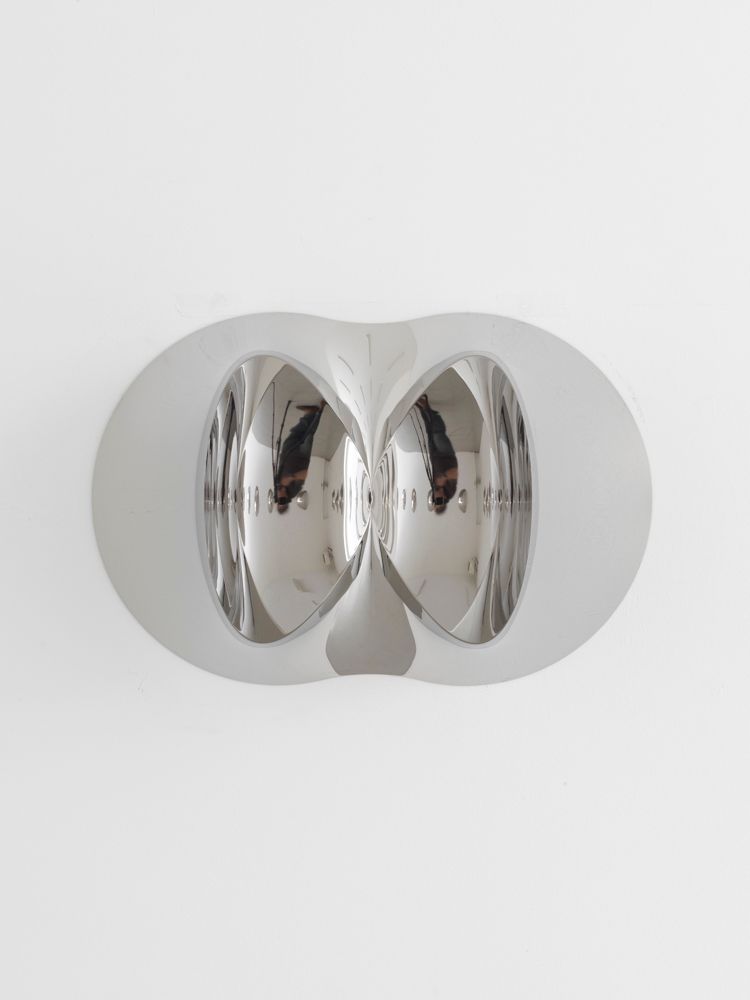
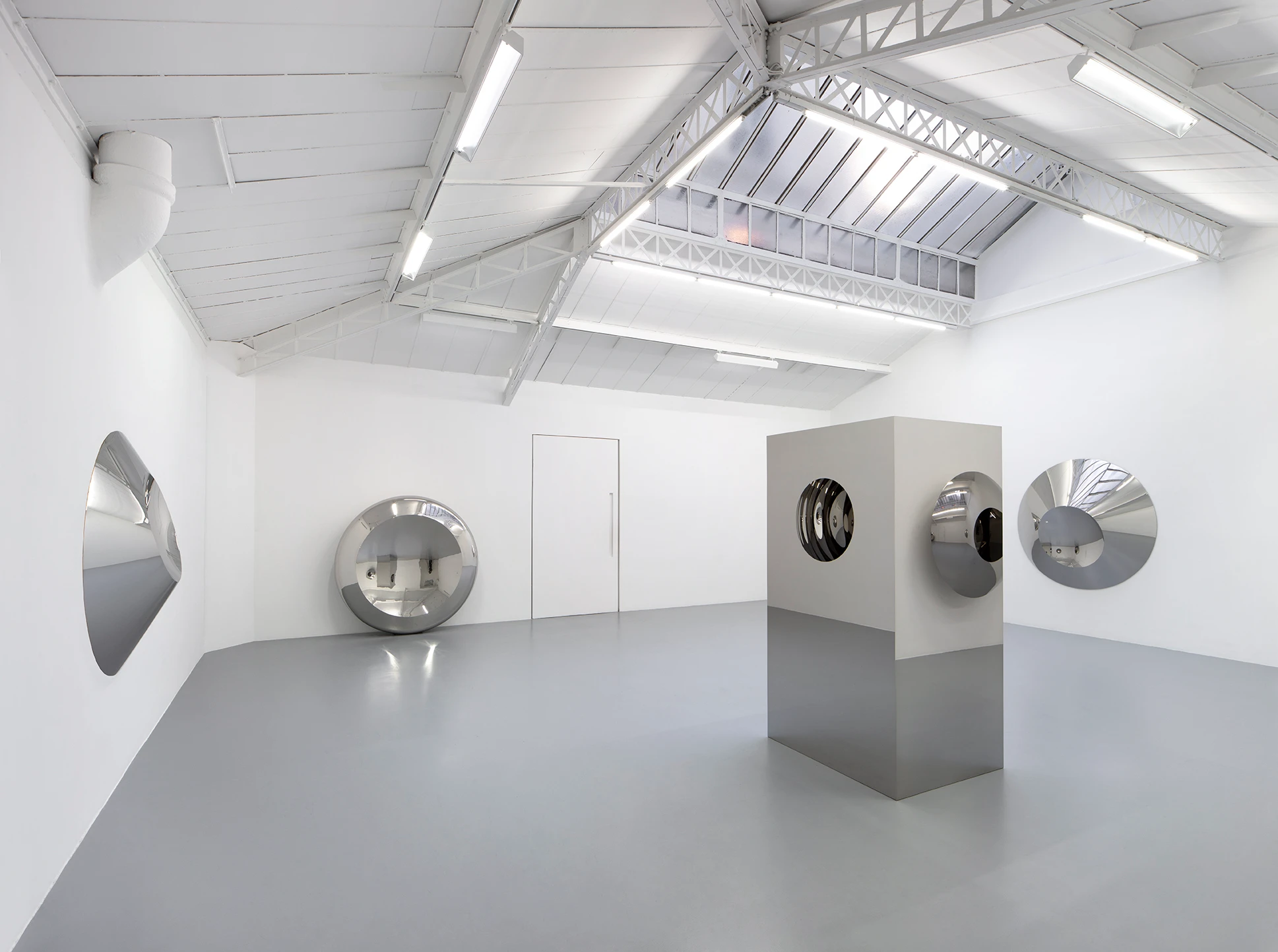
For his fourth solo show at Galerie Mennour, Kapoor proposes a series of sculptures, wall mounted and on bases, in polished stainless steel made between 1998 and 2026. The appearance of that reflective material in the middle of the 1990s marked a vertiginous turning point in the artist’s practice. Kapoor chose polished stainless steel to assert the materiality of the metal than to actually try to make it disappear. “Pushed to an extreme degree,” he explains, “the polished surface ceases to be physical.” With the use of the mirror Kapoor can proceed, in a different way, with a research initiated with the void. Where the black cavities covered in pigment appeared to draw the eyes to a depth situated behind the surface, the reflective works move that depth in front of them. A “present” space, to take up Kapoor’s terms, that he opposes to the deep space of the traditional sublime: the space of sculpture would no longer be situated solely behind the work’s plane, but in front of it, precisely where the spectator stands.
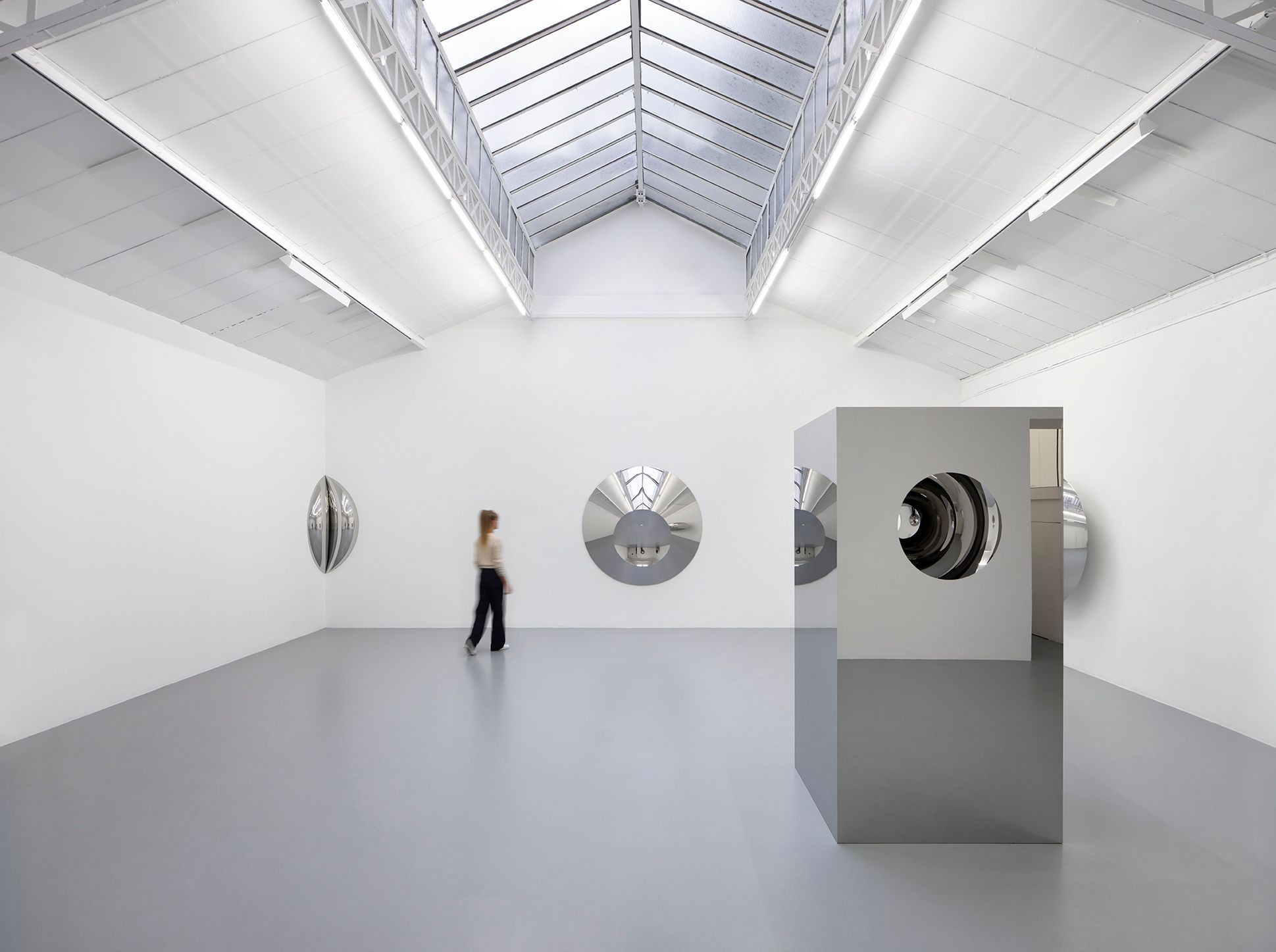
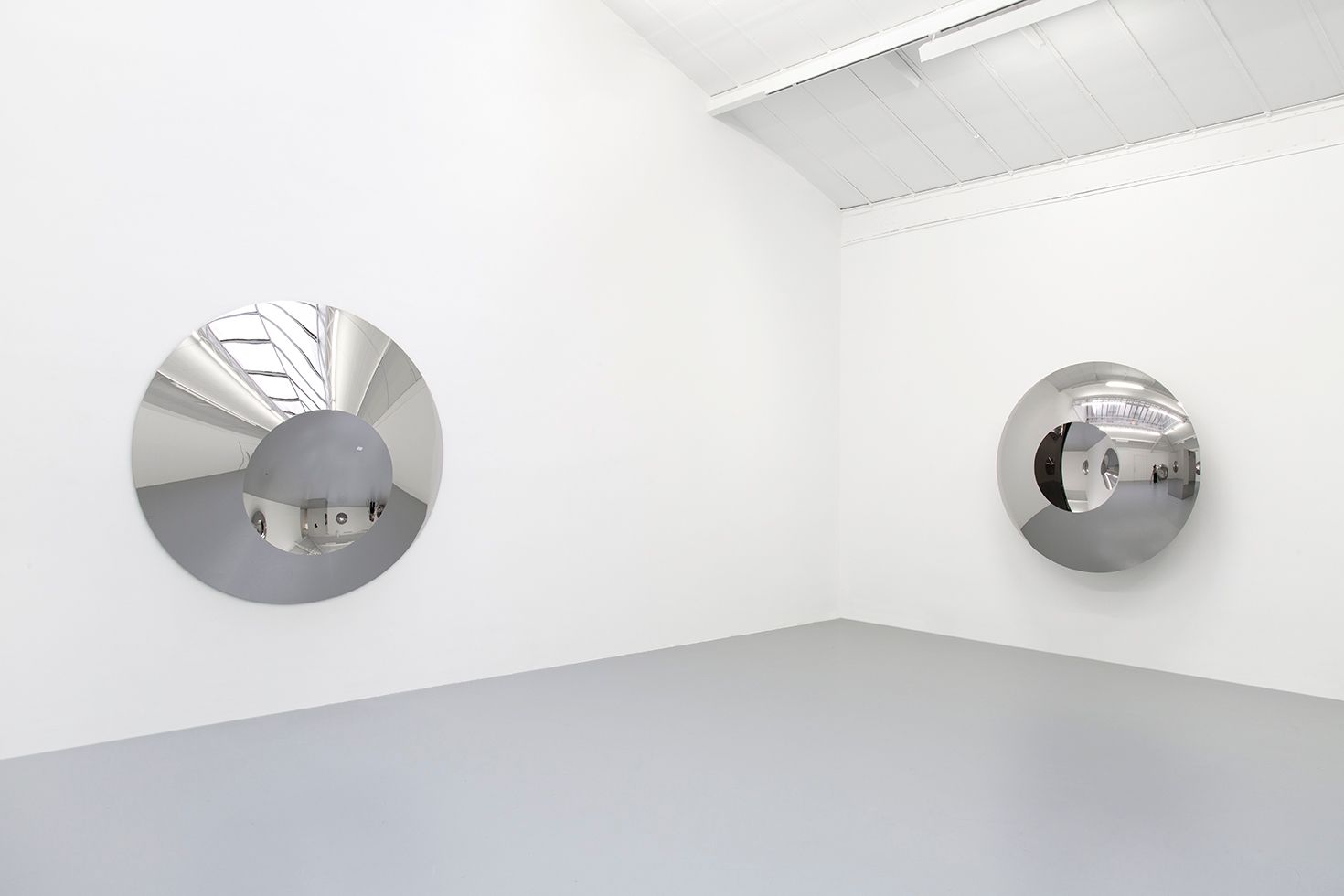
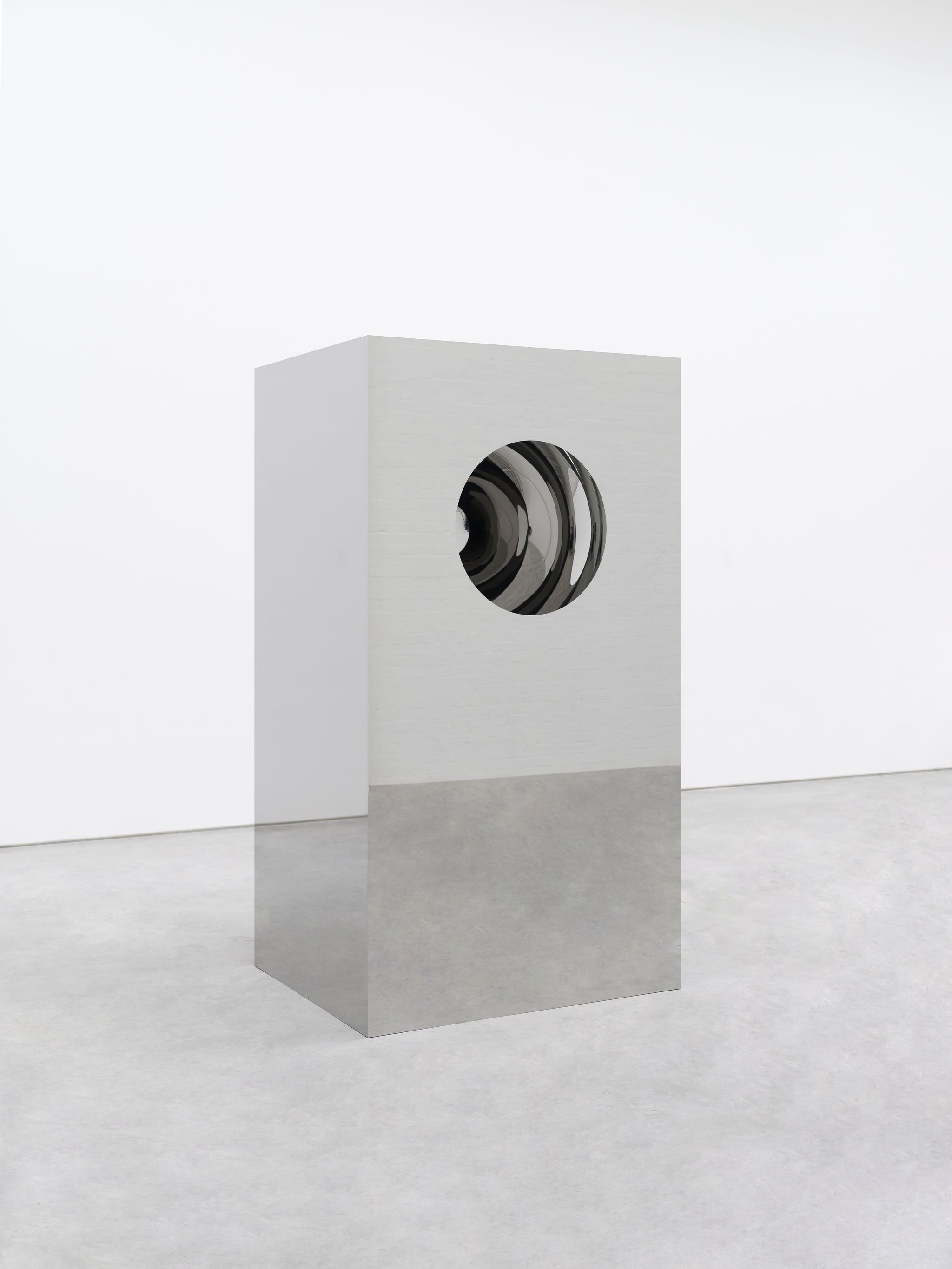
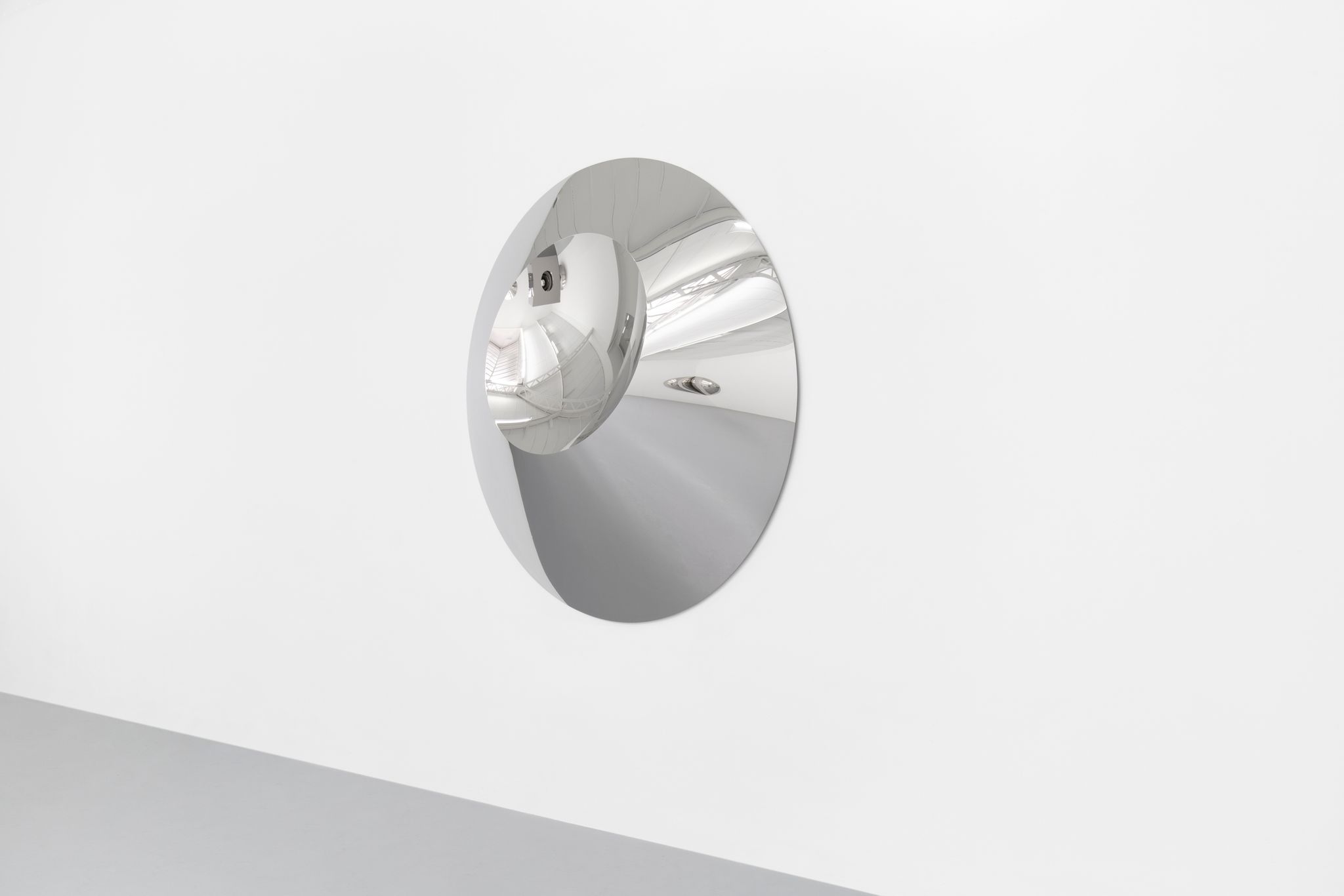
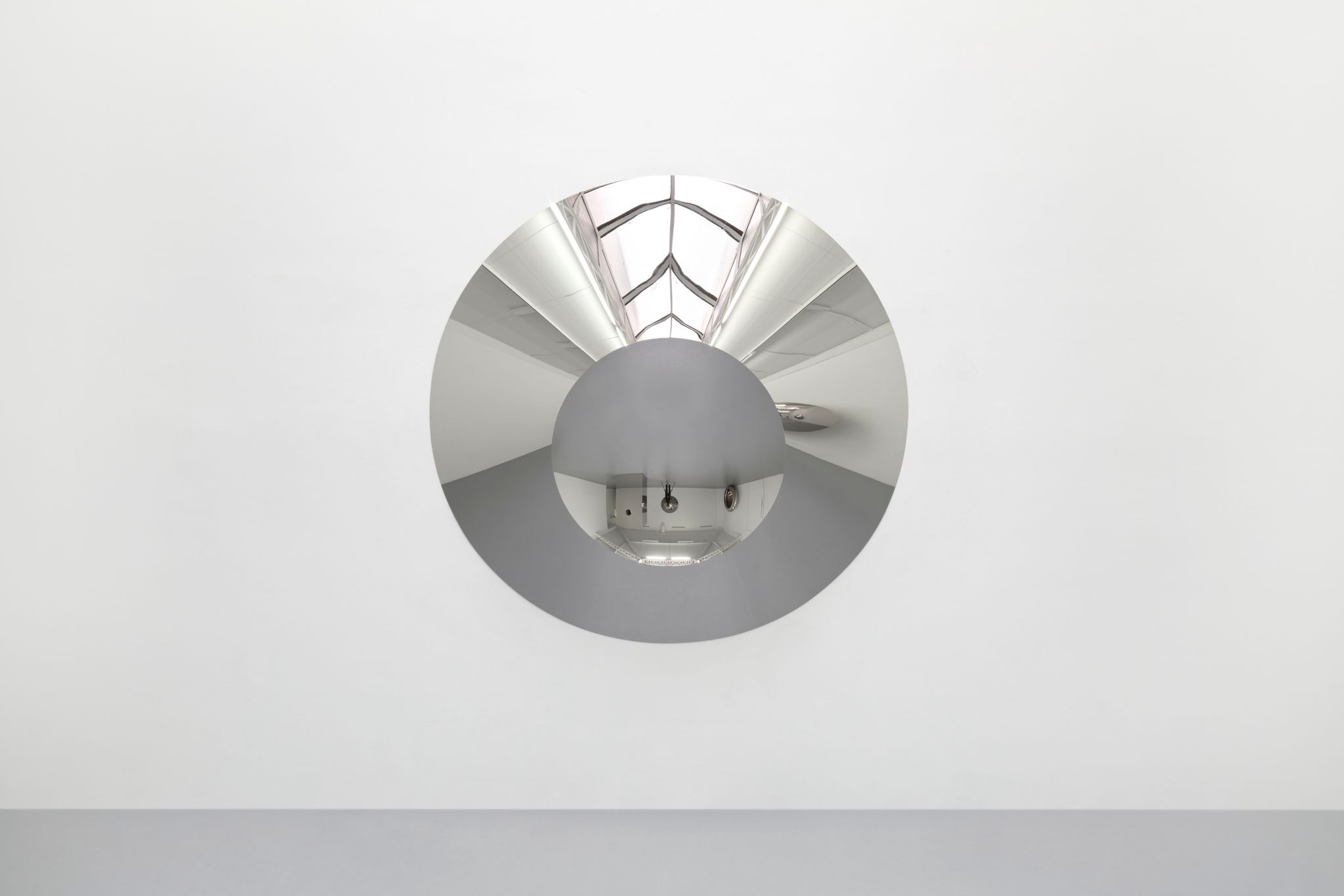
In doing so, Kapoor continues and radicalises some of the research that regularly punctuates modern sculpture, from Brancusi to Giacometti and Richier: a sculpture is no longer considered a full and autonomous form but is perceived in its capacity to make tangible the space surrounding it. In Kapoor’s work, that shift reaches a paradoxical form: the void is no longer solely what is around or between the forms, it seems to penetrate the object itself, be reflected in it, hollowed and turned upside down, until it makes the boundary between sculpture and the space it occupies eminently changeable.
The sculptures are seen first as autonomous forms with simple and clear contours. However, as one comes closer, their autonomy breaks down. The steel visually absorbs everything that is external to it: the architecture, the light, the other pieces, and finally, the person looking at them. The sculpture no longer merely occupies a space: it contains the shifting image of that space.
The mirror becomes less a surface than a spatial device. Following its curve, concave or convex, the world contracts, dilates, is turned upside down or disappears. Some forms concentrate the space in front of them; others seem to open it up. The image can suddenly tilt when the spectator passes the optical focus of the reflecting surface. Reality remains perfectly recognisable while simultaneously becoming unthinkable.
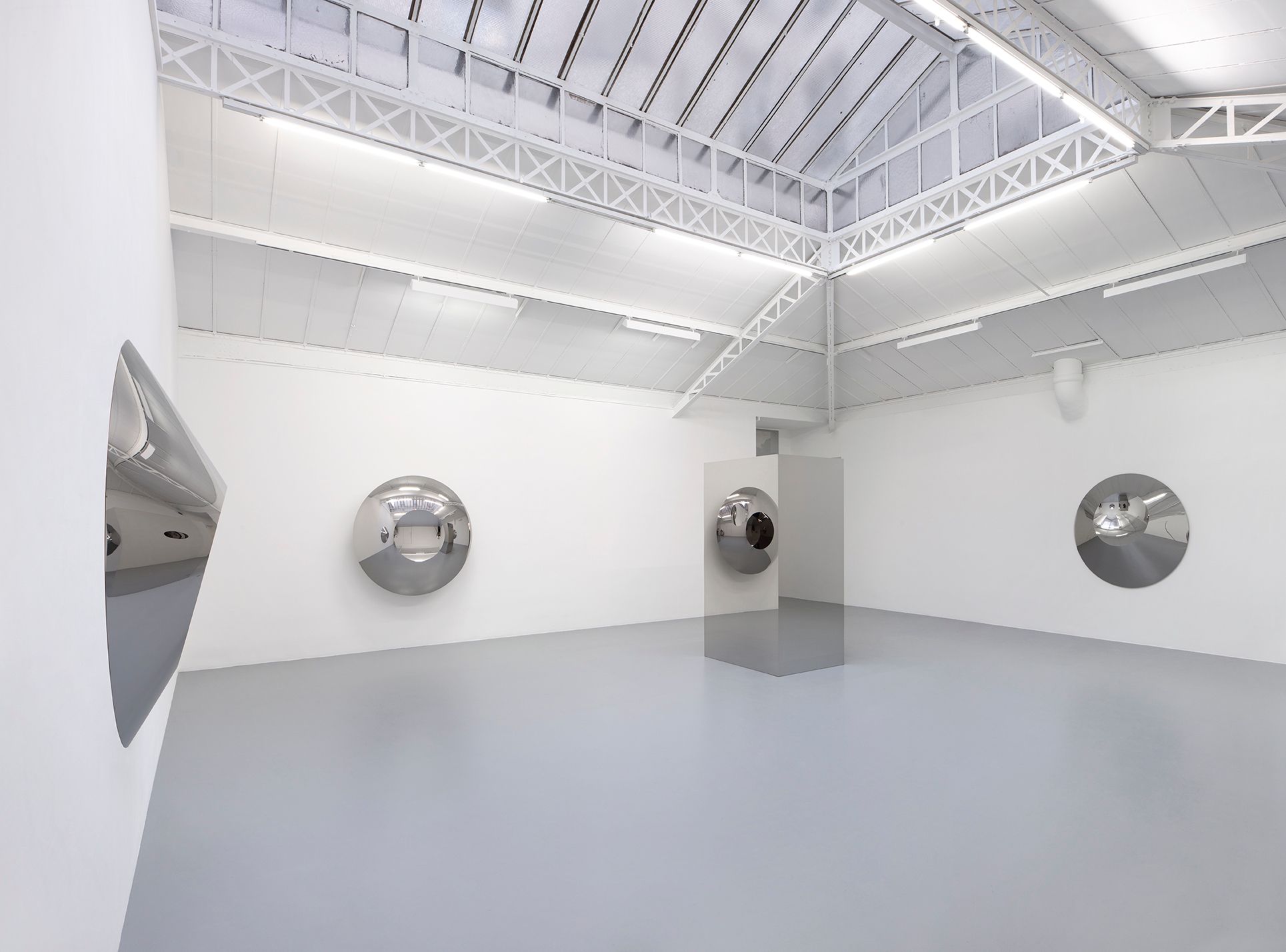
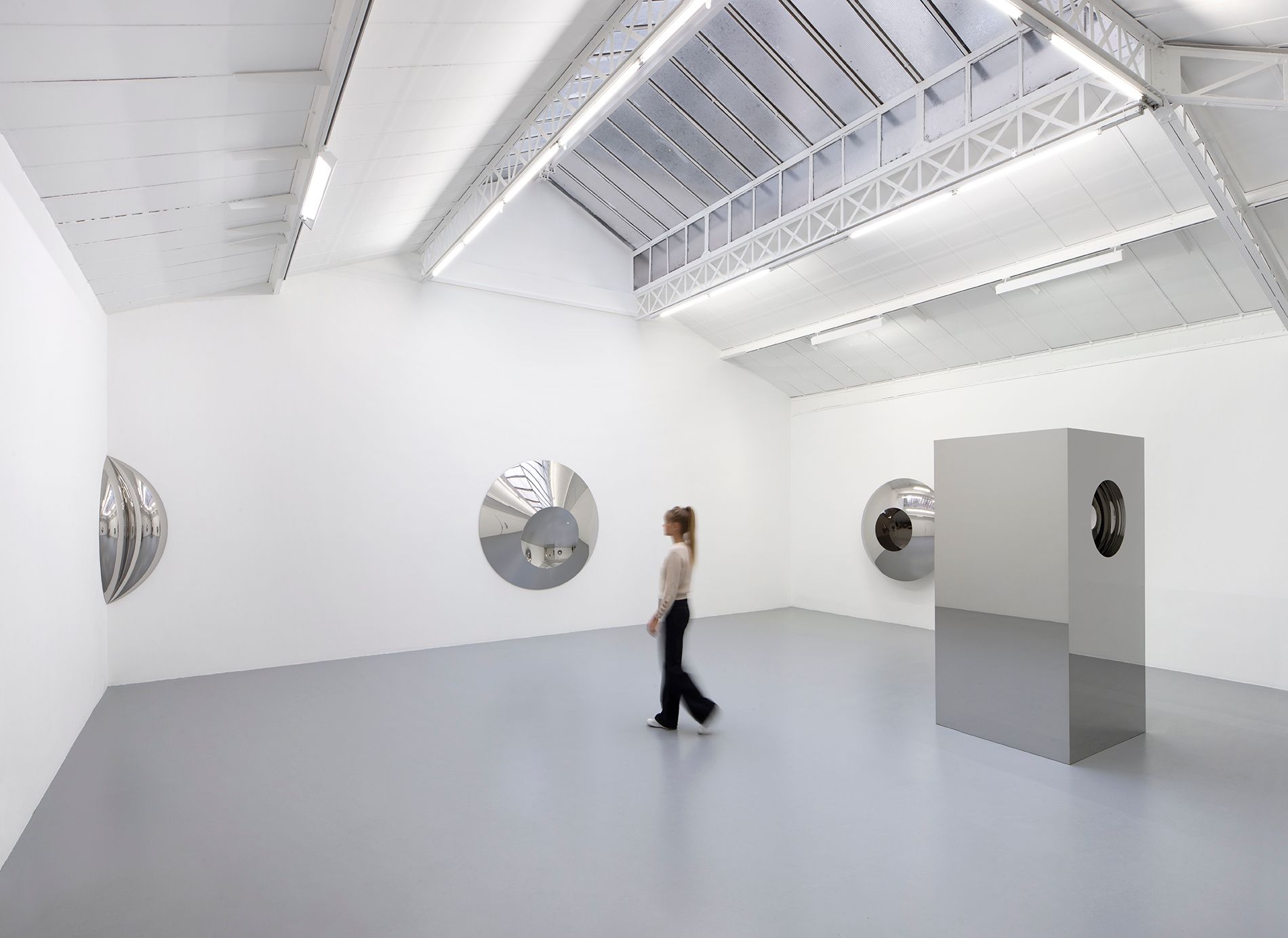
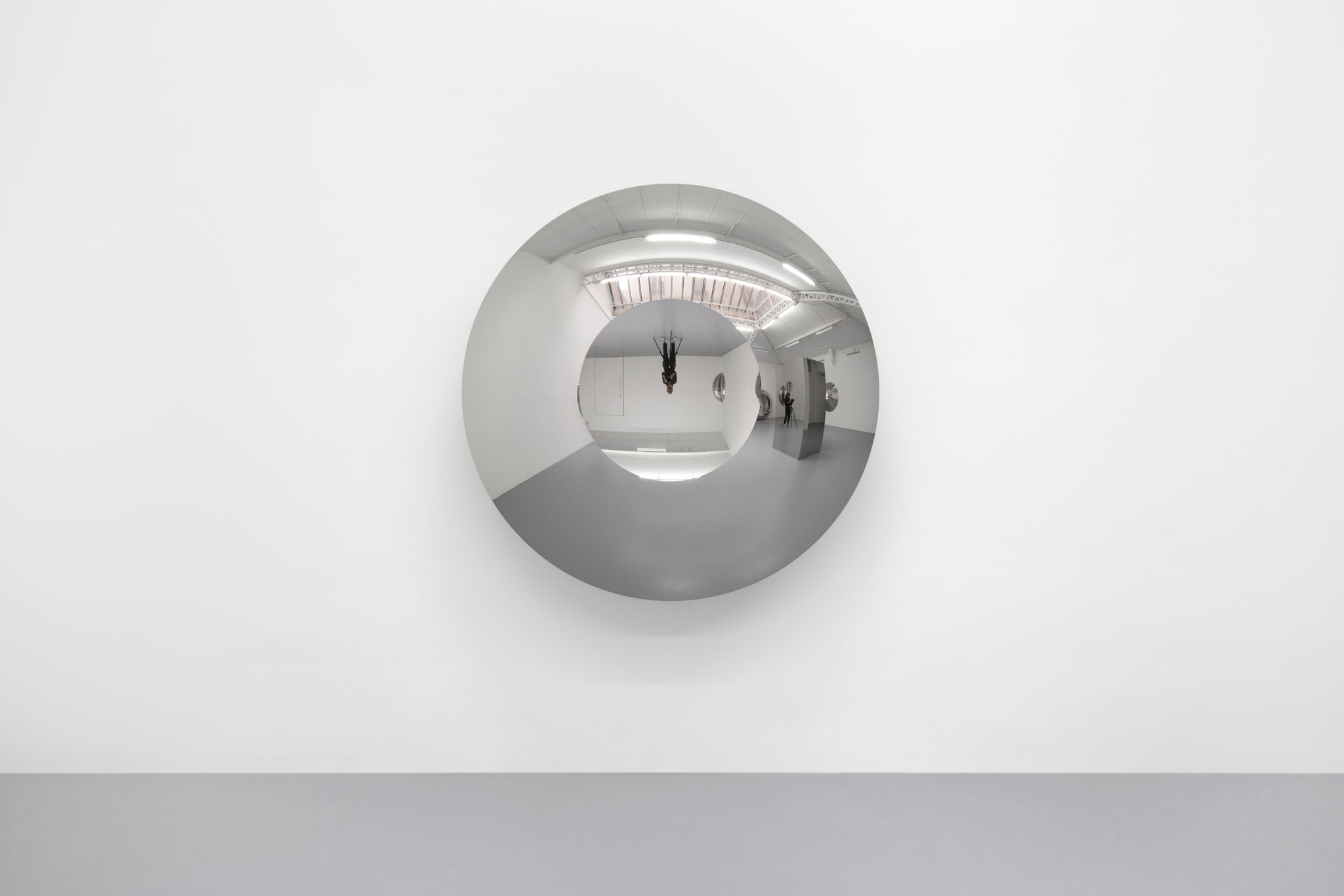
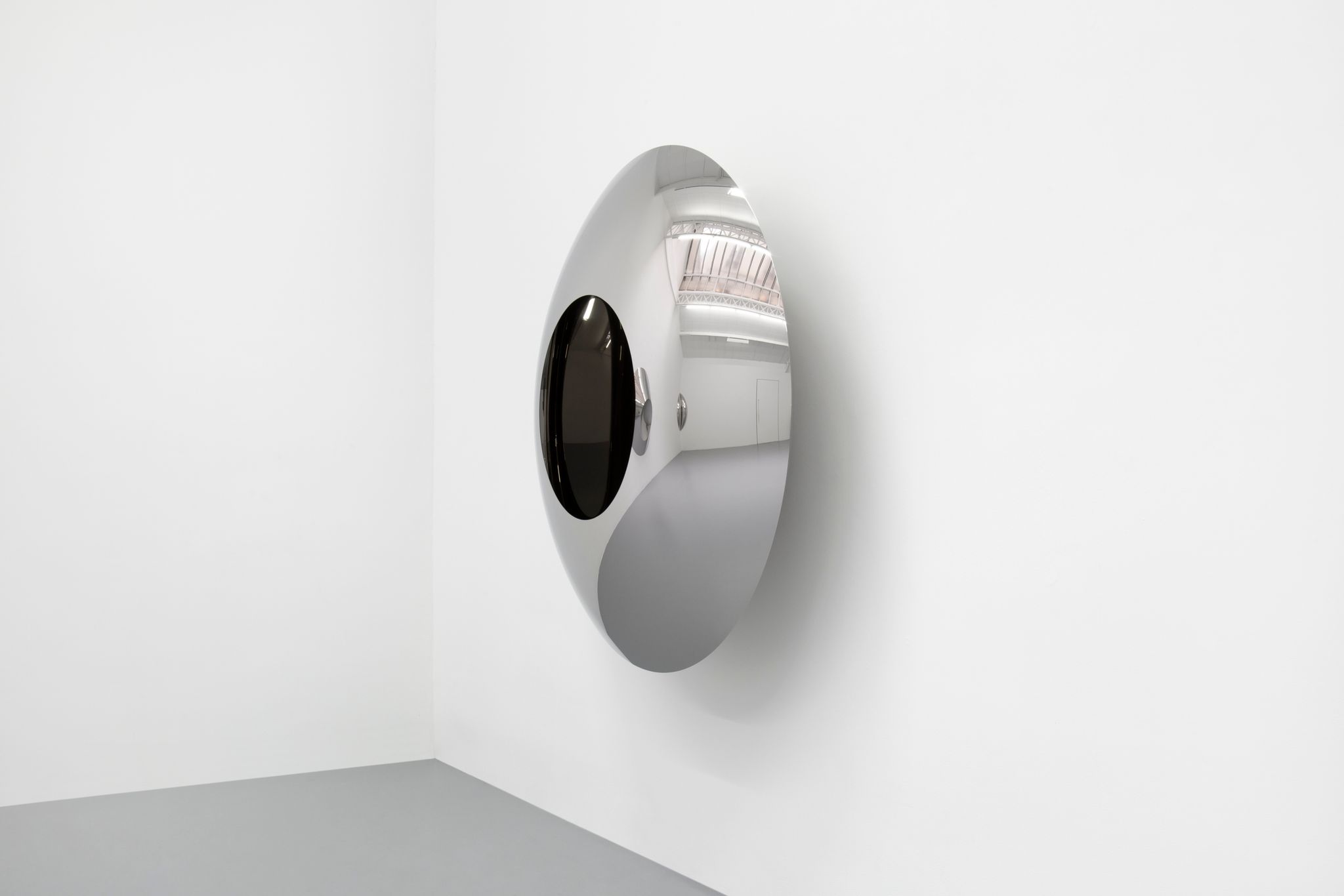
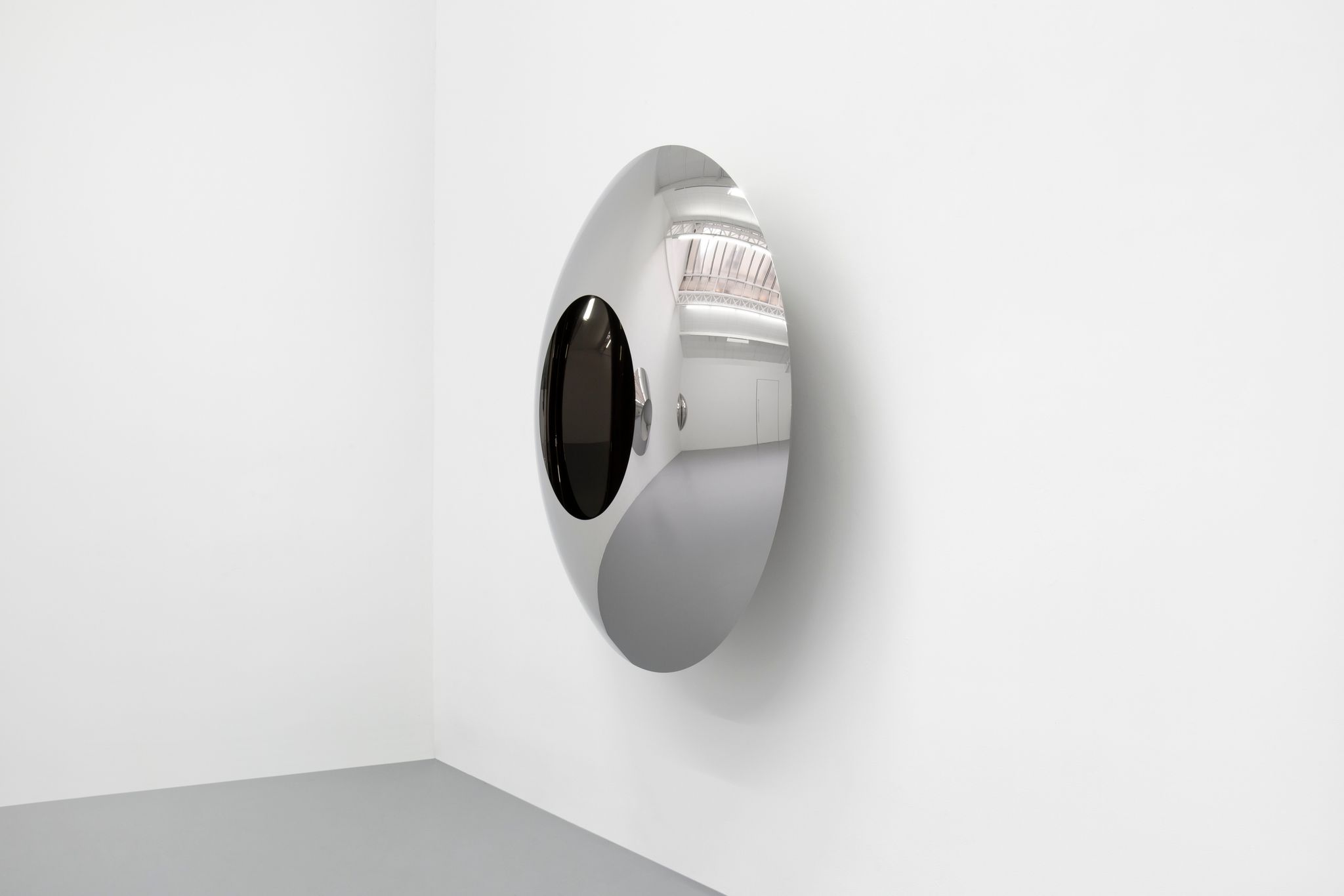
In that experience, the spectator occupies an all-important place. Facing Kapoor’s first works, he could contemplate an object that appeared to withdraw in front of the gaze. With the mirror surfaces, he can no longer stay outside what he observes. His body enters the work as an image, but a changeable one: enlarged, fragmented, turned upside down and sometimes momentarily erased.
If, for Marcel Duchamp, “the lookers make the paintings”, in Kapoor’s work the spectator is fully involved in experiencing the work. He becomes both the one who sees and the one who is seen, the subject of the experience as much as an integral part of the image. By incorporating the gaze into the work, Kapoor turns it not only into an act of perception, but into a physical experience of the space as much as of our own presence in the world.
— Christian Alandete

Anish Kapoor
Lives and works in London, England