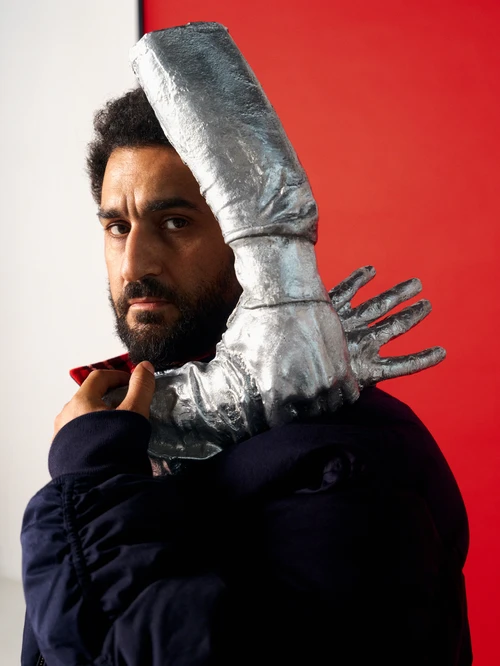
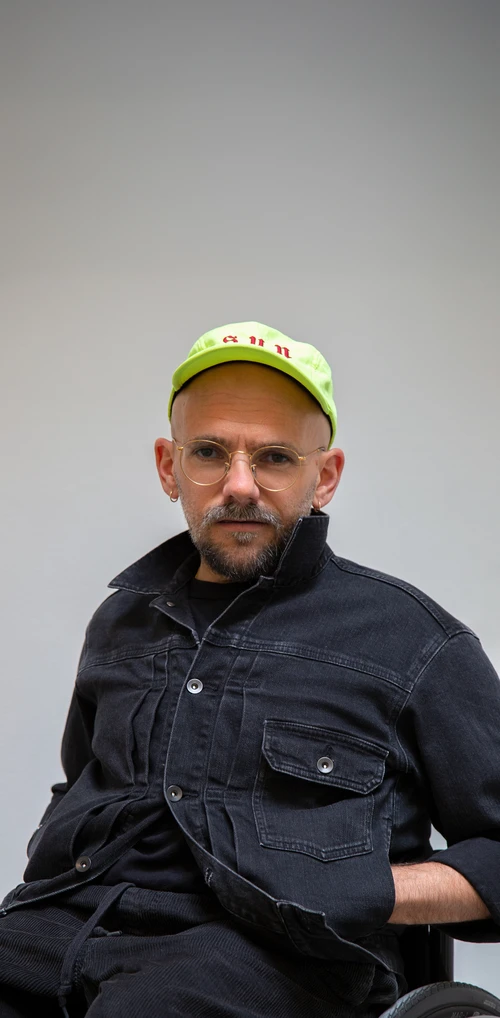
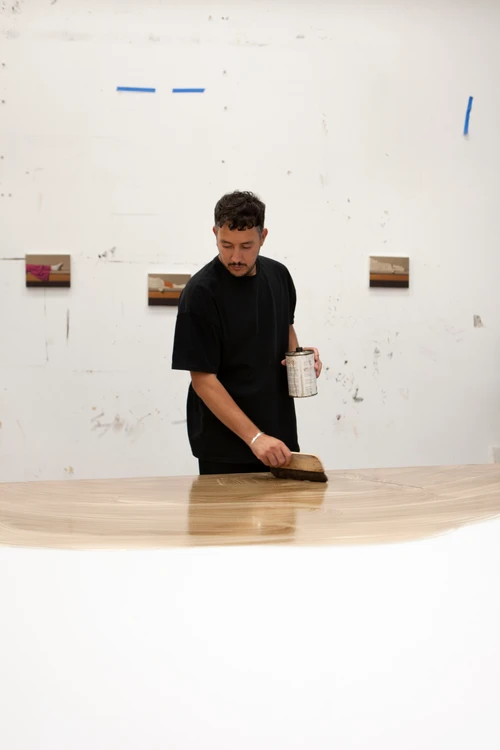
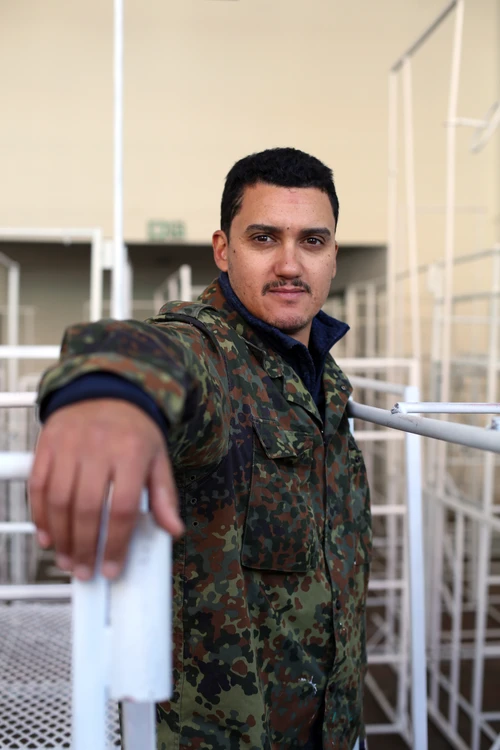
Amine Habki
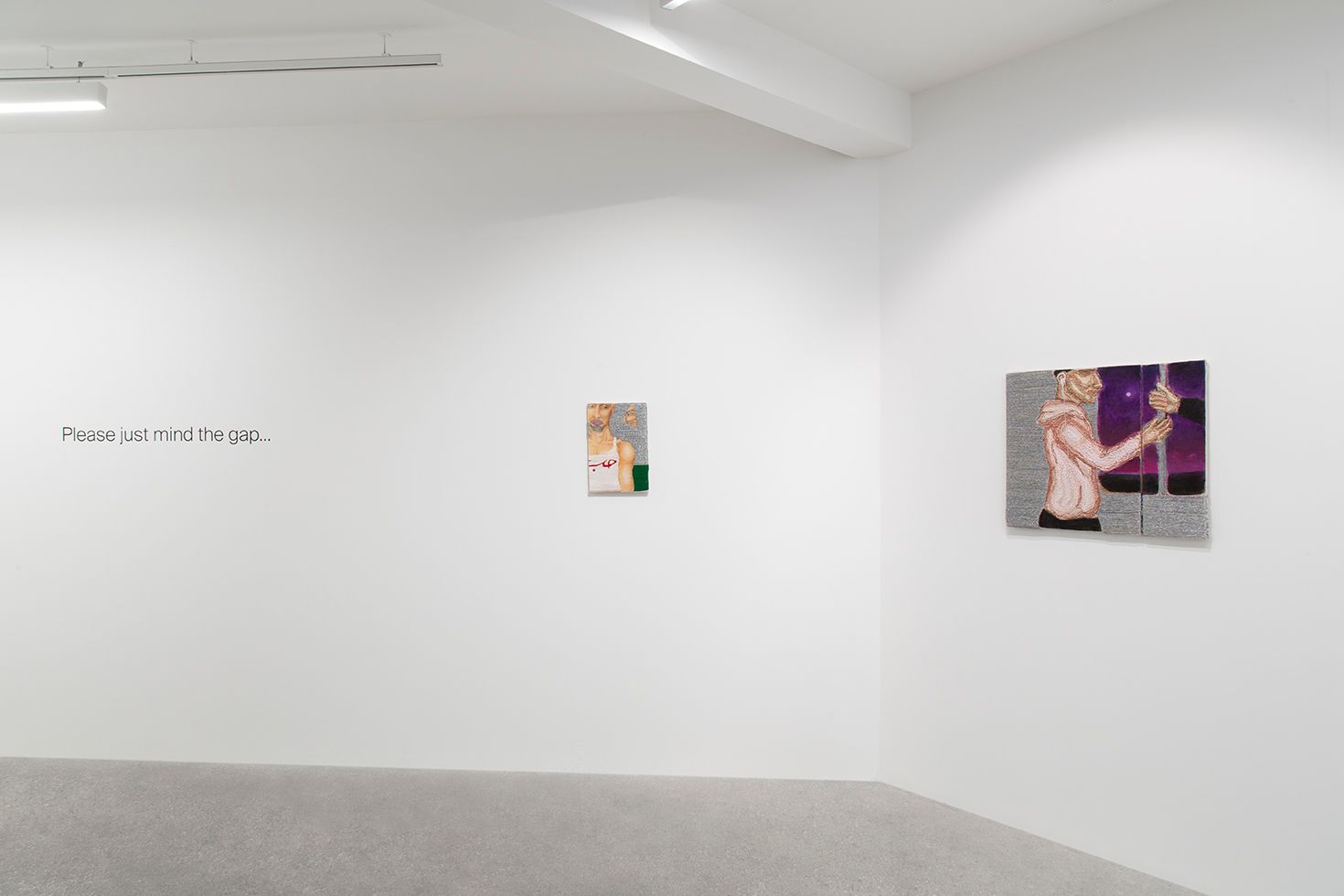
Please mind the gap
Sep 3 - Oct 3, 2026
Mennour, 5 rue du Pont de Lodi
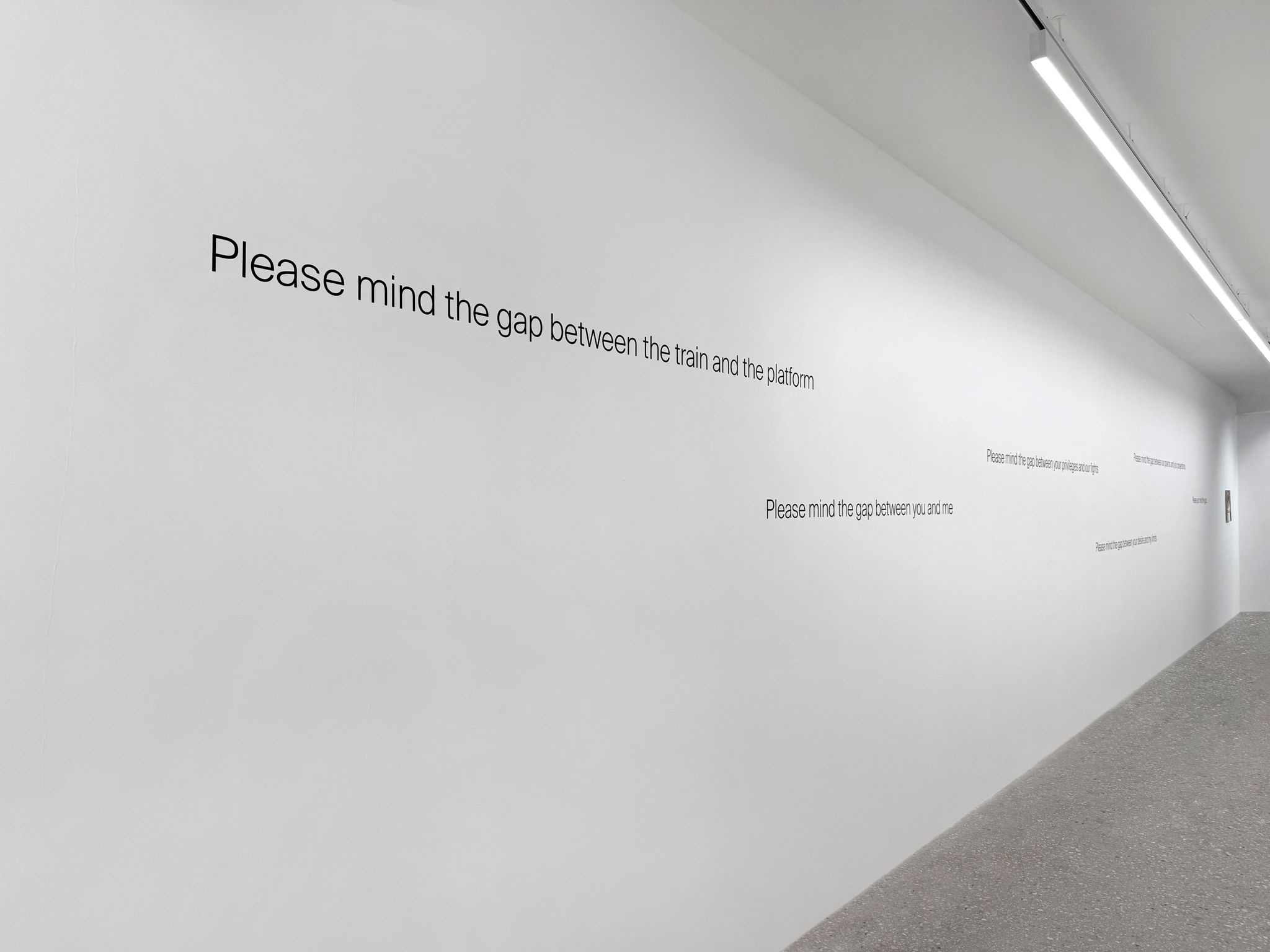
"Mind the gap between the train and the platform", "Stand clear of the closing doors". Those familiar instructions mechanically diffused on public transport combine distancing with a kind a protection of bodies.
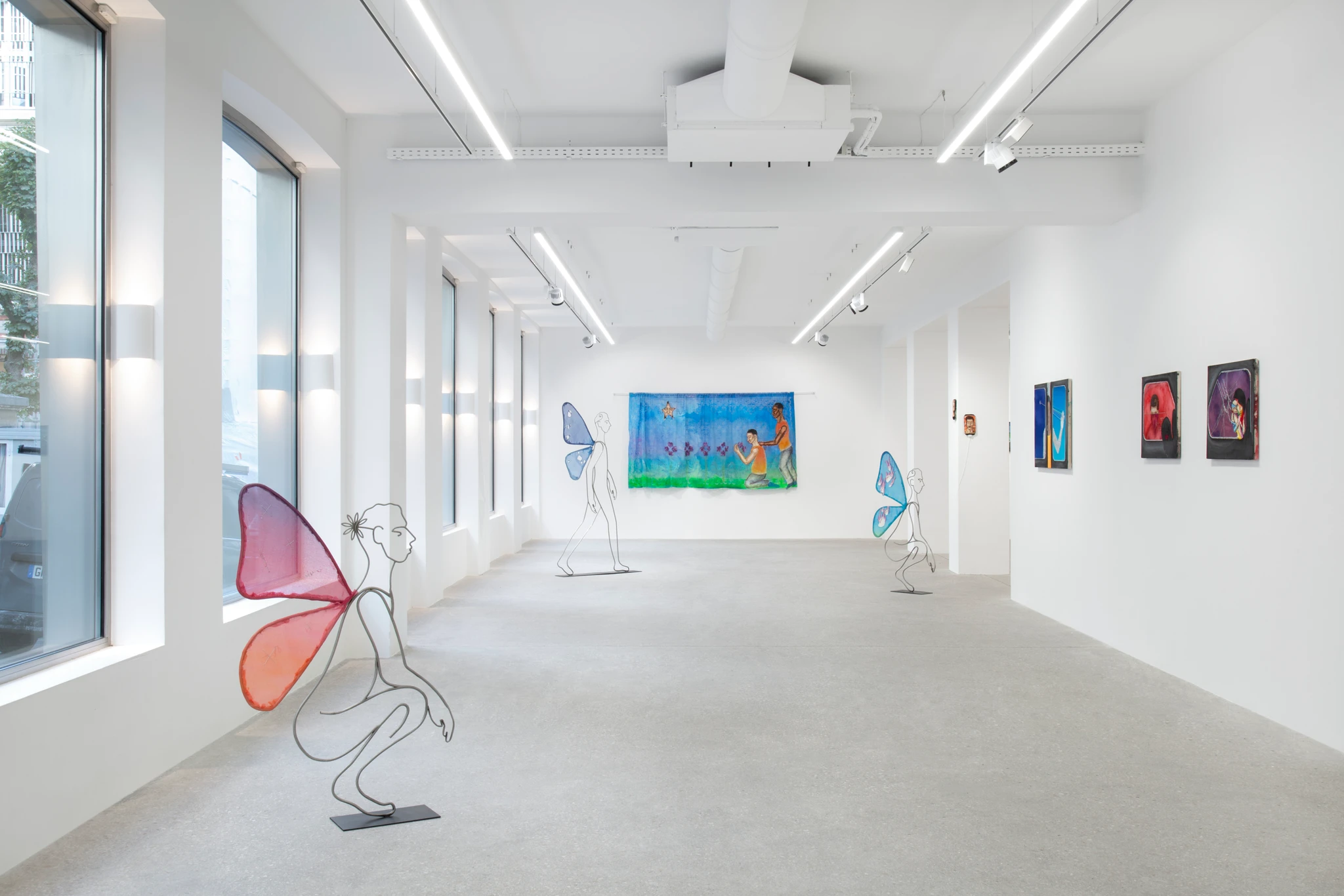
Behind the warning and signal about possible danger, a physical separation is announced: the empty space is well and truly present and the gap, irreducible. For his first solo exhibition at Mennour, Amine Habki borrows his title from the audible and written warning phrases used in the New-York subway and the London underground to think about movement, as much in its concrete as in its contemplative dimension. The title "Please Mind the Gap" comes from a poem written by the artist in which he asks to respect the boundaries of our bodies, and by extension of our private lives. Picking up the threads so to speak, to become aware of the gap created by the plurality of our experiences, the divergence of our struggles and the disparity of our privileges. His works question the way our bodies collectively inhabit the cracks and how the act of wandering makes up our emotional cartographies.
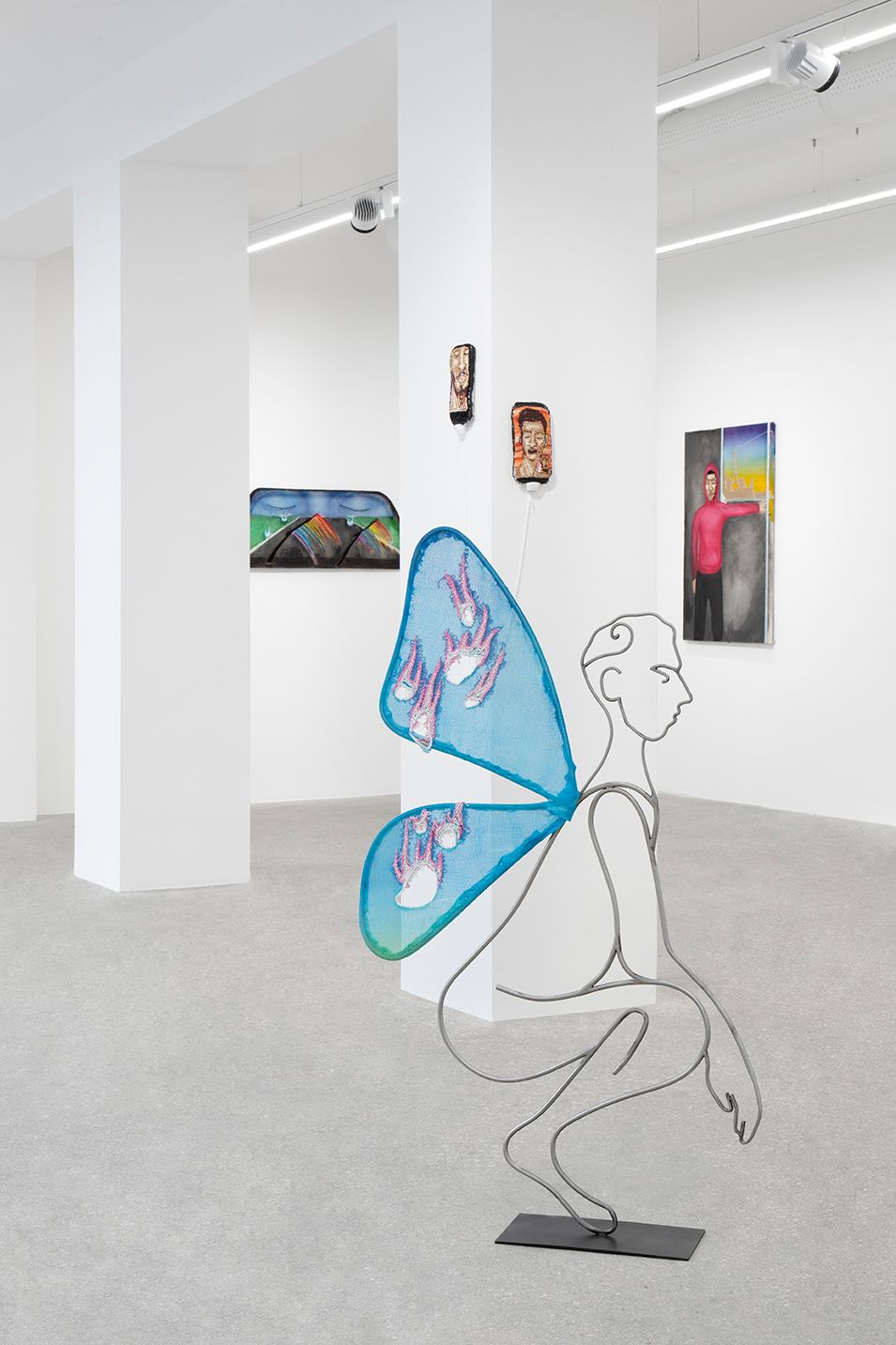
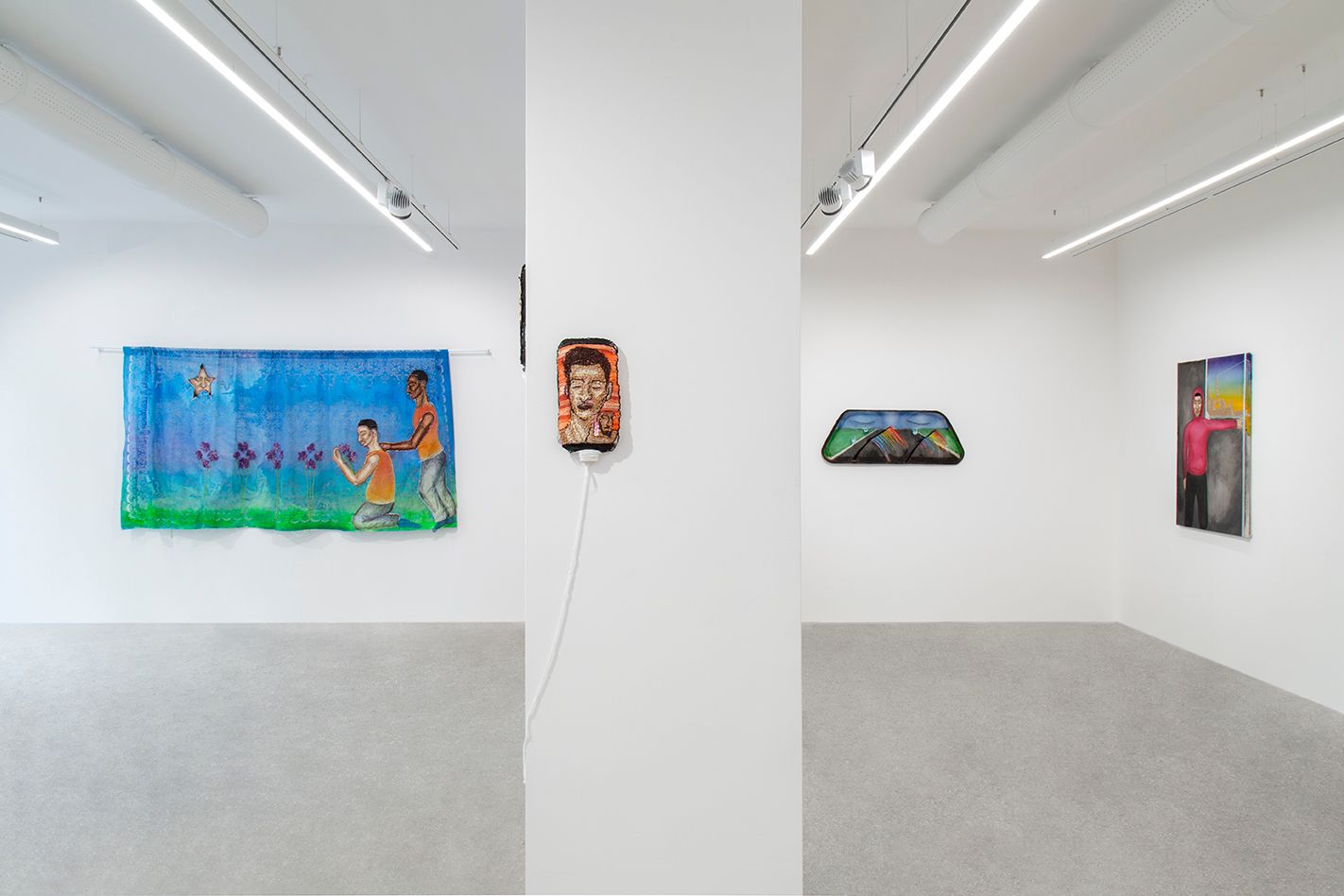
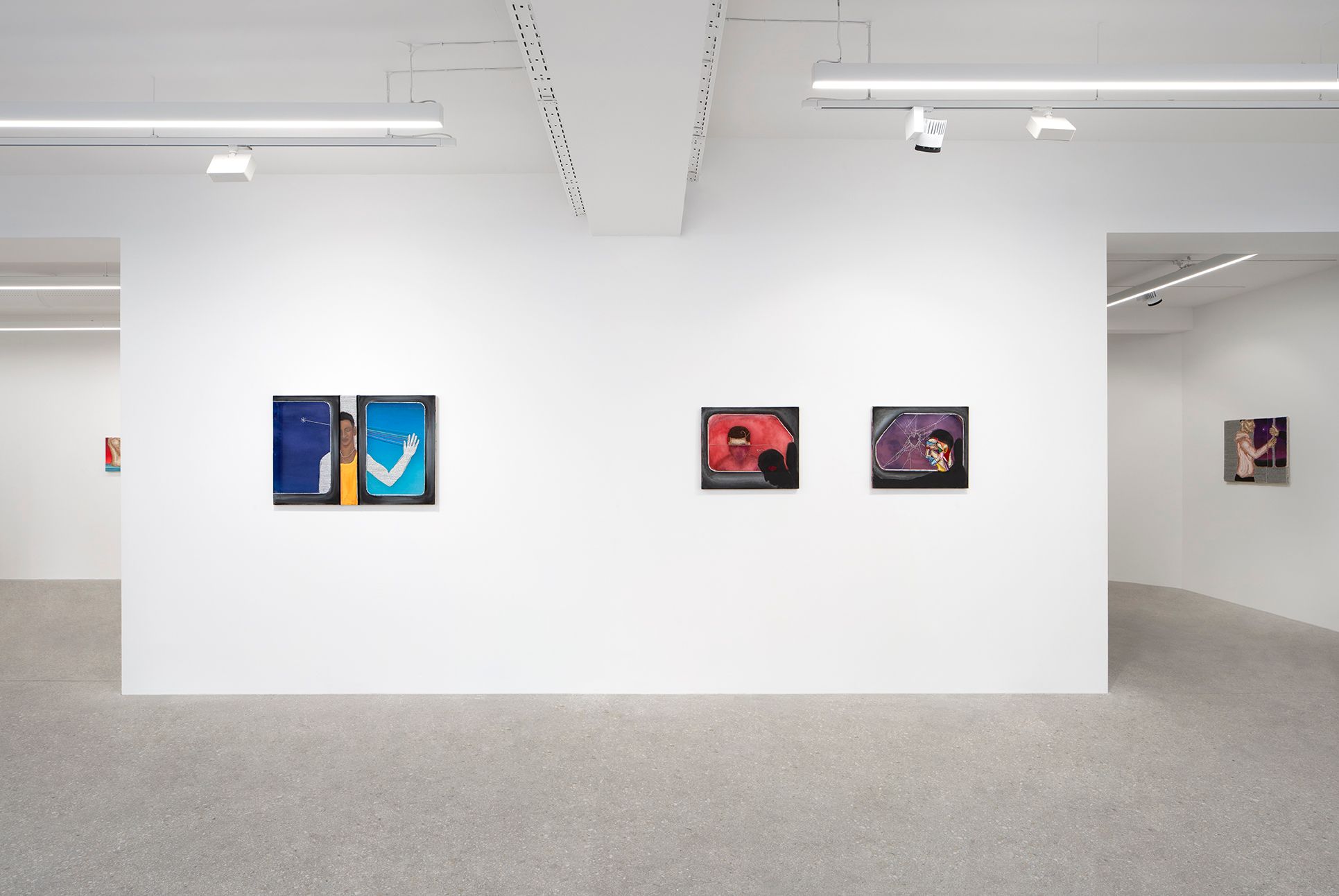
The road occupies a vital place in Amine Habki's practice for it manifests the possibility of an evasion. Reminiscent of childhood memories, of an escape mechanism or of running away, it materialises the in-between state, that intermediary non-place in which the construction of alternative imaginaries fully expands. Having been raised in Cergy, in the Paris suburbs, the RER played a major part in the artist's development, as the background of his initiatory journey and the theatre stage of his everyday life. Connecting the centre to the periphery, and serving each outskirt territory as a zone of transition, that railway track holds the living archive of a profusion of intimate stories, experienced as much as fantasised. Like the Internet site Queering the map that records the memories of anonymous encounters in the queer community throughout the world, the RER is the vector of meetings of gazes and tensions, new possibilities and daydreams. For Amine Habki, creating his embroideries comes down to navigating the meanderings of our memories: each stop contains the evocation of a physical desire or of an ambition full of hope, like a stopover in the making of our first love stories and our first achievements.
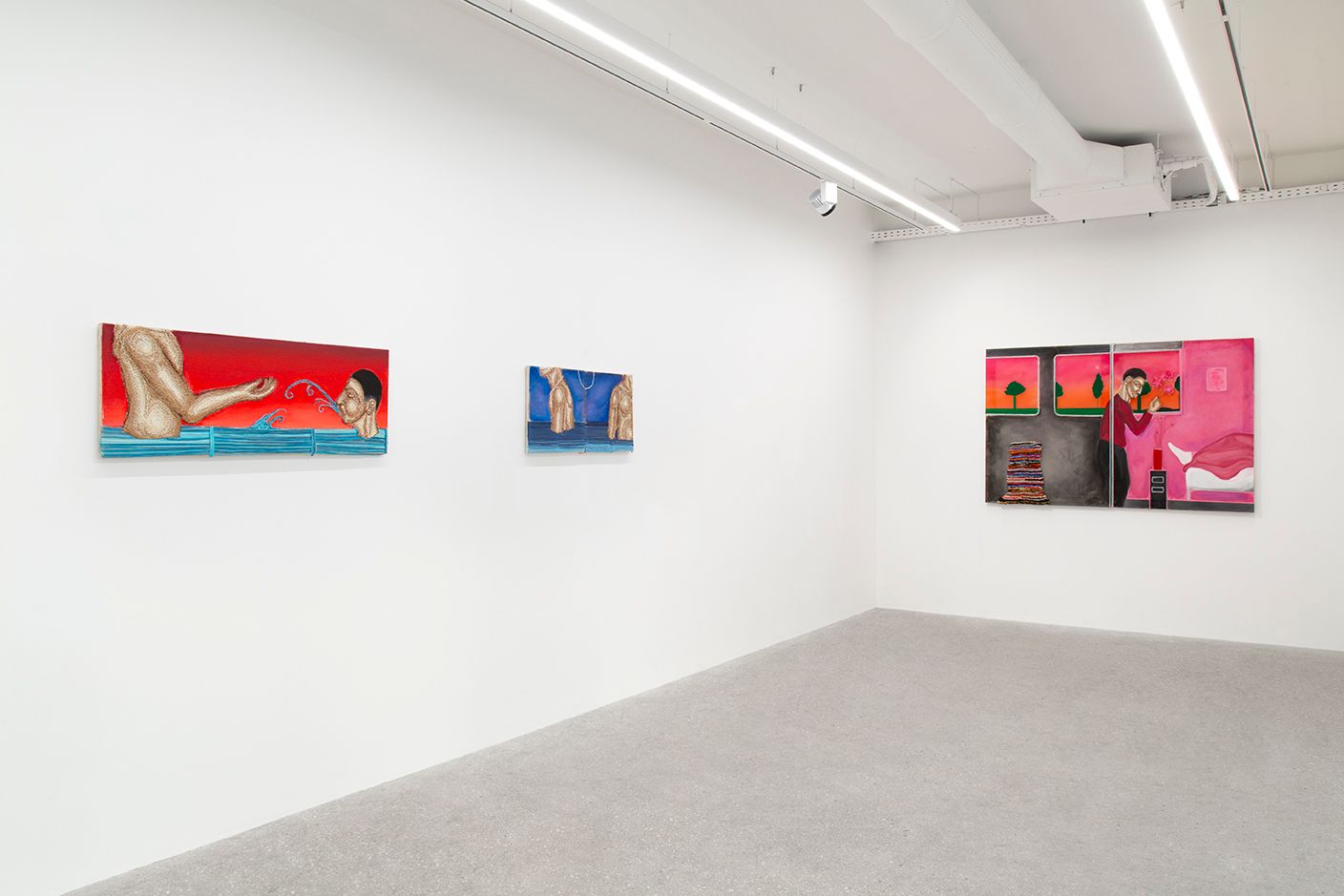
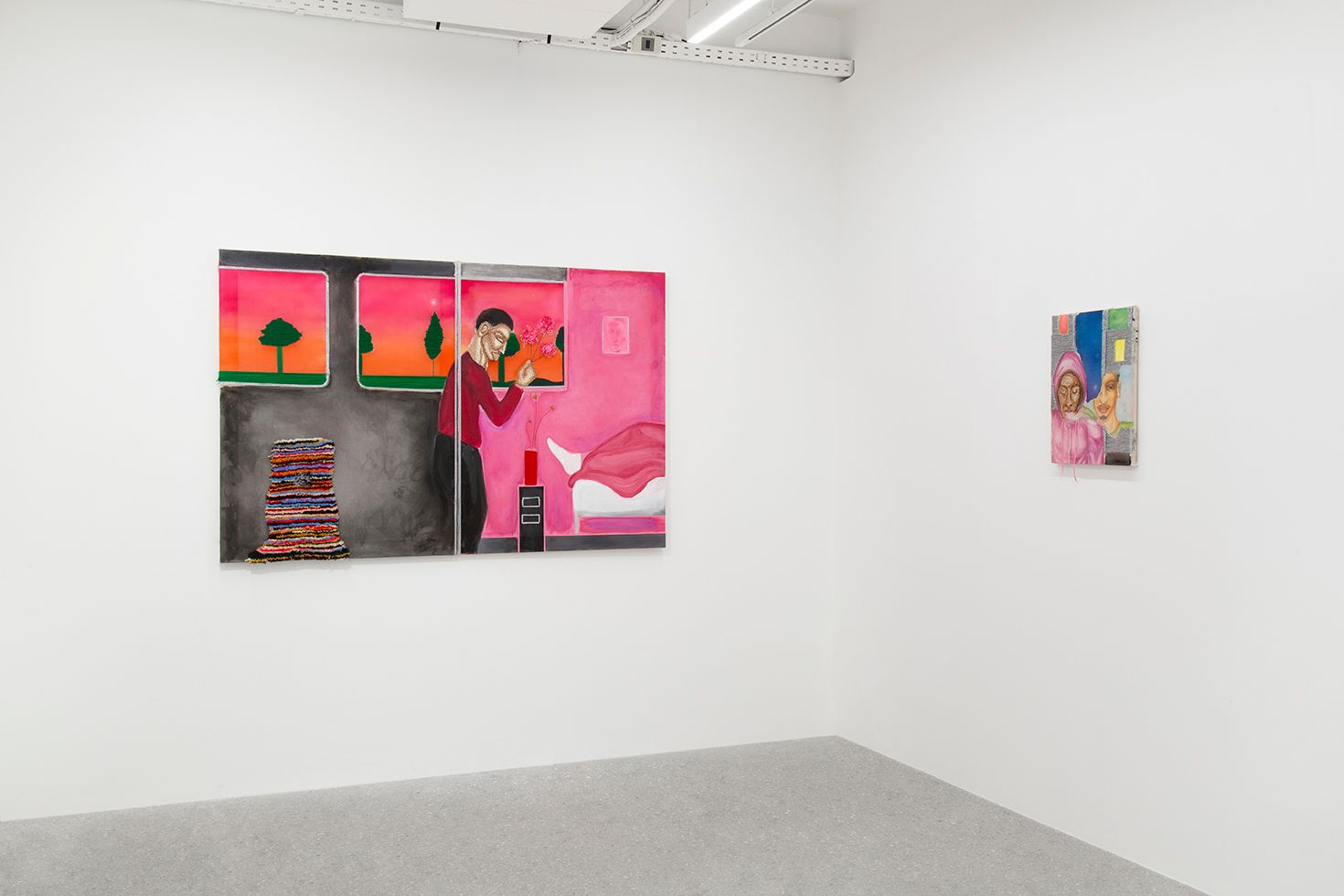
Amine Habki's characters don't travel across stormy seas, just a few stations on the RER track or the ring roads. However, the Western imaginary was fashioned by the myths of the exploration of the East, of prodigious conquests and Homeric crusades. In the colonial belief, the foreign land is always there to be conquered, as much in its territory as in its psyche. The Orientalist painters captured the quintessence of the fantasies about the East, the cradle of projections more and more exoticizing. To travel became synonymous with dominating, exploring and taking back control of the narrative. Amine Habki turns upside down that treatment of the representation by depicting men with a familiar look, mixed avatars of the faces of his close relations, of strangers seen while scrolling on Instagram or studying Persian iconography. By taking his subjects away from a fixed and recognisable identity, he imparts on them a plural and indeterminate acceptance, offering us the possibility of recognising in them the face of a friend, a brother or a lover.
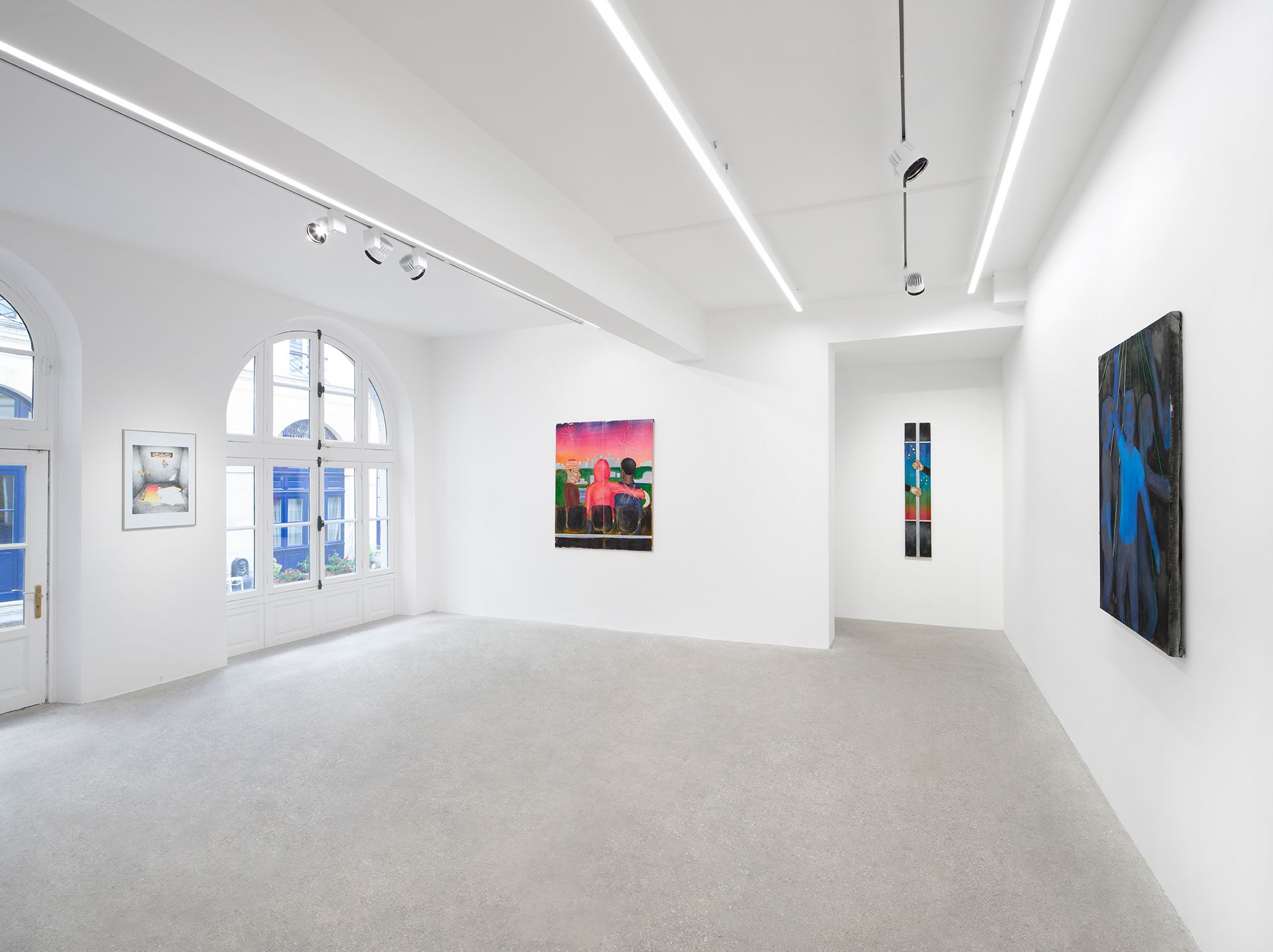
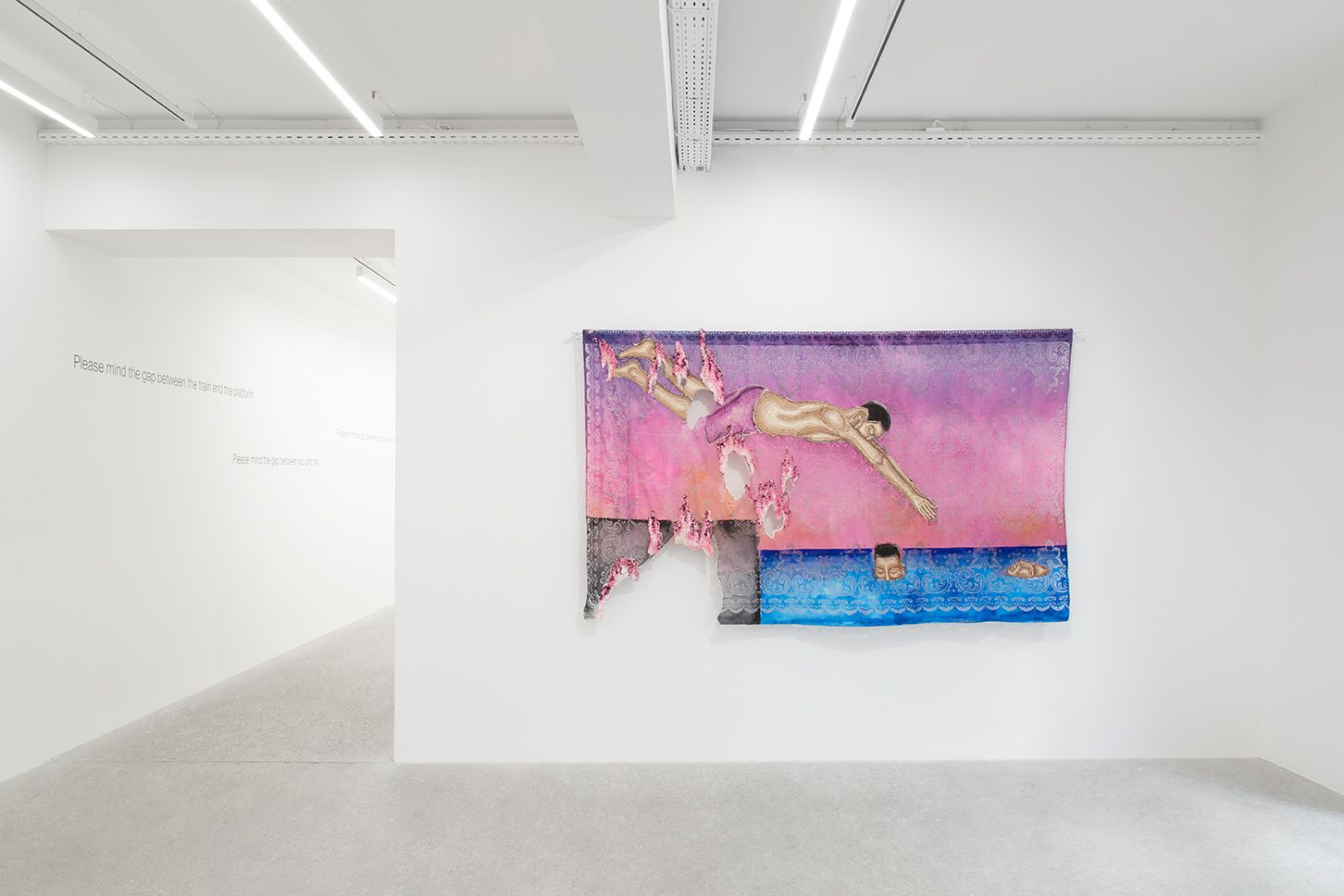
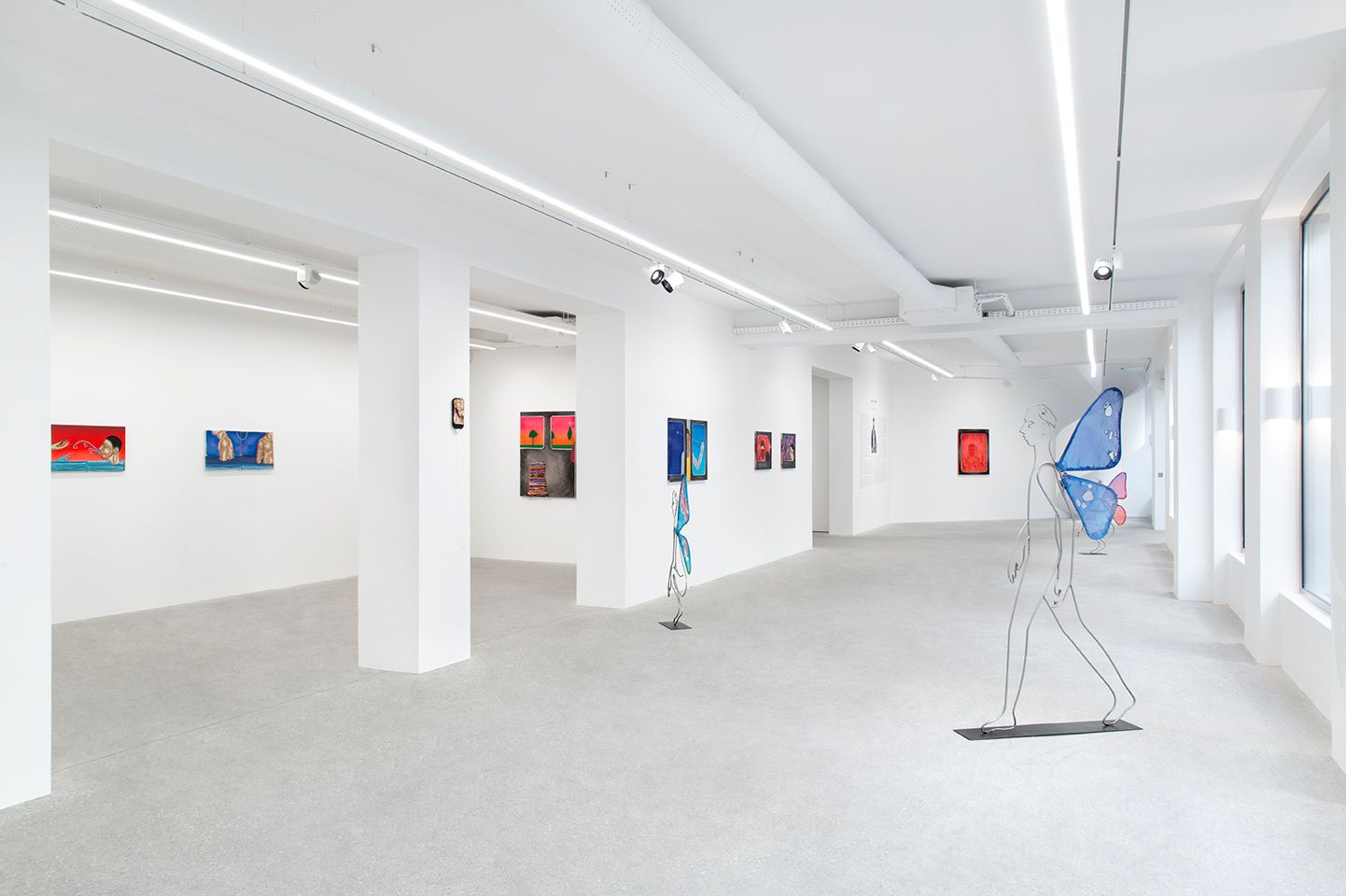
Amine Habki is not interested in telling victorious epics but odysseys of the ordinary, intimate and quiet. Echoing the myth of Icarus, the moulded sculptures of butterfly-men remind us that if navigation is free, it is limited. The figures are less conquerors than passengers letting themselves be carried gently by their thoughts, immersed in an elsewhere, on a background of crepuscular skies inspired by Caspar David Friedrich. Here movement is associated with contemplation and a gentle passivity: a change of scenery is about finding a sense of belonging and on the map, about tracing back not our conquered lands but the fluctuations of our ever-nascent desire.
— Megan Macnaughton
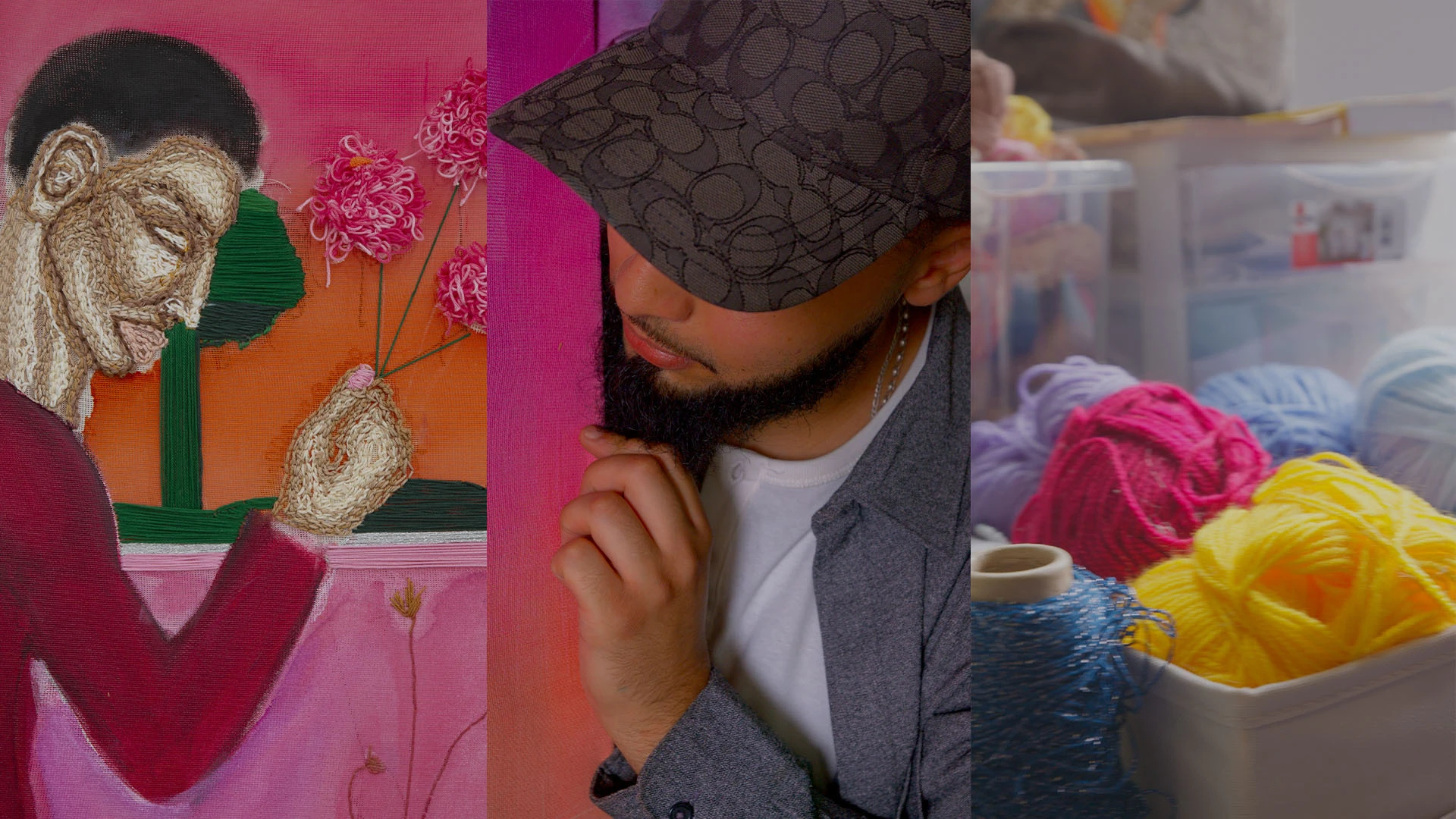
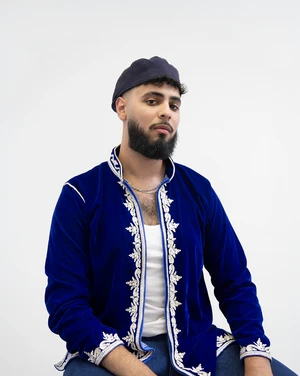
Amine Habki
Born in 2000 in Nantes, France
Lives and works in Paris, France