
François Morellet & Sophie Taeuber-Arp
Au hasard
Curated by Christian Alandete
Apr 9 - Jul 18, 2026
Mennour, 47 rue Saint-André-des-Arts
This exhibition is organized in collaboration with the Fondation Arp-Taeuber, Clamart
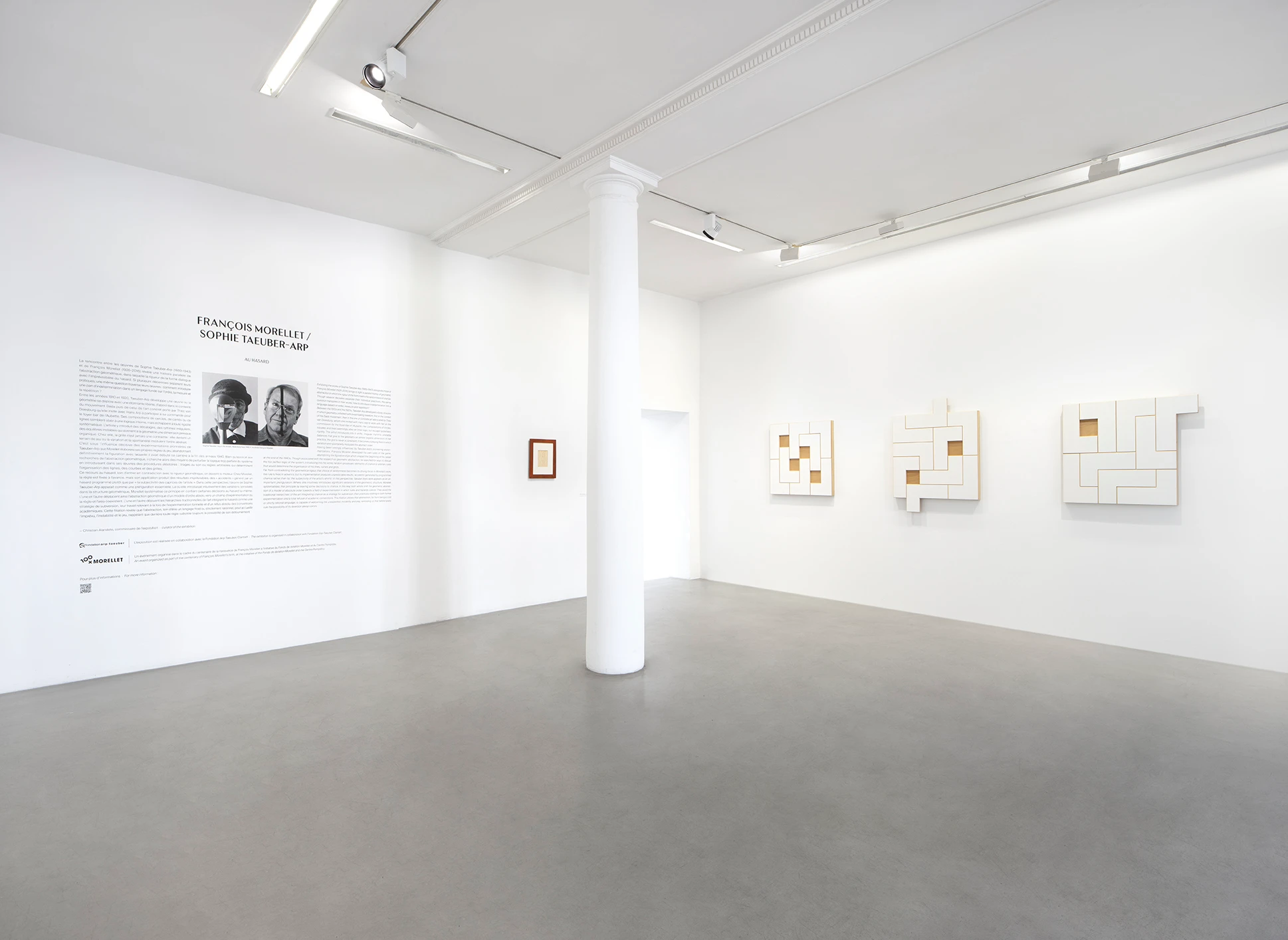
Exhibiting the works of Sophie Taeuber-Arp (1889-1943) alongside those of François Morellet (1926-2016) brings to light a parallel history of geometric abstraction in which the rigour of the form meets the randomness of chance.
Though several decades separate their individual practices, the same question transpires in their works: how to introduce indetermination into a language based on order, measure and repetition?
Between the 1910s and the 1920s, Taeuber-Arp developed a body of works in which geometry unfolded with breathtaking freedom, first in the context of the Dada movement, then in the one of concrete art advocated by Theo van Doesburg, whom she invited with Hans Arp to work with her on the commission for the foyer-bar of l’Aubette. Her compositions of circles, squares and lines seemingly obey an inner logic, but escape systematic rigidity. The artist introduces into it shifts, irregular rhythms, unstable balances that give to the geometry an almost organic dimension. In her practice, the grid is never a constraint: it becomes a playing field in which variation and spontaneity modulate the abstract order.
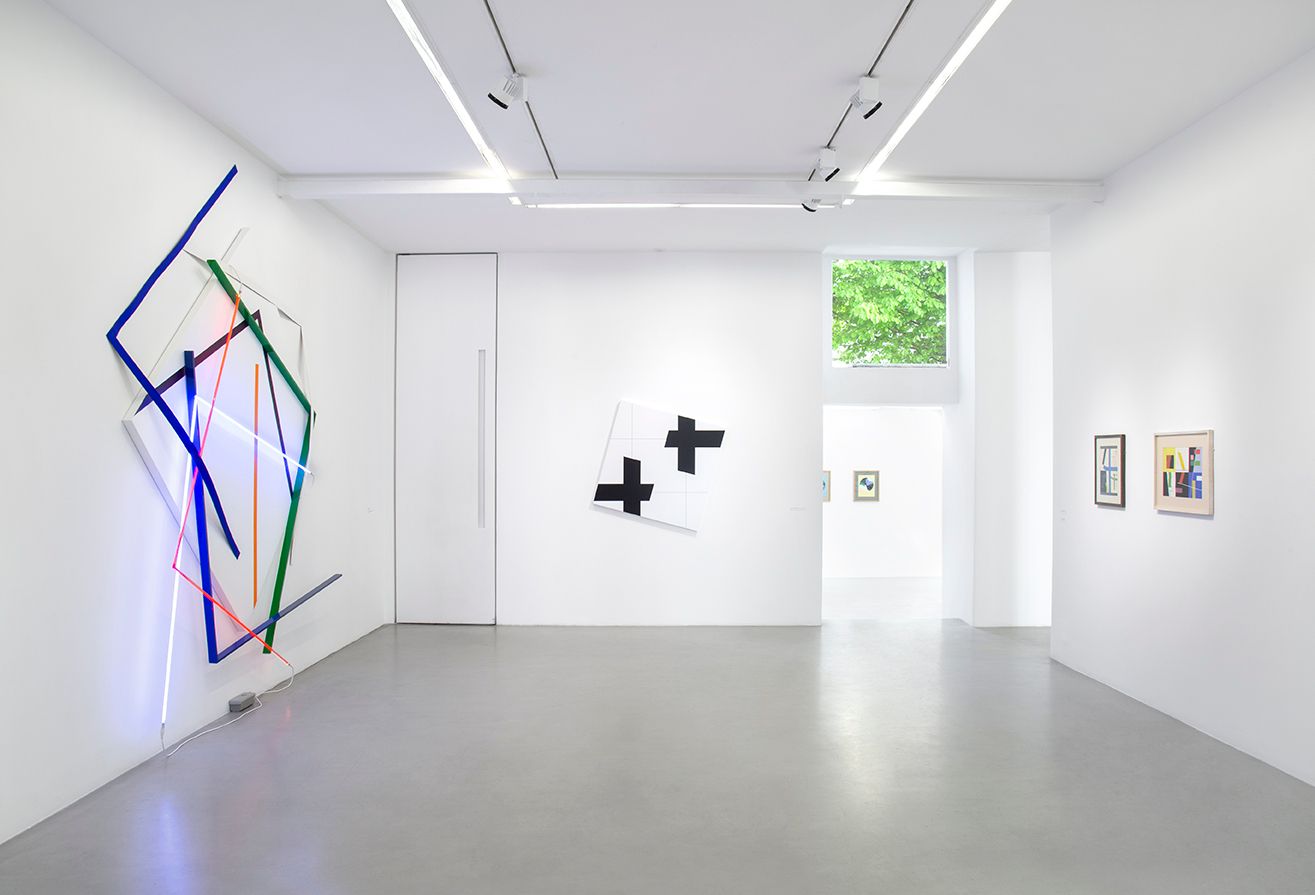
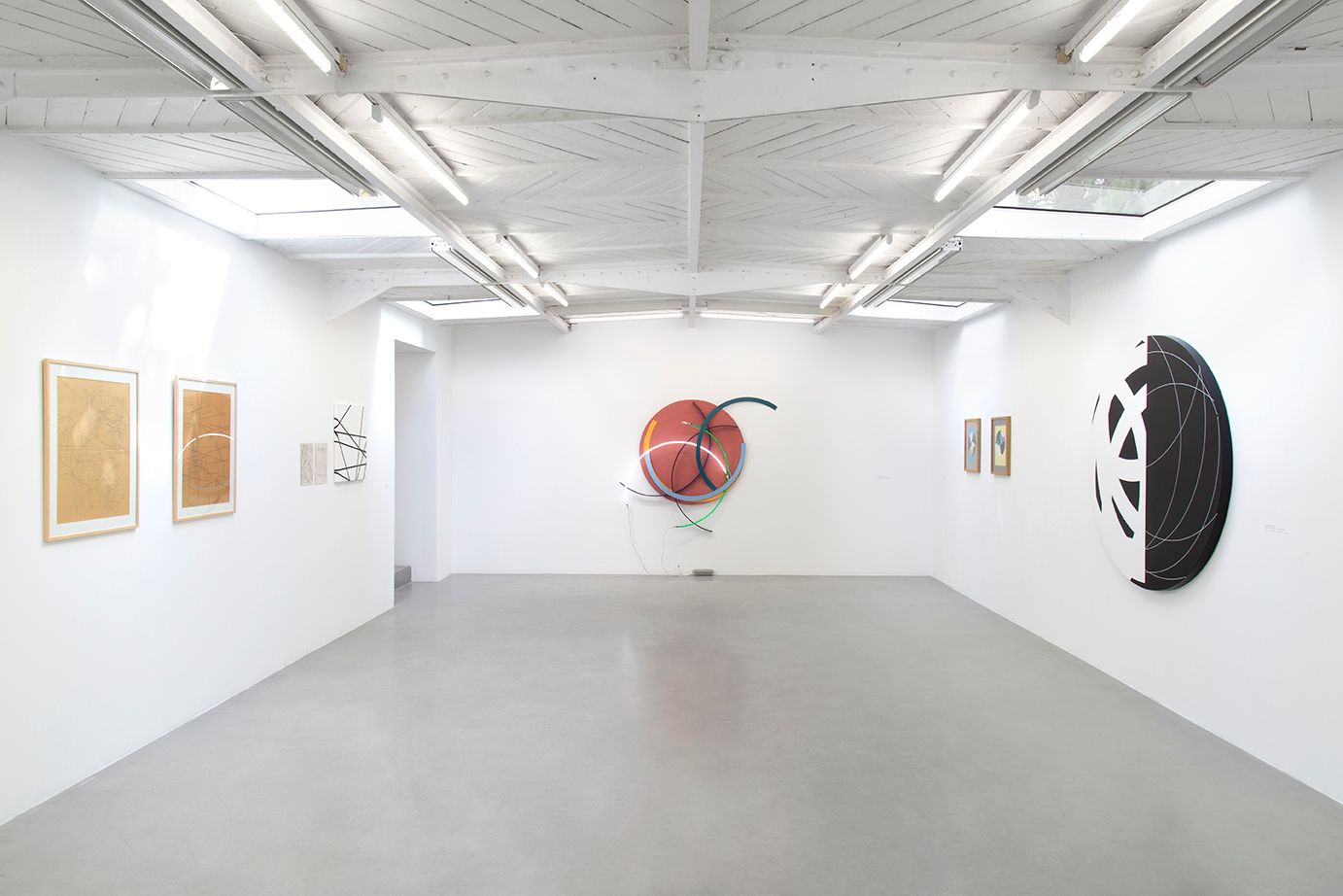
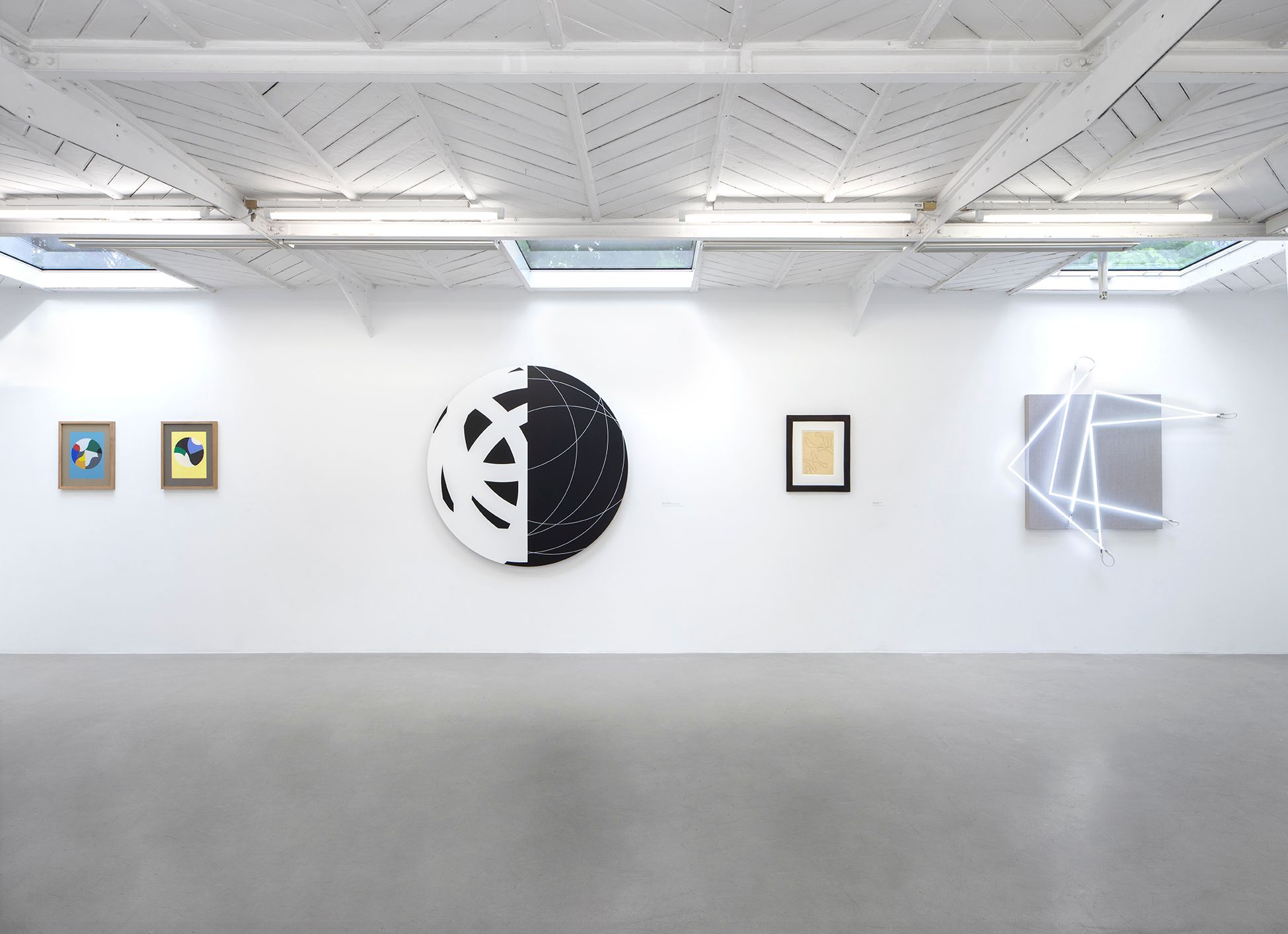
Having been strongly influenced by Taeuber-Arp’s pioneering experimentations, François Morellet developed his own rules of the game, abandoning the figurative style which shaped the beginning of his career at the end of the 1940s. Though associated with the research on geometric abstraction, he searched for ways to disrupt the too perfect logic of the system, introducing into his works random processes: elements of chance or arbitrary rules that would determine the organisation of his lines, curves and grids.
Far from contradicting the geometrical rigour, that choice of randomness becomes its driving force. In Morellet’s work, the rule is fixed in advance, but its implementation produces unpredictable results, ‘accidents’ generated by programmed chance rather than by ‘the subjectivity of the artist’s whims’. In this perspective, Taeuber-Arp’s work appears as an all-important prefiguration. Where she intuitively introduces significant variations in the geometric structure, Morellet systematises that principle by leaving some decisions to chance. In this way, both artists shift the geometric abstraction of a model of absolute order towards a field of experimentation in which rules and hazards coexist. They avoid the traditional hierarchies of the art integrating chance as a strategy for subversion, their practices relating to both formal experimentation and a total refusal of academic conventions. This filiation shows that abstraction, far from being a cold or strictly rational language, is capable of welcoming the unexpected, instability and play, reminding us that behind every rule the possibility of its diversion always exists.
— Christian Alandete, curator of the exhibition
Featured Artists
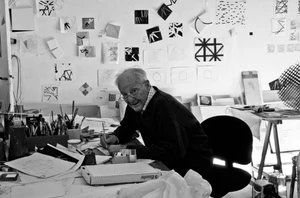
François Morellet
Born in 1926 in Cholet, France
Died in 2016 in Cholet, France
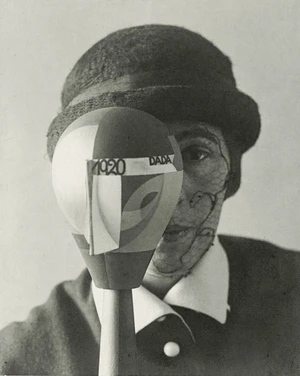
Sophie Taeuber-Arp