Huang Yong Ping & Shen Yuan
Is Paris Burning? 2019
Dec 9, 2021 - Jan 29, 2022
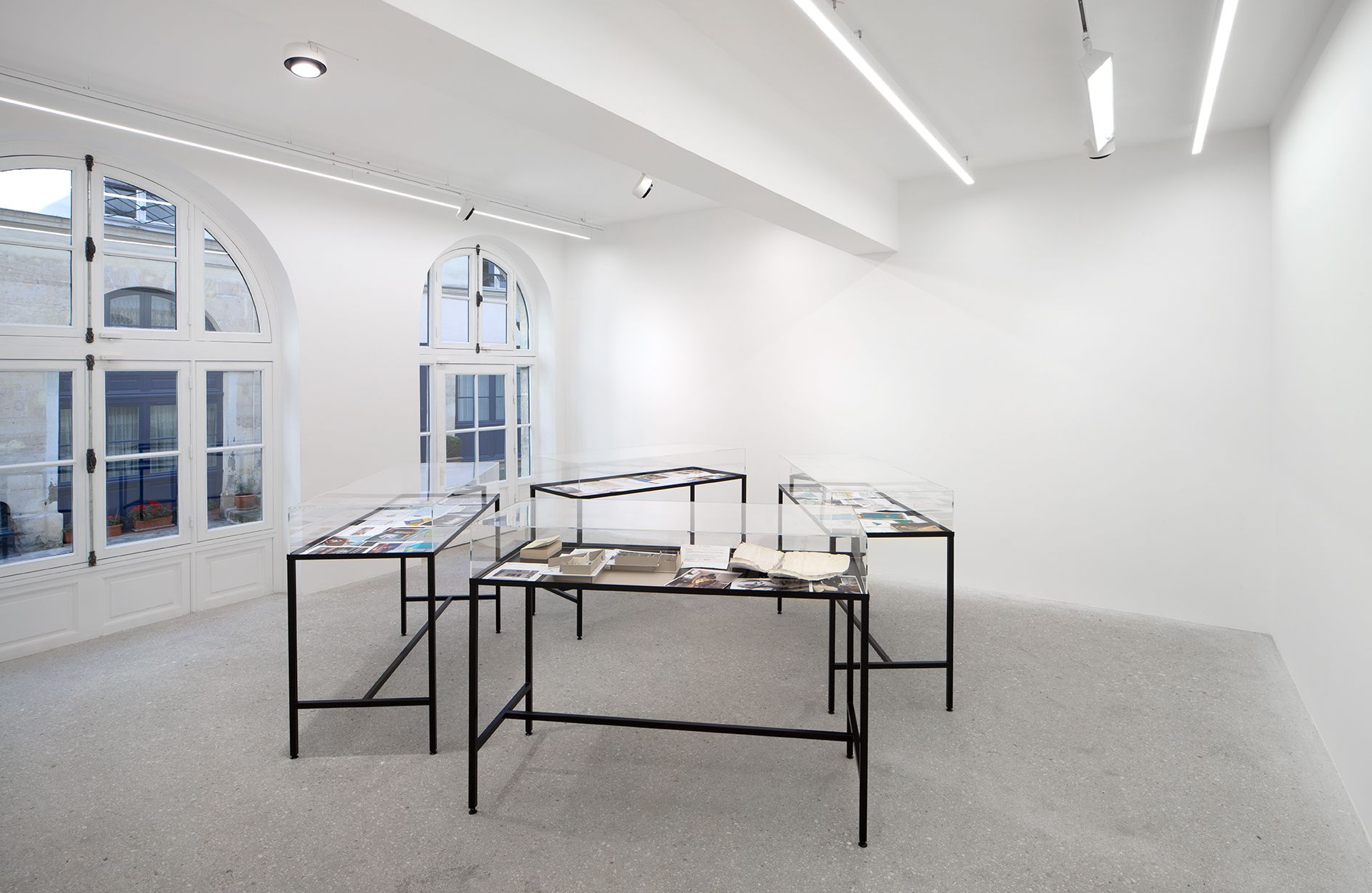
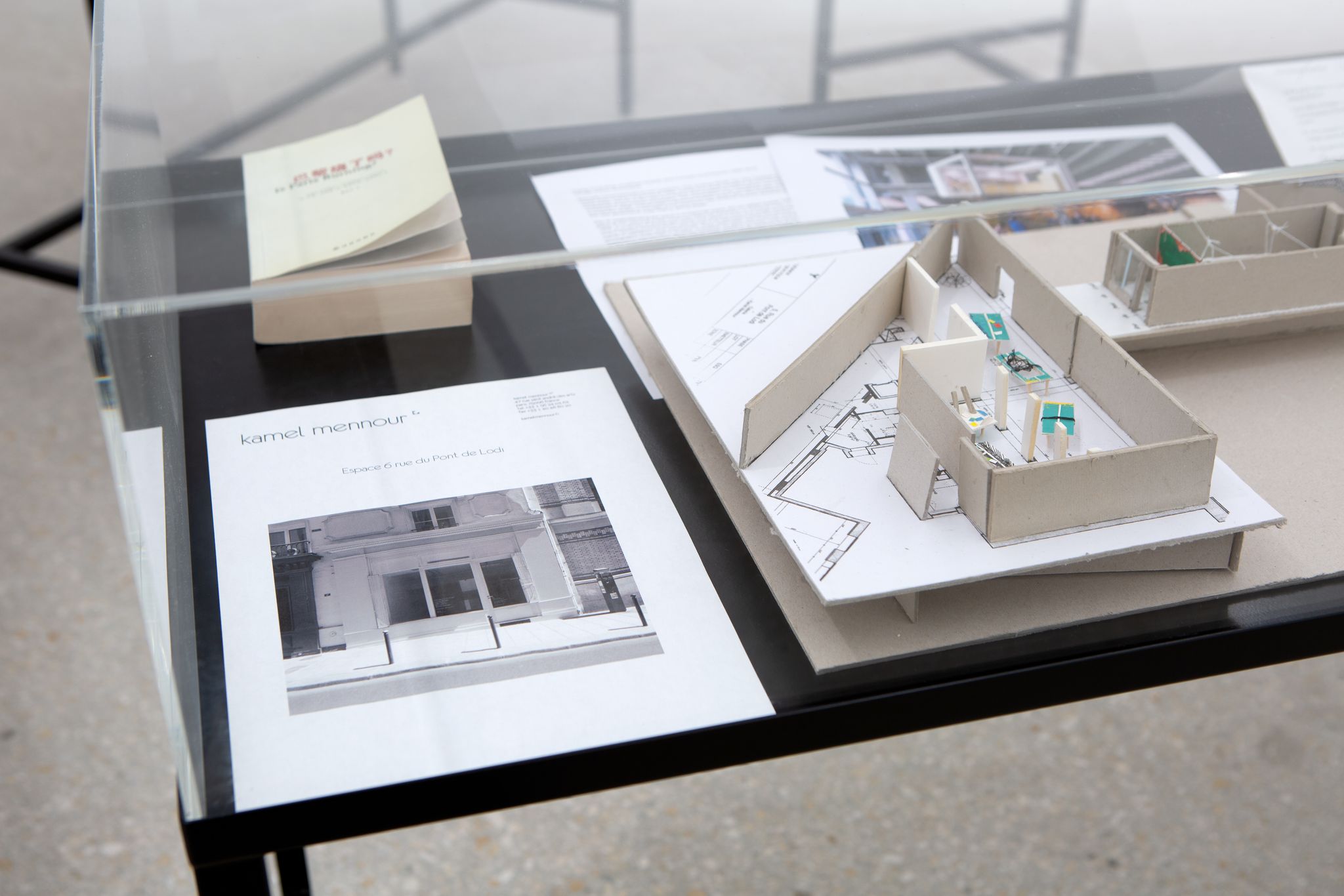
Mennour, 5 rue du Pont de Lodi
Mennour, 6 Rue du Pont de Lodi
How to Become Parisien?
Notes on the exhibition
Two years after Huang Yong Ping passed away, the everyday dialogue between him and Shen Yuan, his more than four-decade-long life companion and art collaborator, continues: they continue to discuss and share their imaginative ideas and creative practices to experiment how to live, for better and for worse, in Paris, their adopted city for more than 30 years. In the end, it’s about how to become real Parisiens... This time however, the conversation, which unfortunately can no longer be carried out in words, is being developed, with much more strength and determination, in actions—the realisation of their ultimate joint project, a two-person exhibition at the Galerie kamel mennour.
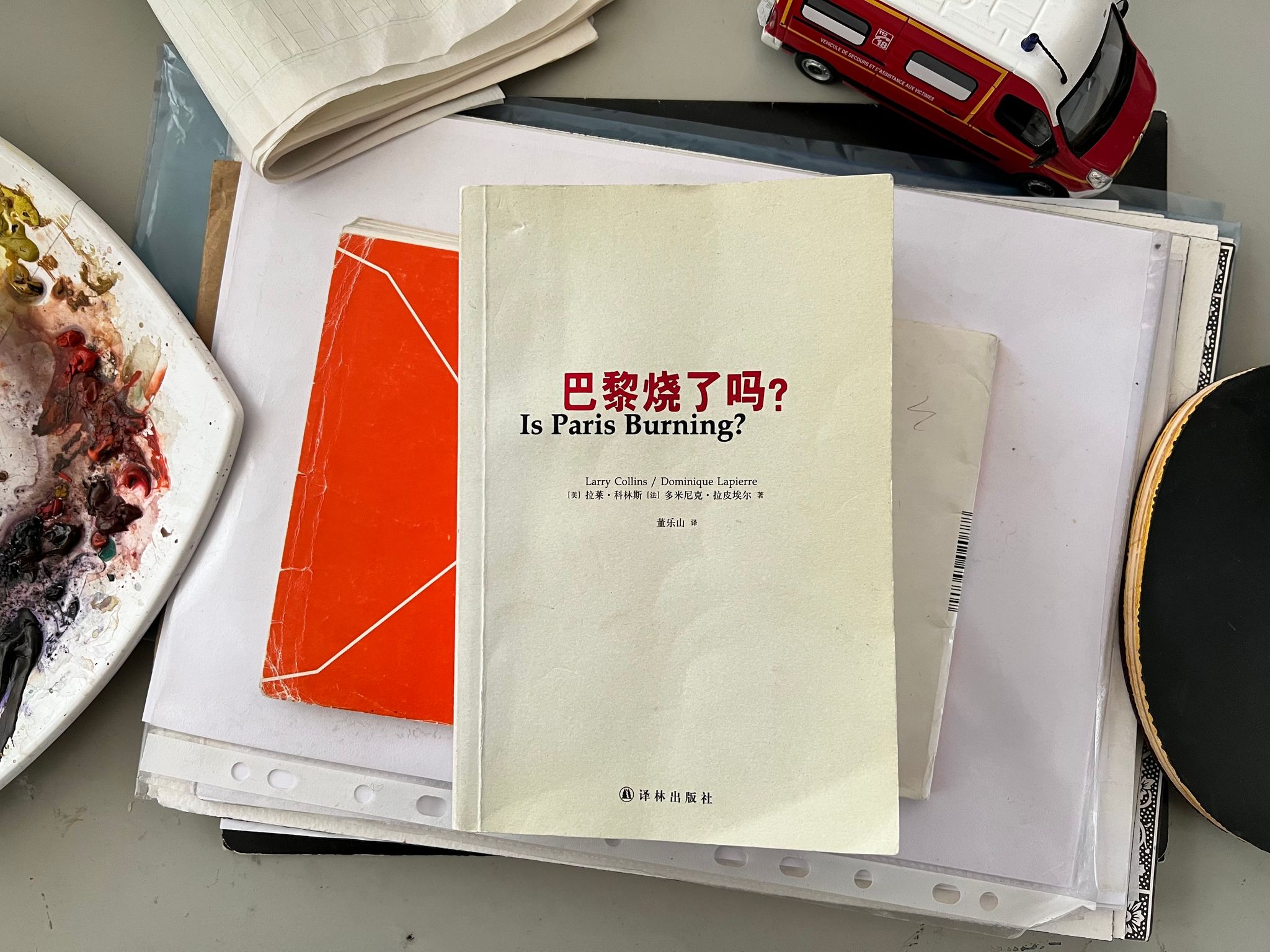
The project was brought about by a seemingly unimportant event. One day in early 2019, Yong Ping showed the book Paris brûle-t-il ? (by Dominique Lapierre and Larry Collins, adapted into a film by René Clément) to Shen Yuan, who was working on her project Samedi, representing the disturbing scenes of the clashes between gilets jaunes and the police on the Champs-Élysées.
Having lived in Paris for three decades, both artists came to recognise that Paris is not only the capital of love and beauty, but is also a hotbed of revolution and violence. It’s a field of fire, both potential and real. And this is what has made it a heaven of freedom, but also a hell of oppression... Paris has seen numerous events take place that have marked French history: the Revolution, the Restoration, the Prussian invasion, the Paris Commune, the two World Wars, then the student movement of 1968 (without forgetting the bloody oppression of the Algerian independence movement in 1961), as well as waves of terrorist attacks from the 1970s to the present day. In other words, there has always been fire in the heart of the city. It’s almost as if, to become a real Parisien, one must go through all sorts of baptêmes du feu!
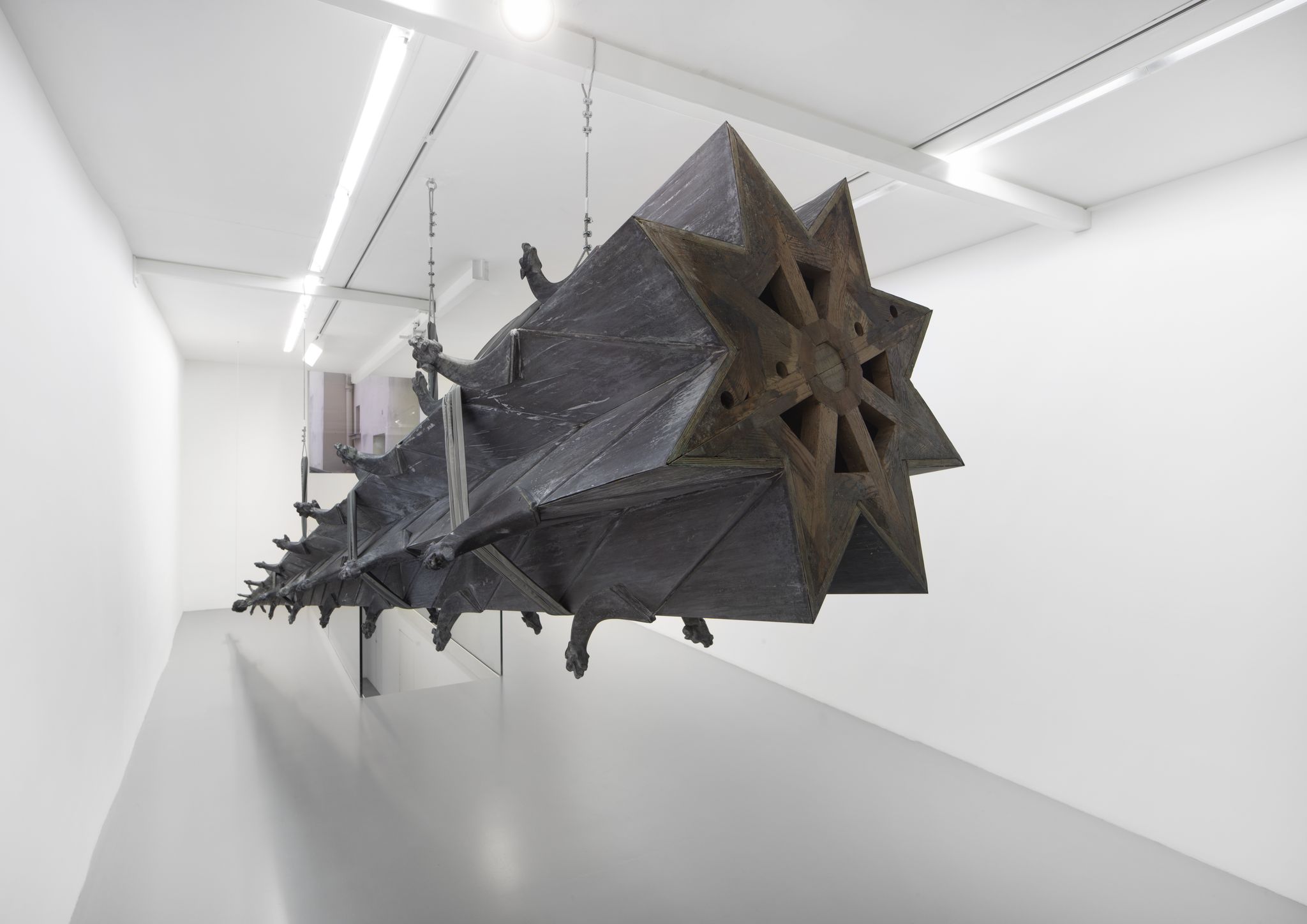
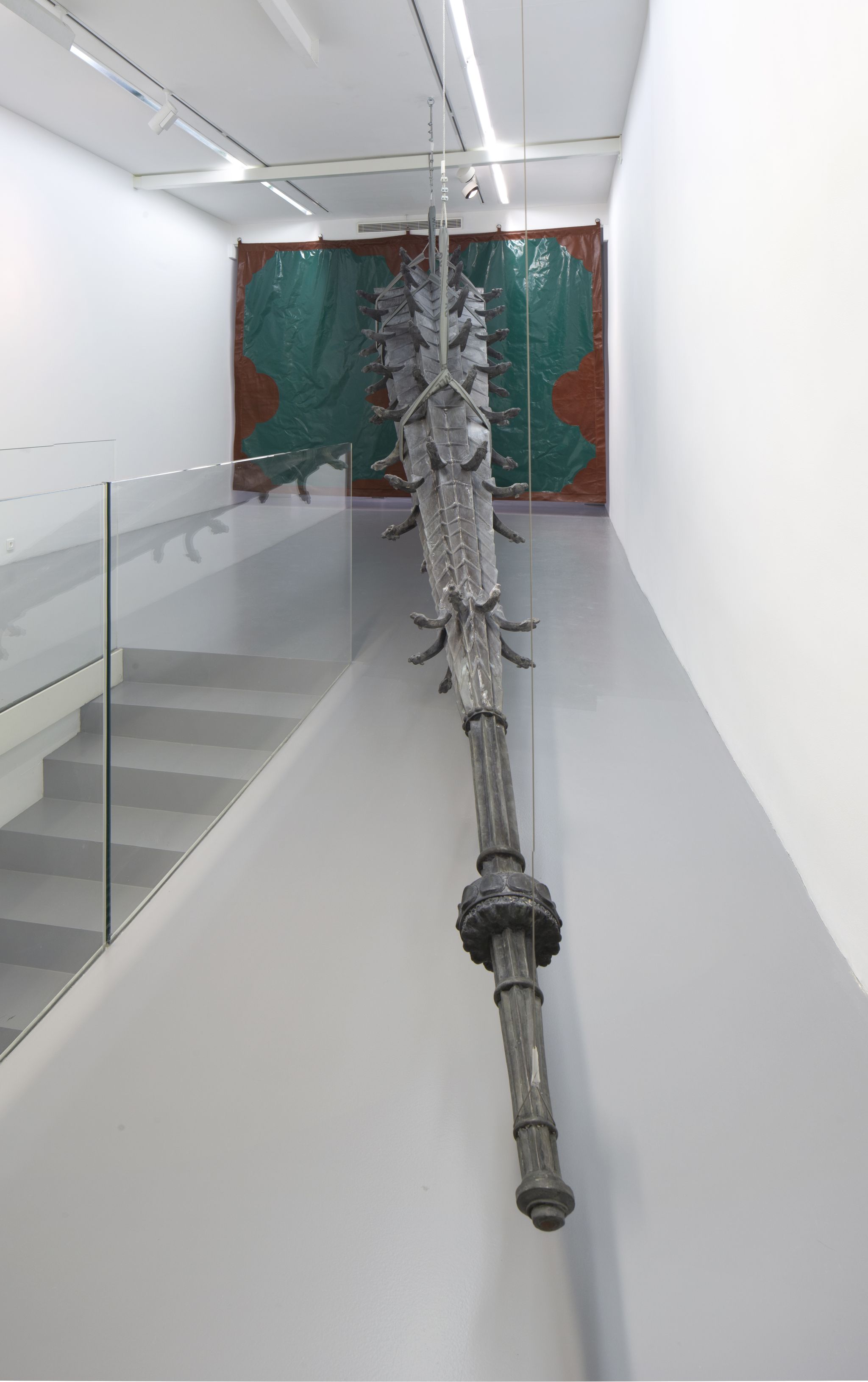
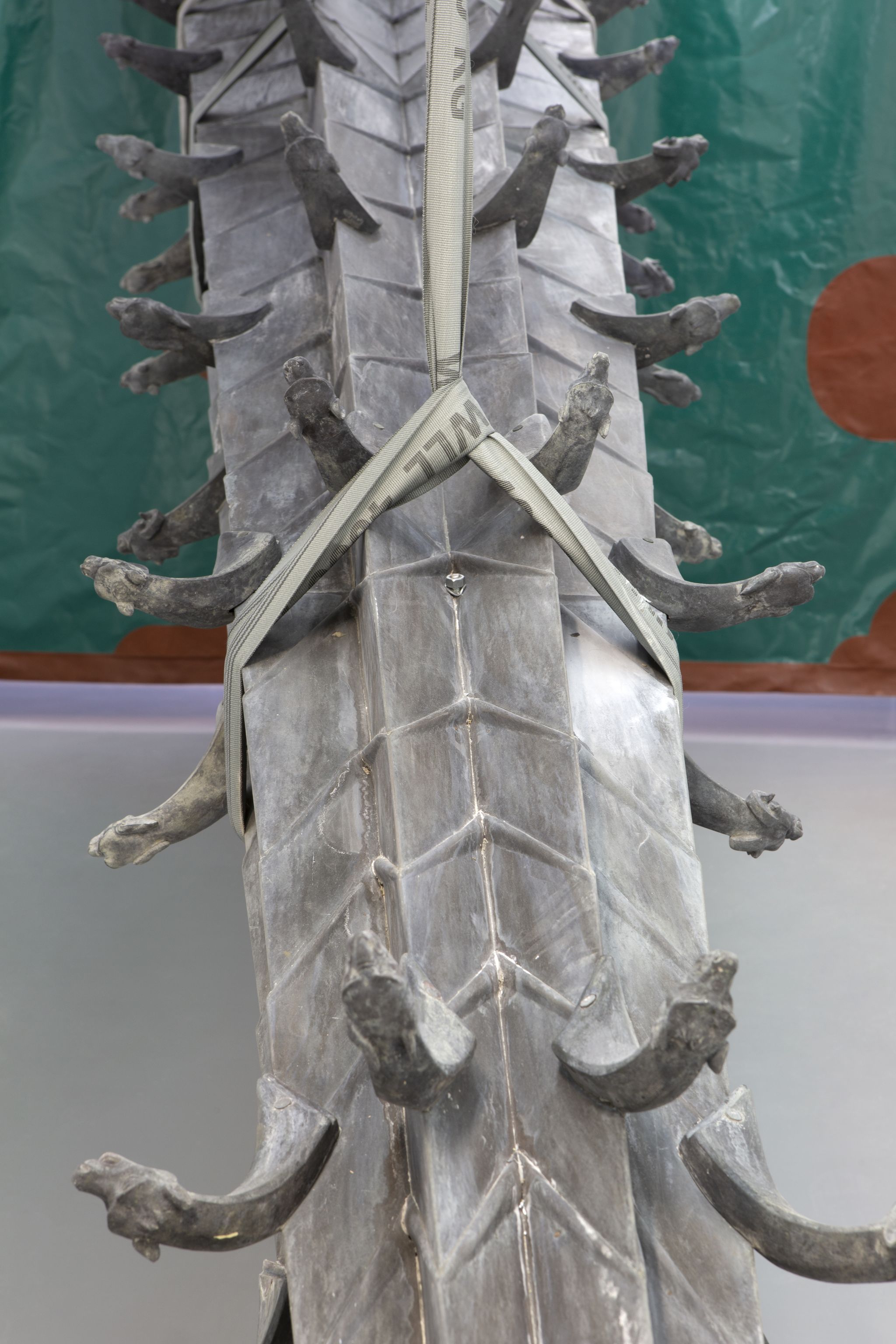
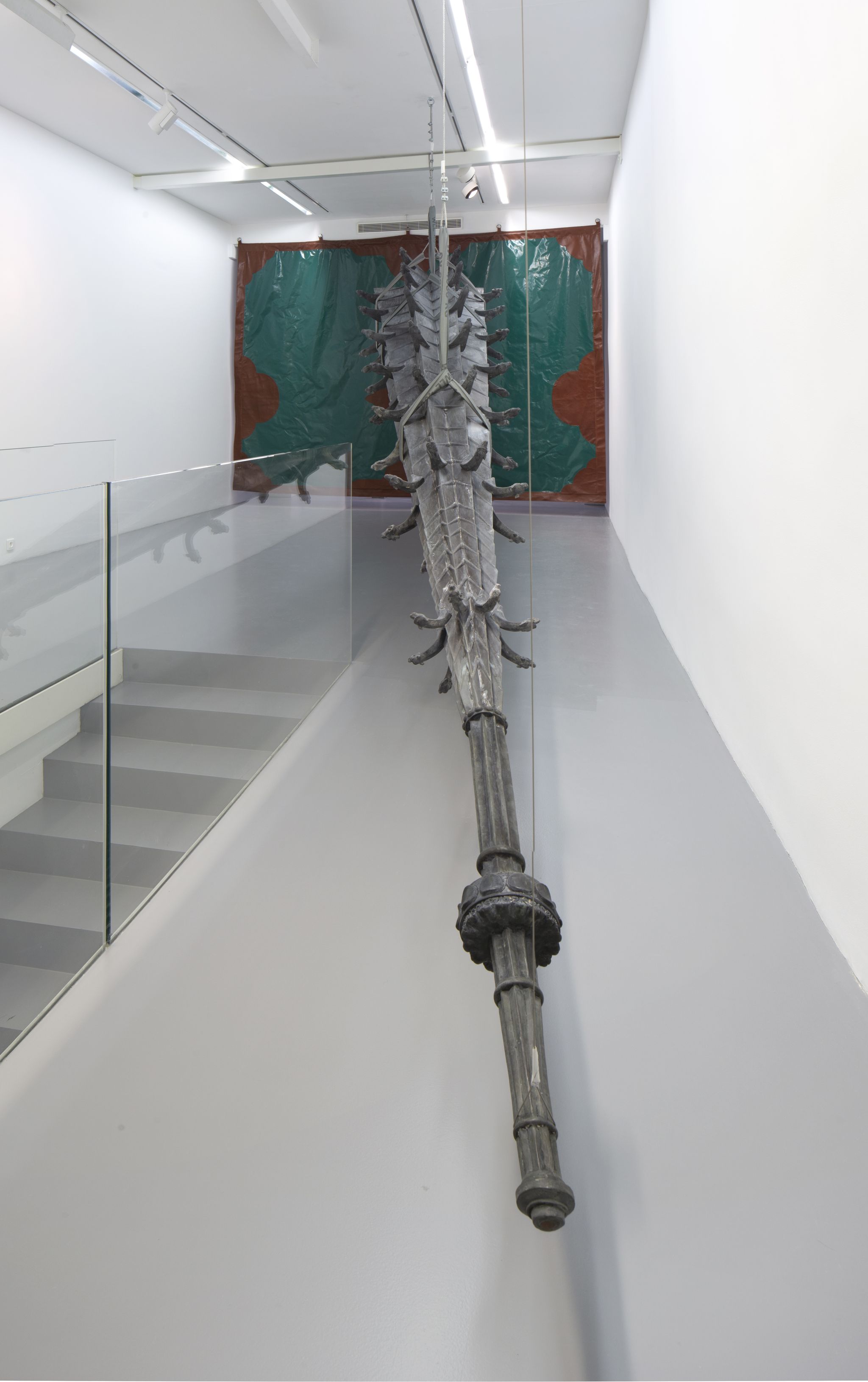
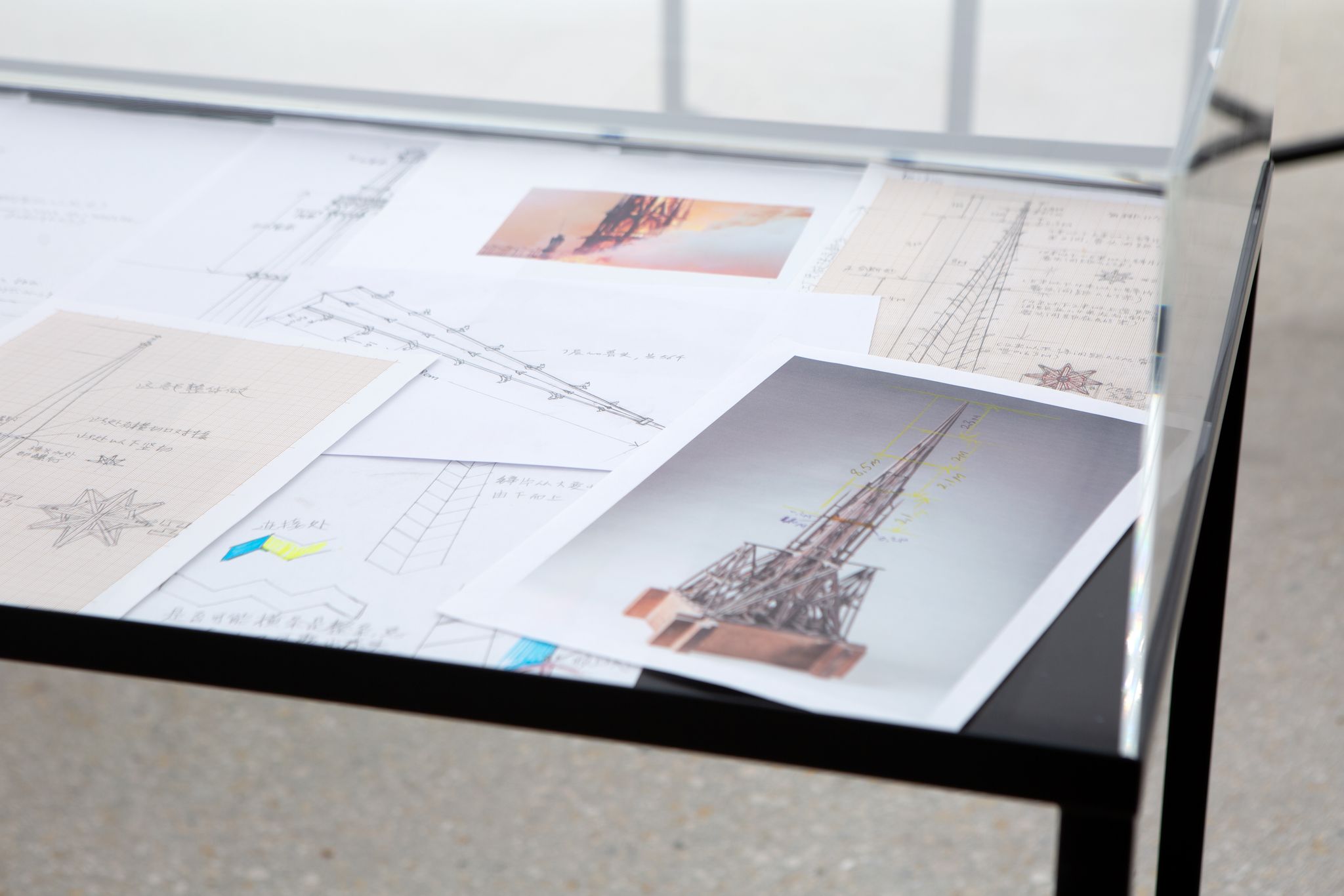
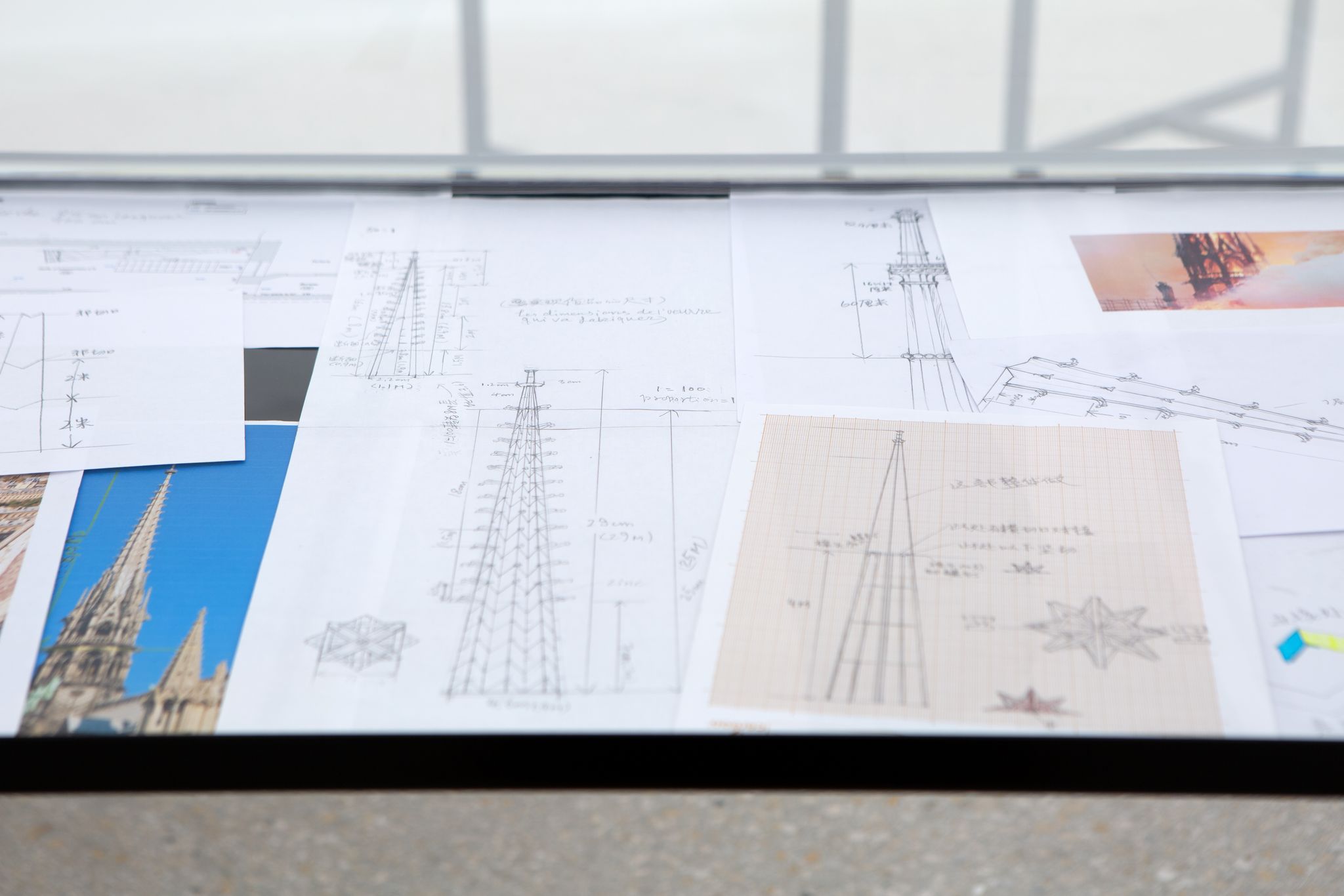
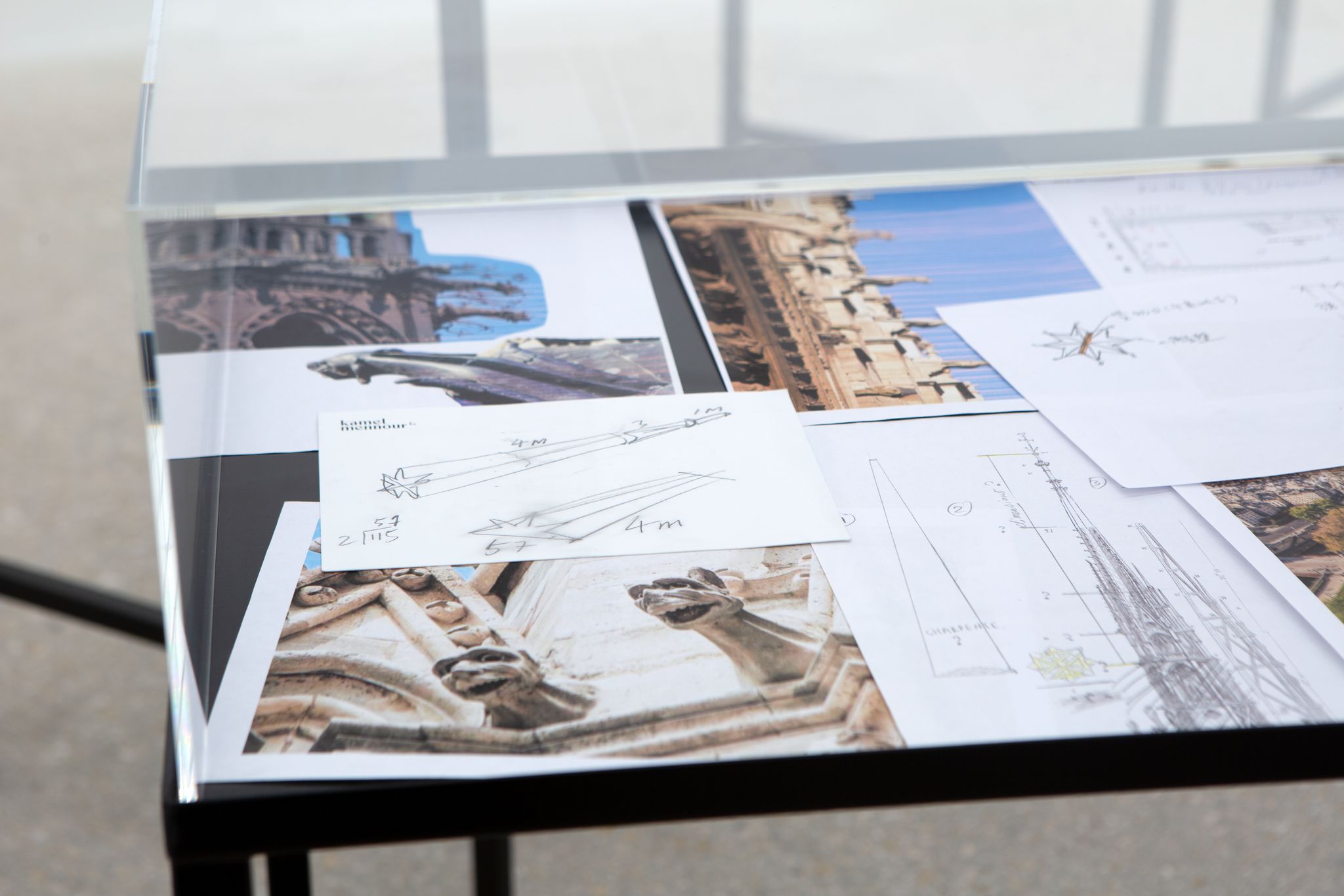
Huang Yong Ping and Shen Yuan, in their respective works, were actively engaged in investigating the complex causes of these “burning” events. They created works such as Trois pas, neuf traces (1996) and Alley- Battle (1997). In the former work, Huang Yong Ping explored the cause of the tension between the terrorist attacks in 1995 and the government’s response. In the latter, Shen Yuan depicted the violent scenes of street protests happening almost daily across the city. Then, on 15 April 2019, they were deeply shocked by the live broadcast on television of Notre- Dame burning and the fall of the spire, one of the most renowned symbols of Parisian pride. Huang Yong Ping could not help but decide to “reconstruct” the destroyed spire. However, it would have to be shown upside-down, behind a curtain hanging at the entrance of a mosque... Apparently, this accident was not the only sign that Paris had to face its destiny: the gilets jaunes movement kept going full steam ahead despite such a dramatic event. Instead, it became wilder and wilder, with more and more fires burning... Shen Yuan, also, has not stopped deepening her exploration of this new baptême du feu. In this hustle and bustle of current events, and with a clear desire to revive the memory of and the dialogue with her beloved Yong Ping, she eventually finished her Samedi.
Fire is everywhere: it’s not only burning in Paris. A baptême du feu has always been a “rite of passage” for people everywhere in the world seeking freedom and justice, facing political oppression and social crises. This turns out to be even more intense in a city like Hong Kong, where people are fighting for freedom and justice in the complex and wrestling negotiations amongst post-colonial transition, globalisation, claims for democracy and neo-totalitarian domination. Over the last few years, the Umbrella Movement and Anti- Extradition Law Amend Bill Movement have marked the ultimate rise and fall of this territory, which is so crucially important for the future of China and further afield as well. The burning flames in Central and on the Polytechnic University campus represented a new baptême du feu for the whole world... For their Hong Kong Foot exhibition (Tang Contemporary Gallery, 2017, Hong Kong), Shen Yuan came up with Yellow Umbrella/ Parasol to represent, quite literally, the protests unfolding across the city and their impact on urban spatiality and social transformation. At the same time, Huang Yong Ping, with Les Consoles de Jeu Souveraines, aimed at unveiling the complicated entanglements—between history and the present, between the colonial situation and postcolonial emancipation—that have eventually determined the fate of the city today.
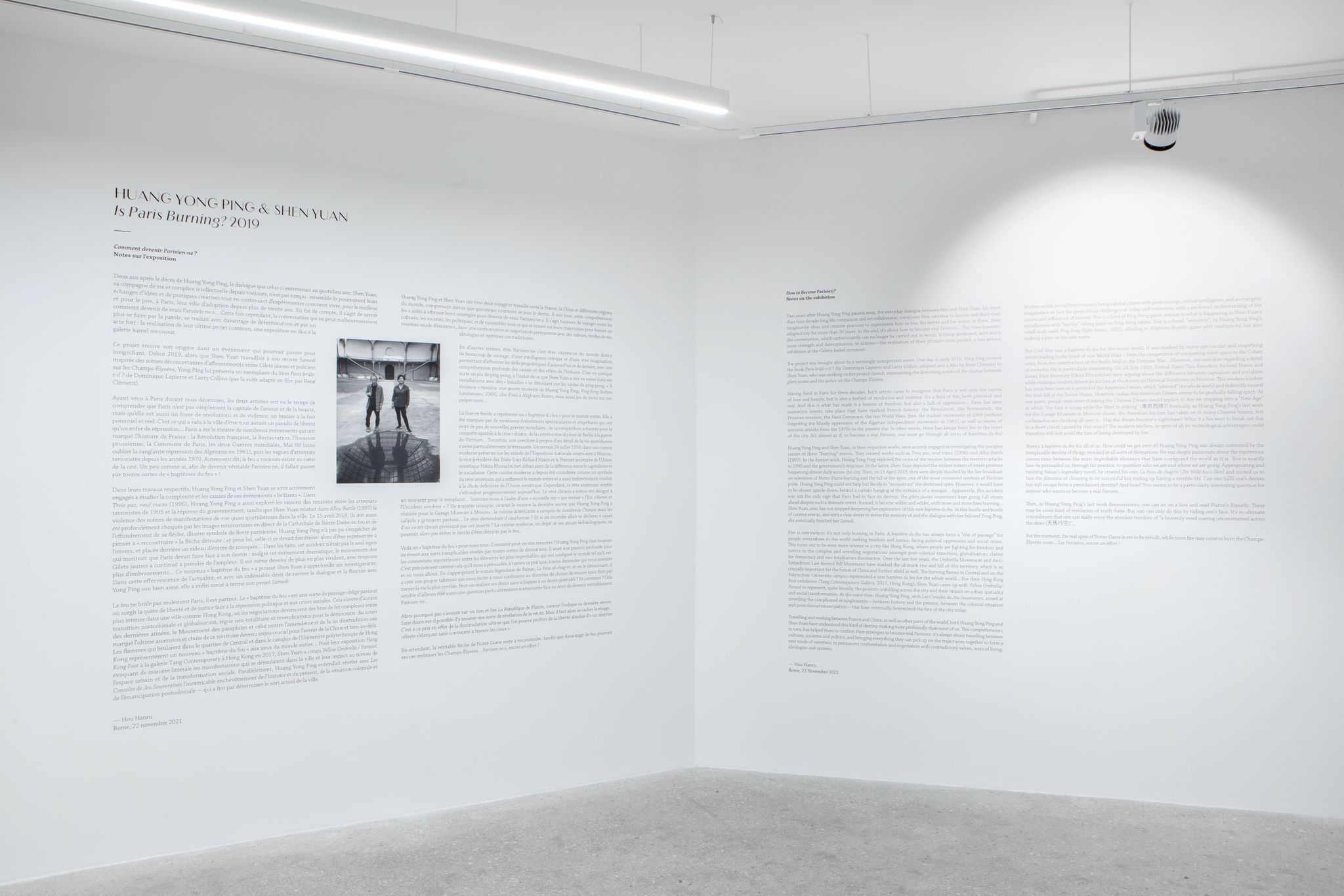
Travelling and working between France and China, as well as other parts of the world, both Huang Yong Ping and Shen Yuan have understood this kind of destiny-making more profoundly than most of us. This comprehension, in turn, has helped them to confirm their strategies to become real Parisiens: it’s always about travelling between cultures, societies and politics, and bringing everything they can pick up on the trajectories together to form a new mode of existence, in permanent confrontation and negotiation with contradictory values, ways of living, ideologies and systems.
In other words, being Parisien means being a global citizen with great courage, critical intelligence, and an energetic imagination to face the geopolitical challenges of today and tomorrow, with a profound understanding of the causes and influences of history. This is a kind of Ping-Pong game, similar to what is happening in Shen Yuan’s installations with “battles” taking place on Ping-Pong tables. This is echoed, “remotely”, by Huang Yong Ping’s small-scale work Ping-Pong (light boxes, 2003), alluding to Alighiero Boetti’s game with multiplicity, but also making a pun on his own name...
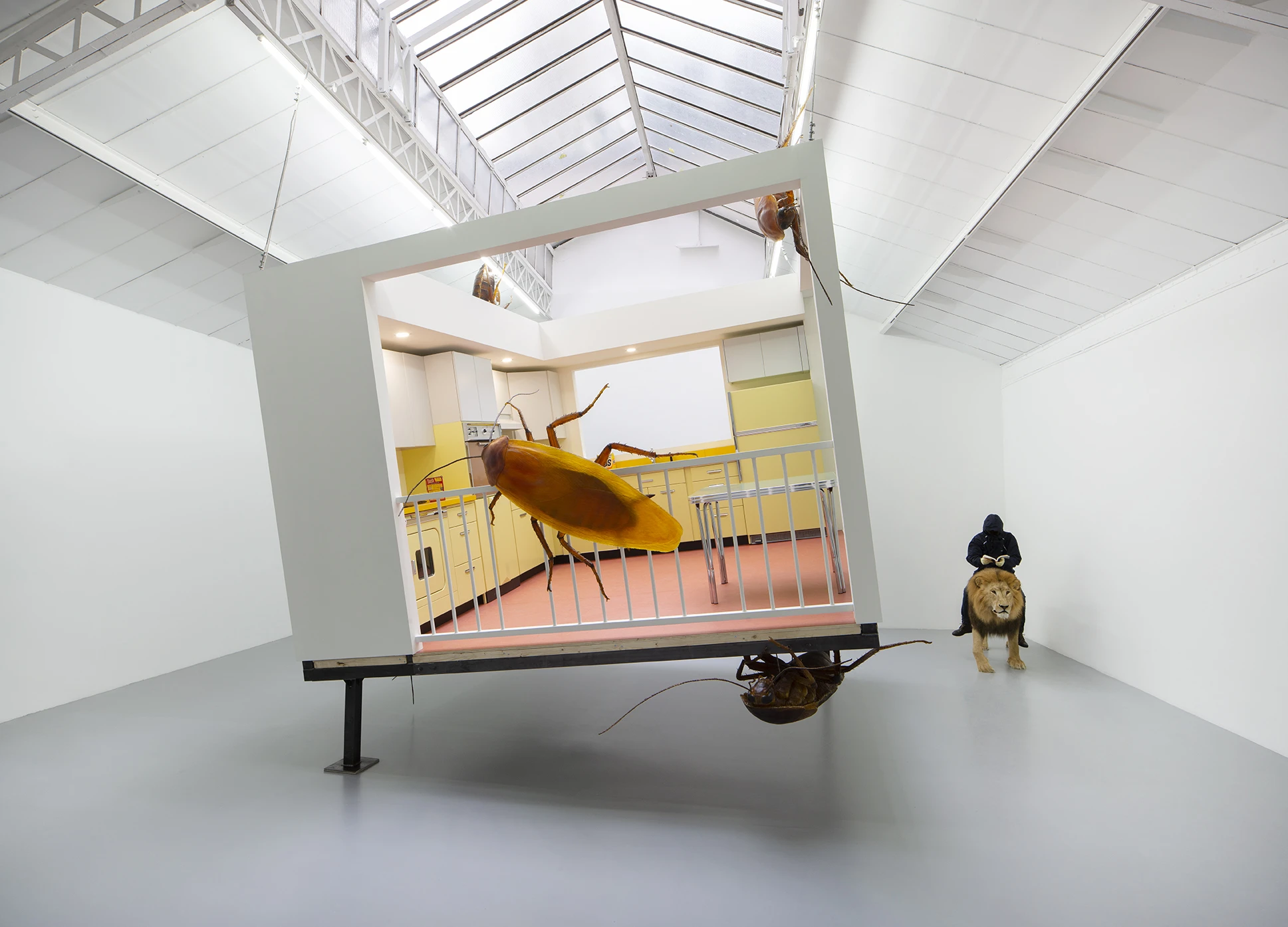
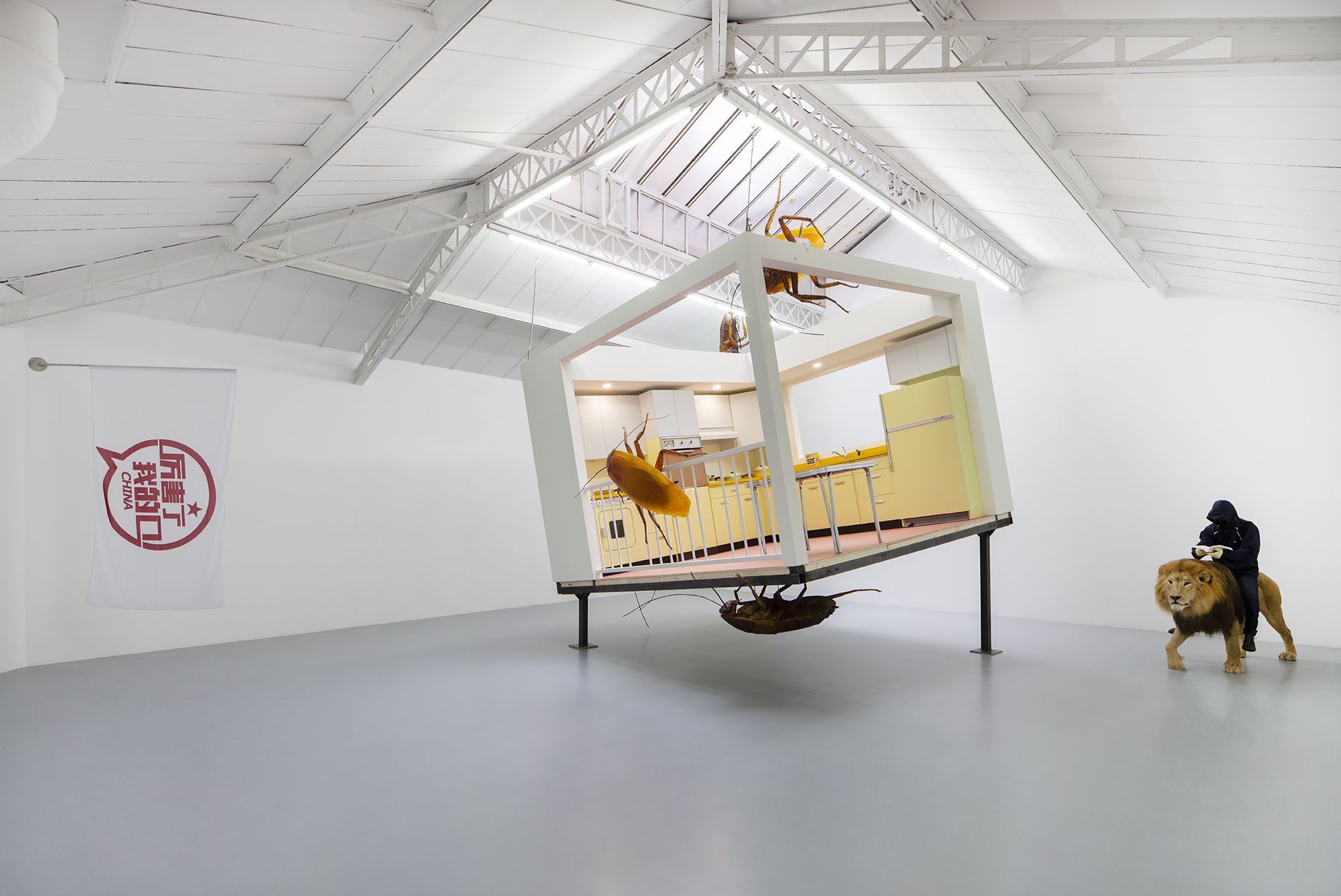
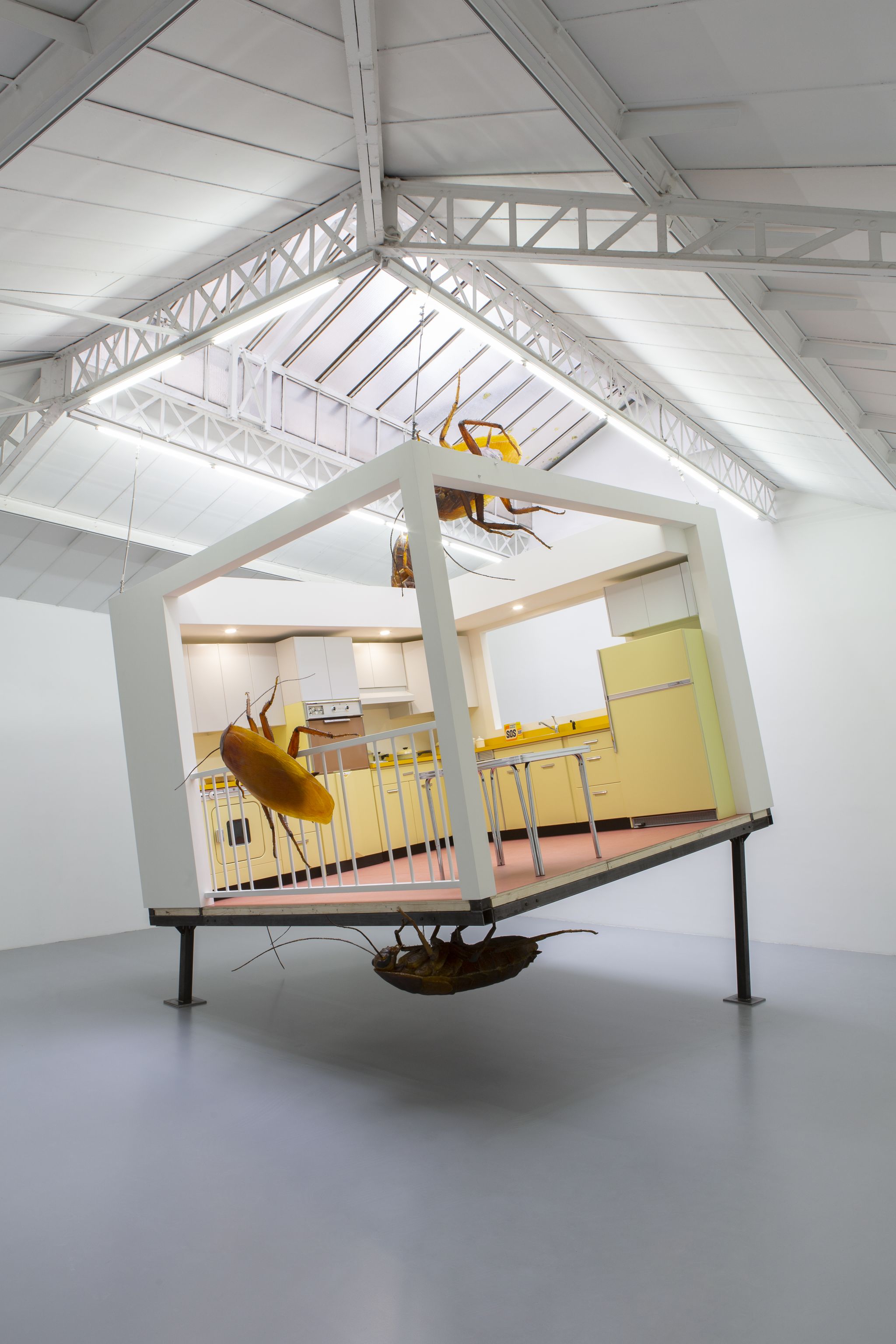
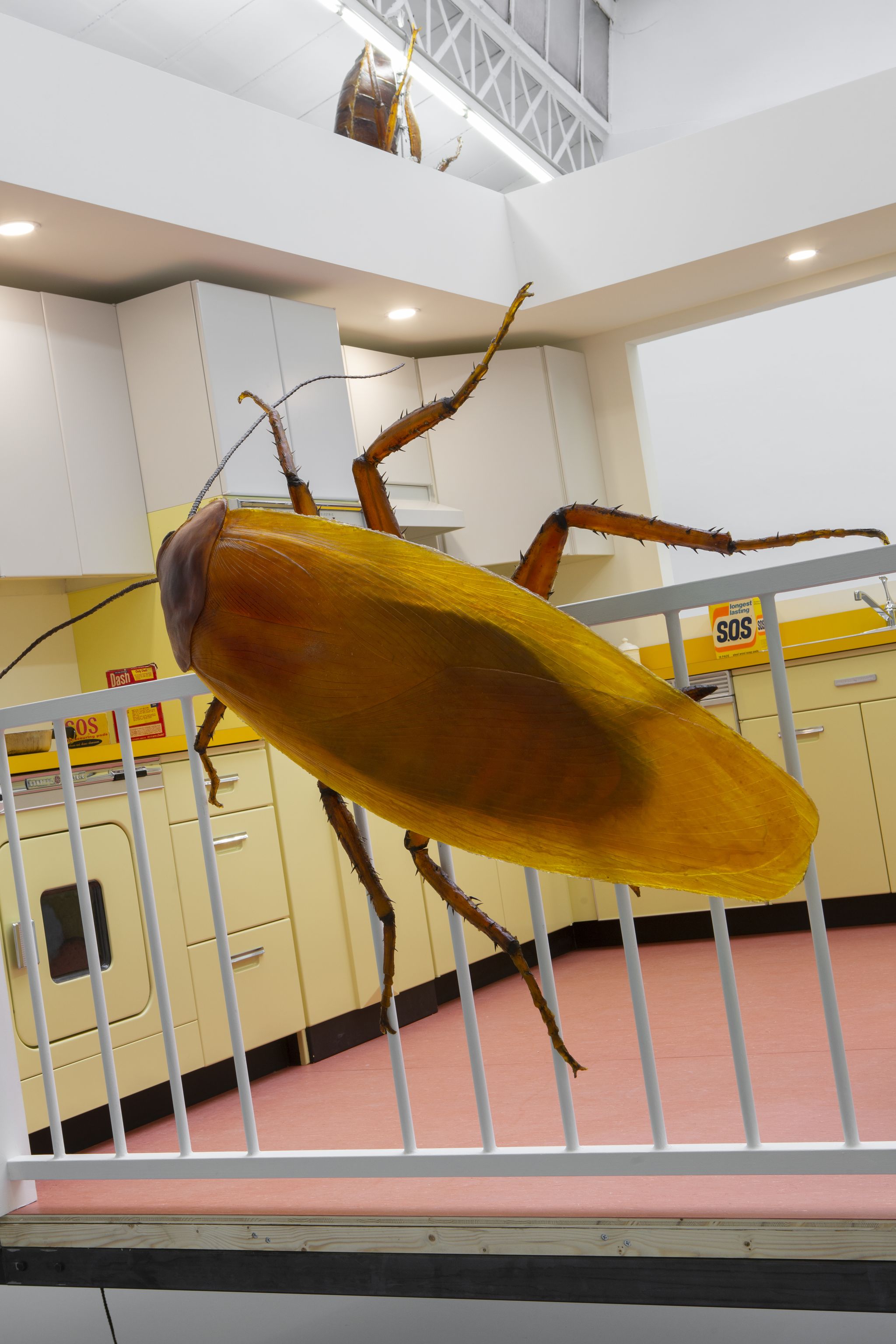
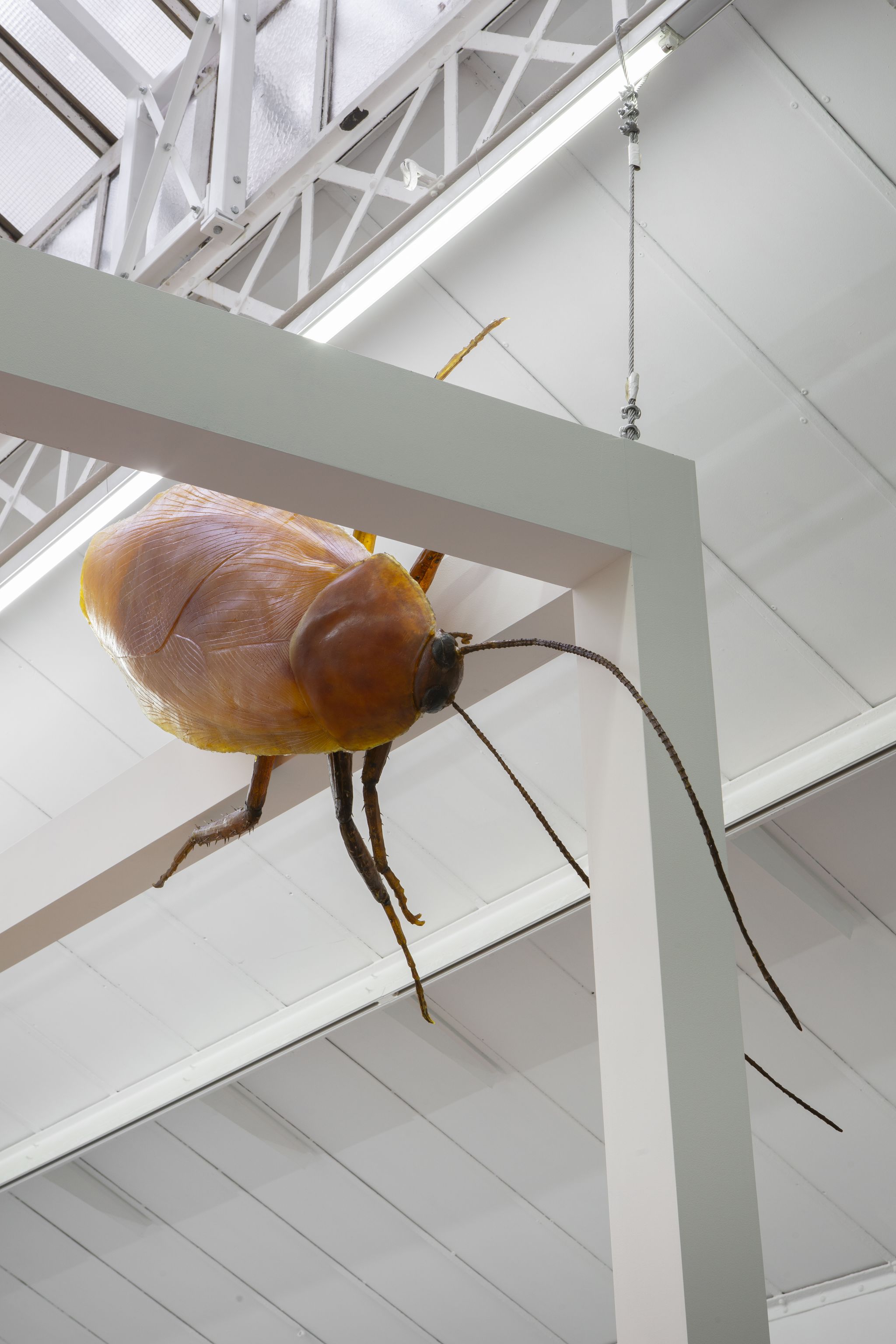
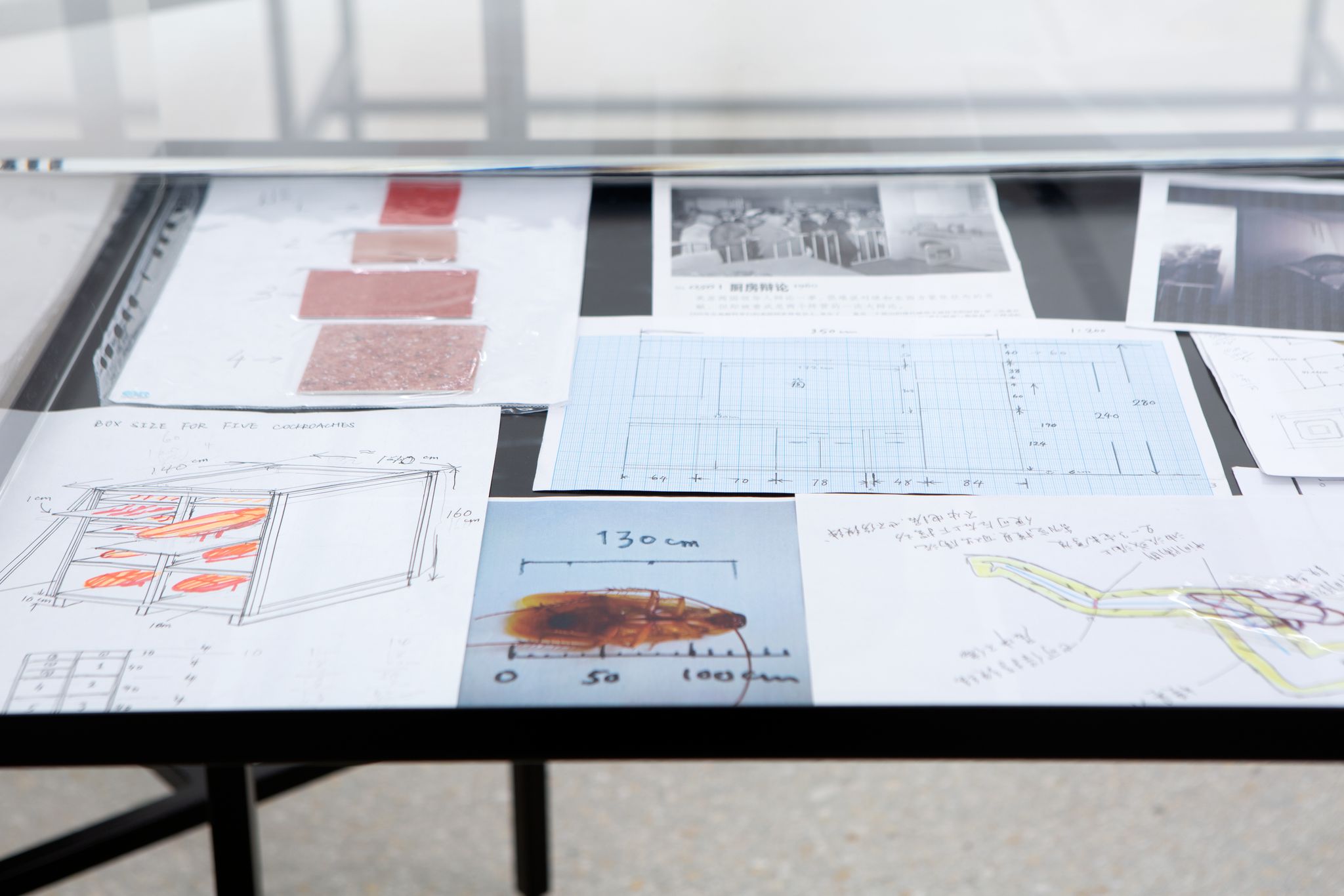
The Cold War was a baptême du feu for the entire world. It was marked by many spectacular and stupefying events leading to the brink of new World Wars – from the competition of conquering outer space to the Cuban crisis, from the construction of the Berlin Wall to the Vietnam War... However, one anecdote regarding a detail of everyday life is particularly interesting. On 24 July 1959, United States Vice President Richard Nixon and Soviet First Secretary Nikita Khrushchev were arguing about the difference between capitalism and socialism while visiting a modern American kitchen at the American National Exhibition in Moscow. This modern kitchen has since been seen as a symbol of the American Dream, which “affected” the whole world and indirectly caused the final fall of the Soviet Union. However, today, this American Dream seems to be gradually falling apart. At one point, people were even thinking the Chinese Dream would replace it. Are we stepping into a “New Age” in which “the East is rising while the West is sinking” (東昇西降)? Ironically, as Huang Yong Ping’s last work for the Garage Museum in Moscow shows, the American kitchen has taken on in many Chinese homes, but cockroaches are climbing all over it... Has the dream become a nightmare? What if a fire were to break out due to a short circuit caused by this insect? The modern kitchen, in spite of all its technological advantages, could therefore still not avoid the fate of being destroyed by fire...
There’s a baptême du feu for all of us. How could we get over it? Huang Yong Ping was always interested by the inexplicable destiny of things revealed in all sorts of divinations. He was deeply passionate about the mysterious connections between the most improbable elements that have configured the world as it is. This is exactly how he persuaded us, through his practice, to question who we are and where we are going. Appropriating and twisting Balzac’s legendary novel, he created his own La Peau de chagrin [The Wild Ass’s Skin] and incited us to face the dilemma of choosing to be successful but ending up having a terrible life. Can one fulfil one’s desires but still escape from a preordained destiny? And how? This seems to be a particularly interesting question for anyone who wants to become a real Parisien...
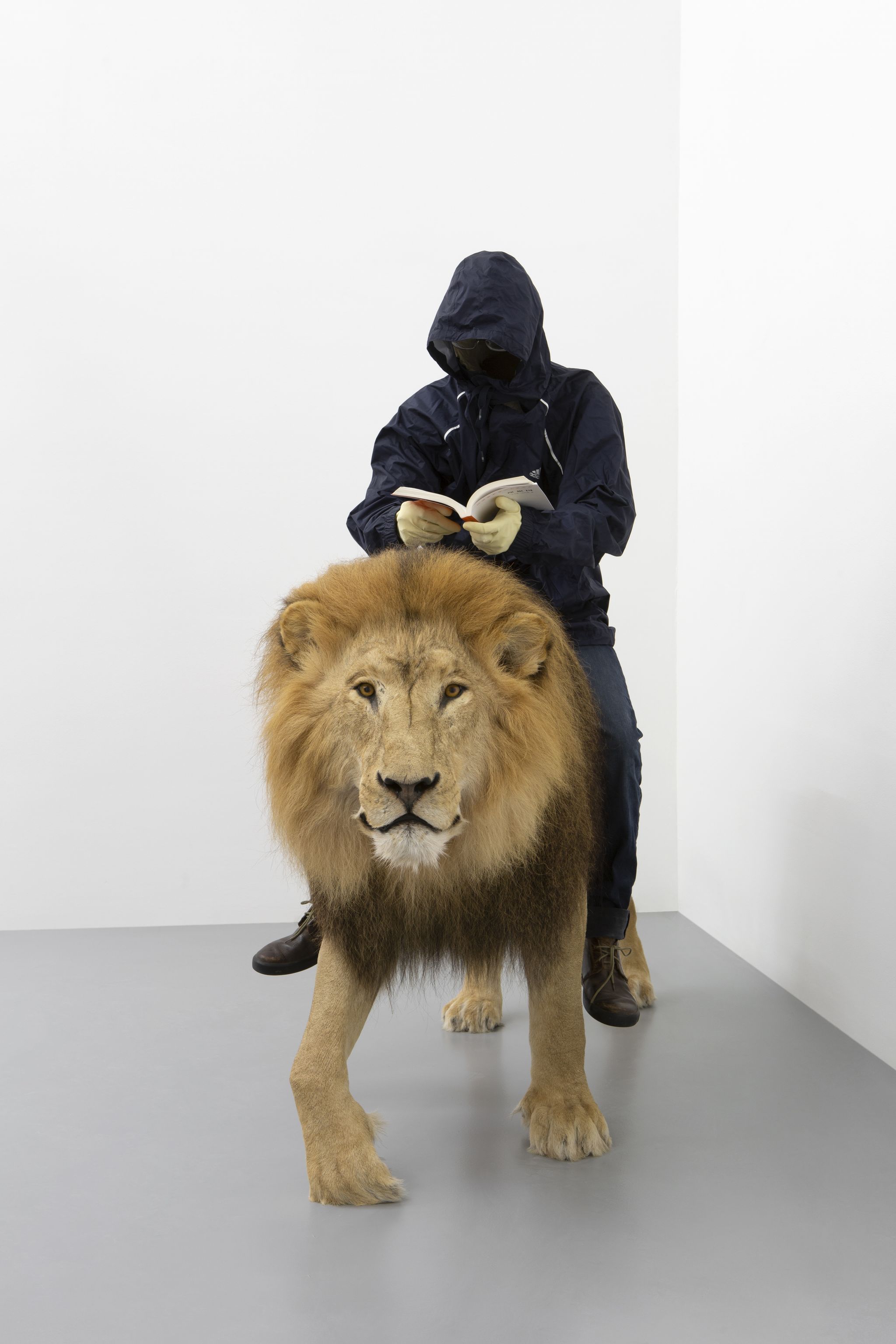
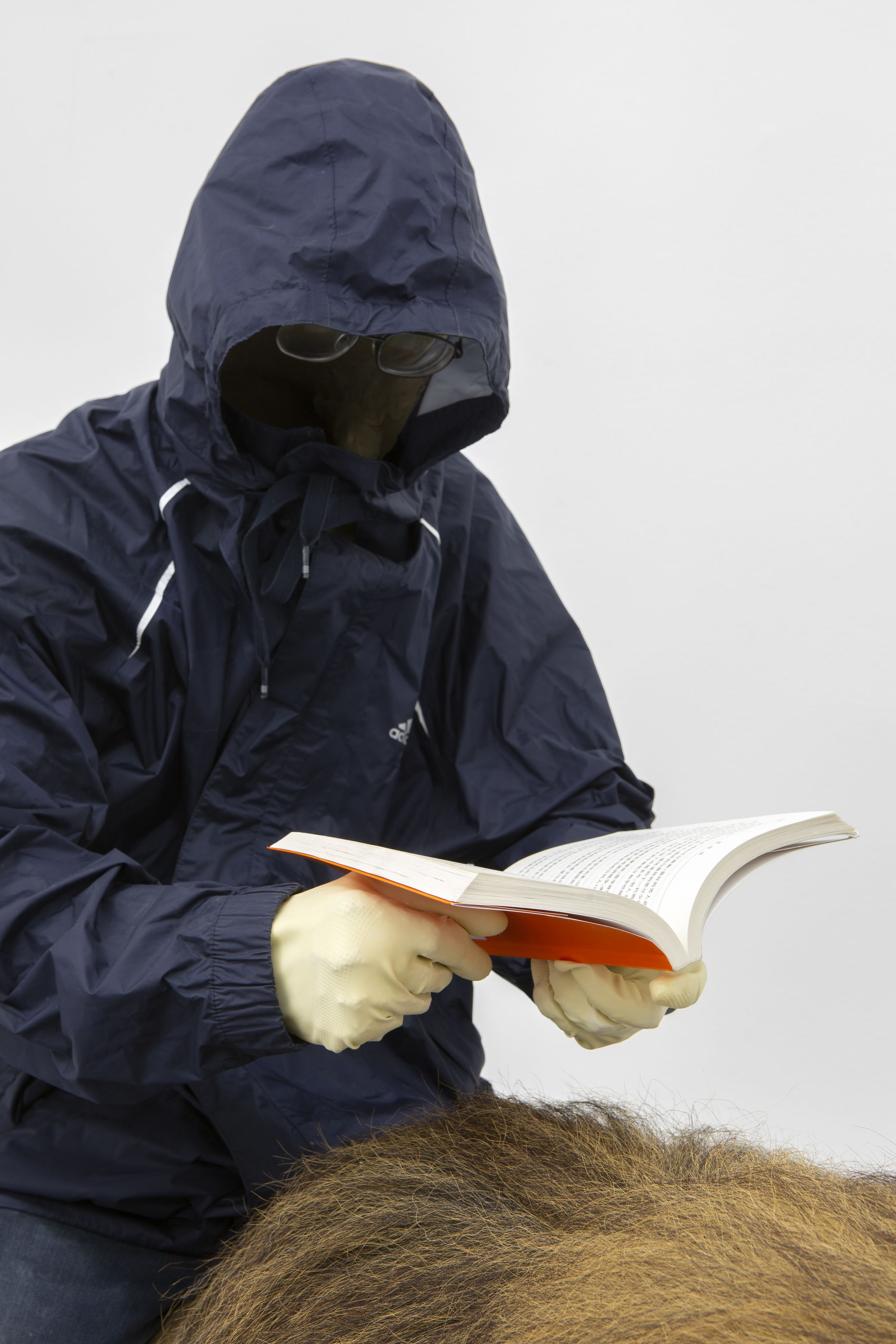
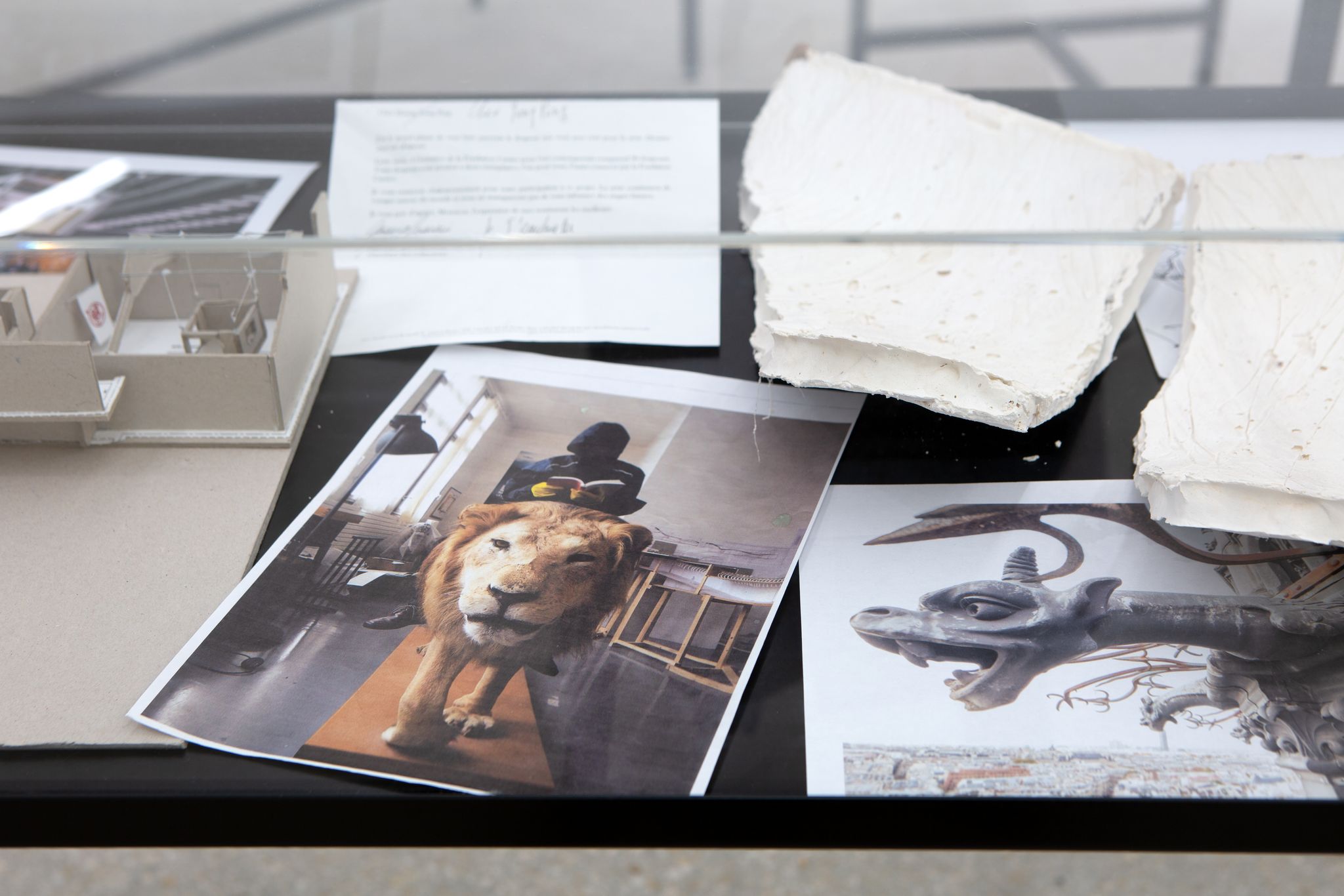
Then, as Huang Yong Ping’s last work demonstrates, one can sit on a lion and read Platon’s Republic. There may be some kind of revelation of truth there. But one can only do this by hiding one’s face. It’s in ultimate concealment that one can really enjoy the absolute freedom of “a heavenly steed soaring unconstrained across the skies (天 馬行空)”...
For the moment, the real spire of Notre-Dame is yet to be rebuilt, while more fire may come to burn the Champs- Élysées soon... Les Parisiens, encore un effort !
— Hou Hanru
Rome, 22 November 2021
"Is Paris Burning? 2019"
I chose this question as the title for our joint exhibition. Where does it come from? One day in early 2019, while I was in my studio working on my piece Samedi, Yong Ping came over and showed me a book called Is Paris Burning? [1] The book was about the history of Paris at the end of the Second World War, with Germany on the verge of defeat. Hitler had ordered that Paris be burned down as an act of retaliation but his commanding general refused to carry out the order, and Paris was saved. Throughout the past, the city has constantly been mixed up with fire. People often talk about it as an expression of passion or cruelty towards the city. When Kamel Mennour asked Yong Ping and I to make an exhibition in two of his gallery spaces, we decided to take Paris as the theme, both to mark the thirty years of our having lived in this city, and to make it a part of our respective bodies of work. We decided to start out with a little piece of its history, an anecdote from its past, to tell the story of this connection.
"Is Paris Burning? 2019" is also the continuation of a dialogue between Yong Ping and myself, which began in the form of a joint exhibition at Tang Contemporary Art in Hong Kong in late 2017, and which was called "Hong Kong Foot: Huang Yong Ping & Shen Yuan". [2] I feel I should briefly describe this exhibition in order to show how the two events are connected. Yong Ping made two pieces for the exhibition, one of which was Les Consoles de Jeu Souveraines. This is what he wrote about the piece:
"This work, which is based on a merry-go-round, is made of two disks revolving in opposite directions at two different heights. On the larger disk are seven objects: a headless white horse, a structure in the shape of a deer, a steel model of an aircraft carrier, a paper tiger, a toy in the shape of a tiger, a larger-than-life- sized anatomical model of a cricket, and an aluminum frog. The objects are both jointly and independently allusive: the headless white horse is tattooed with a Napoleonic symbol, thus evoking the emperor’s mount; the horse and the deer play off one another in an allusion to the Chinese expression ‘to call a deer a horse’, [3] illustrating the one who holds absolute power; the aircraft carrier is a renovated war machine and an ostensible demonstration of power in contradiction with its initial role as a tourist attraction; the paper tiger appears with its derisive undertone in respect to imperialism [4] and the toy Tipu’s Tiger [5] symbolises the curses rained down on the British East India Company by Tipu Sahab, the sultan of Mysore; the word play between the word for cricket and ‘yellow peril’ [6] plays with the notion that both are of countless number and devour everything in their path; and finally the frog, which in French can be a raine, and thus a part of souve-raines, marking out its territory with its croak. Throughout, what is at play are notions of ‘sovereignty’, ‘territory’, ‘possession’, and ‘homogenisation’, as well as ‘organisation’. The homogeneity in question here is not just human (racial) homogenisation but also that of the earth (claims made to territories and borders) and above all that implied by our sovereignty over the animals that inhabit it. This process of homogenisation is alluded to in the symbolic unity of the Indian tigers and the local population against the heterogeneity embodied by the British invaders. From the other, smaller revolving disk about twenty steel models of the islands belonging to the territory of Hong Kong have been suspended, including the island of Hong Kong itself, Lantau, the Kwoloon peninsula, and many other islands of varied sizes (Hong Kong in fact includes more than two hundred islands). These pieces are caught in a balancing act, and another island would mean another weight in need of counterbalancing. Here we are dealing with Hobbes’ Leviathan, with the notion of the giant, the State, of monsters and animals, all of them mixed together in a ‘sovereignty machine’ representing the soul."
Wax Seal, Yong Ping’s second piece, is a watercolour on a long roll of paper that can be thought of as a written pendant to Les Consoles de Jeu Souveraines. At stake here are the relations between the notions of contract, law, treaty, mandatory, signature, and seal. H.K/La Peau de chagrin, his third piece, draws its inspiration from Honoré de Balzac’s novel, in which a magic ass’s skin shrinks each time its owner makes a wish. Yong Ping’s artwork consists of a stretched donkey skin on which a slightly modified sentence from the novel has been engraved in Arabic, with the word ‘Hong Kong’ added to it:
"Hong Kong—Possessing me, you will possess all things. But my life shall be thine, for God has so willed it. Wish, and thy wishes shall be fulfilled. But measure thy desires, according to the life that is in thee. This is thy life, with each wish, I must shrink even as thy own days. Wilt thou have me? Take me. God will harken unto thee."
Like the ass’s skin in the story, the piece suggests that our days, our human desires, infringe upon various freedoms, causing them to shrink.
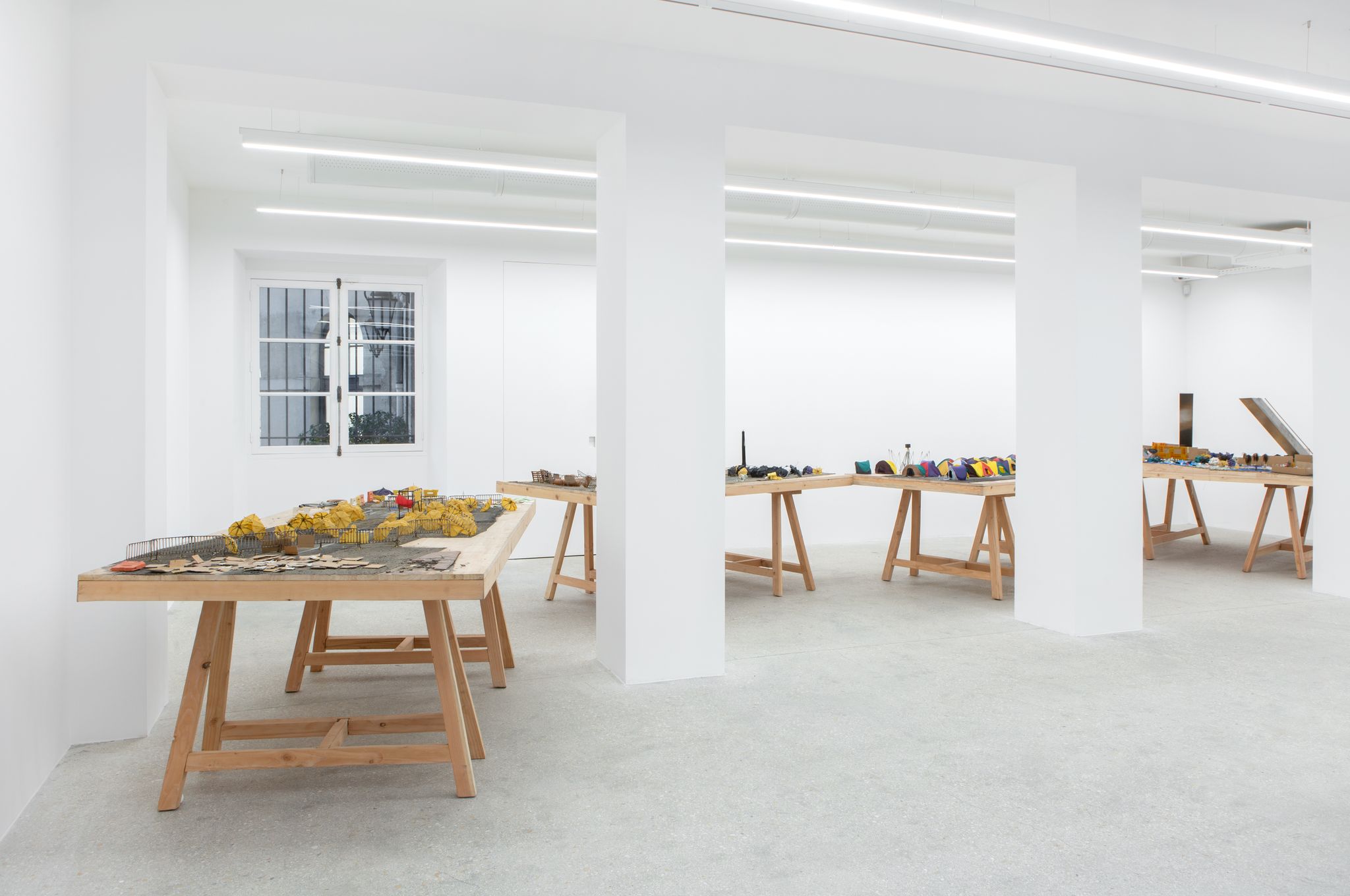
The piece that I showed for the exhibition "Hong Kong Foot" is called Yellow Umbrella/Parasol. I covered four workstations with little models. The yellow umbrella is a reference to the student movement of that name in Hong Kong that emerged in 2014. The parasol is a reference to the domestic workers from the Philippines who regularly get together in public spaces on Sundays. I draw a parallel between two types of gathering, one of which is illegal, the other legal.
From different angles and each in our own way, Yong Ping and I illustrated our thoughts about this unusual territory that is Hong Kong, taking in issues to do with colonisation, problems of sovereignty and freedom, and the Occupy Central movement. His approach was historical, whereas I tried to make connections from fragments and details of everyday life. But we were both infected with Hong Kong Foot.
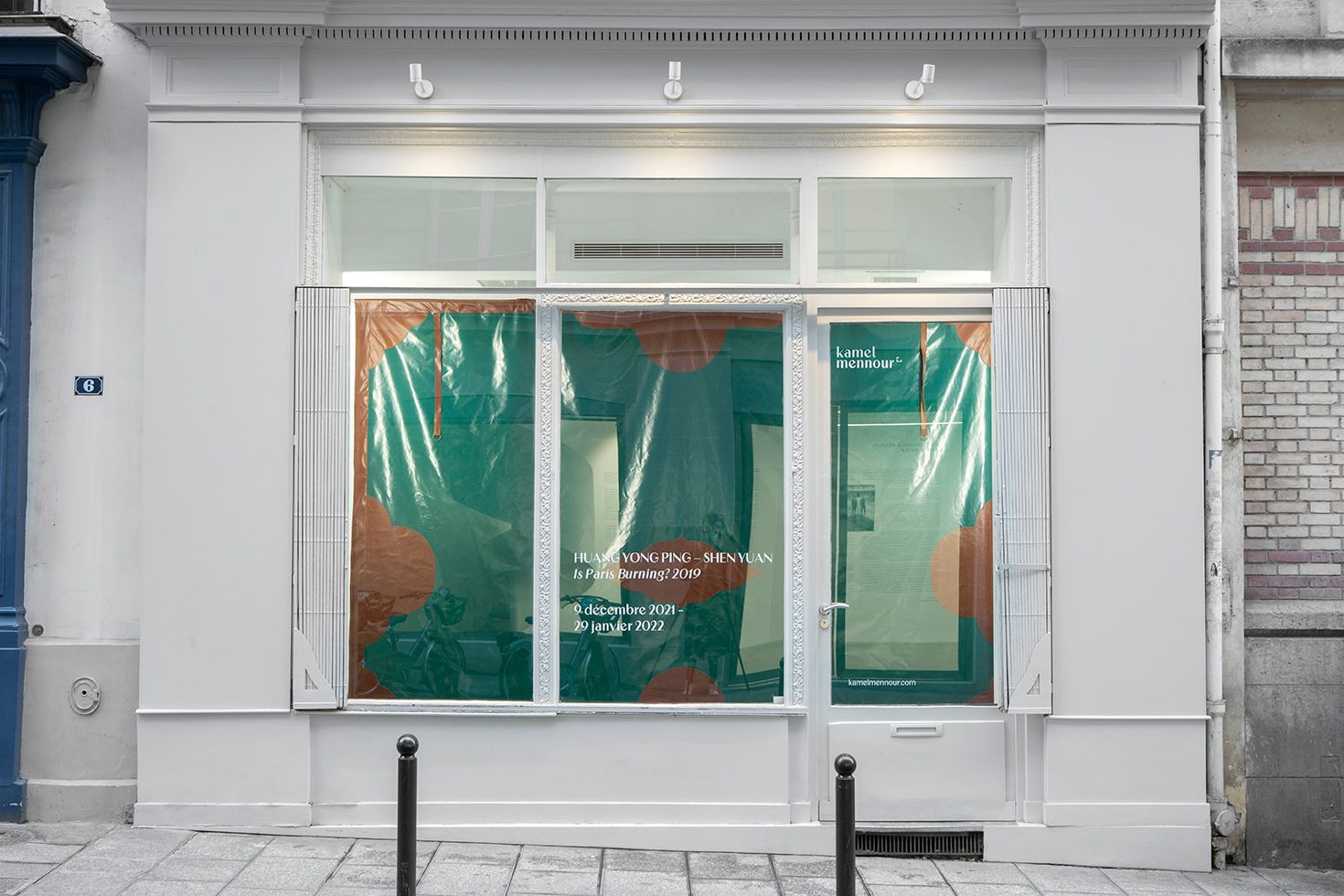
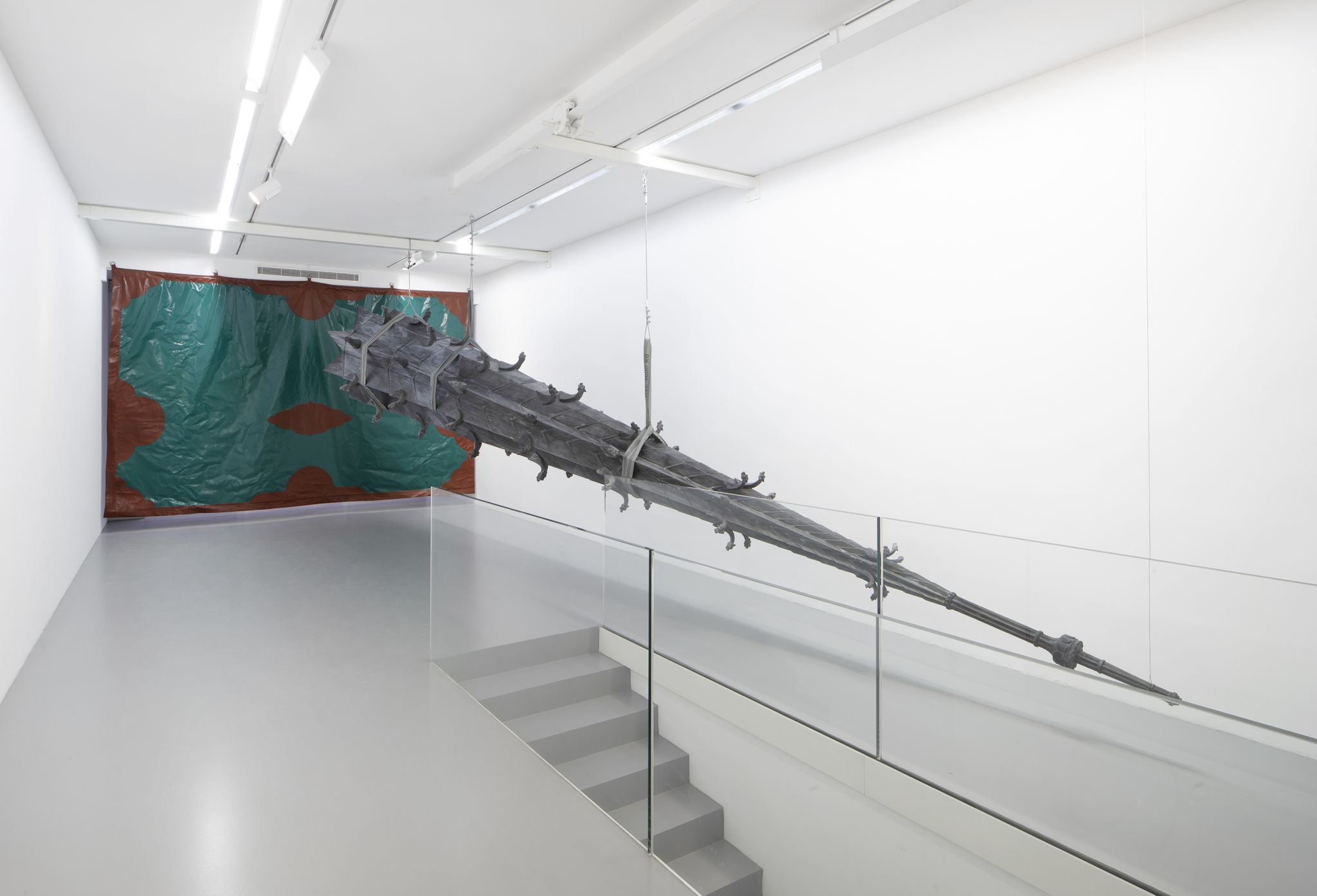
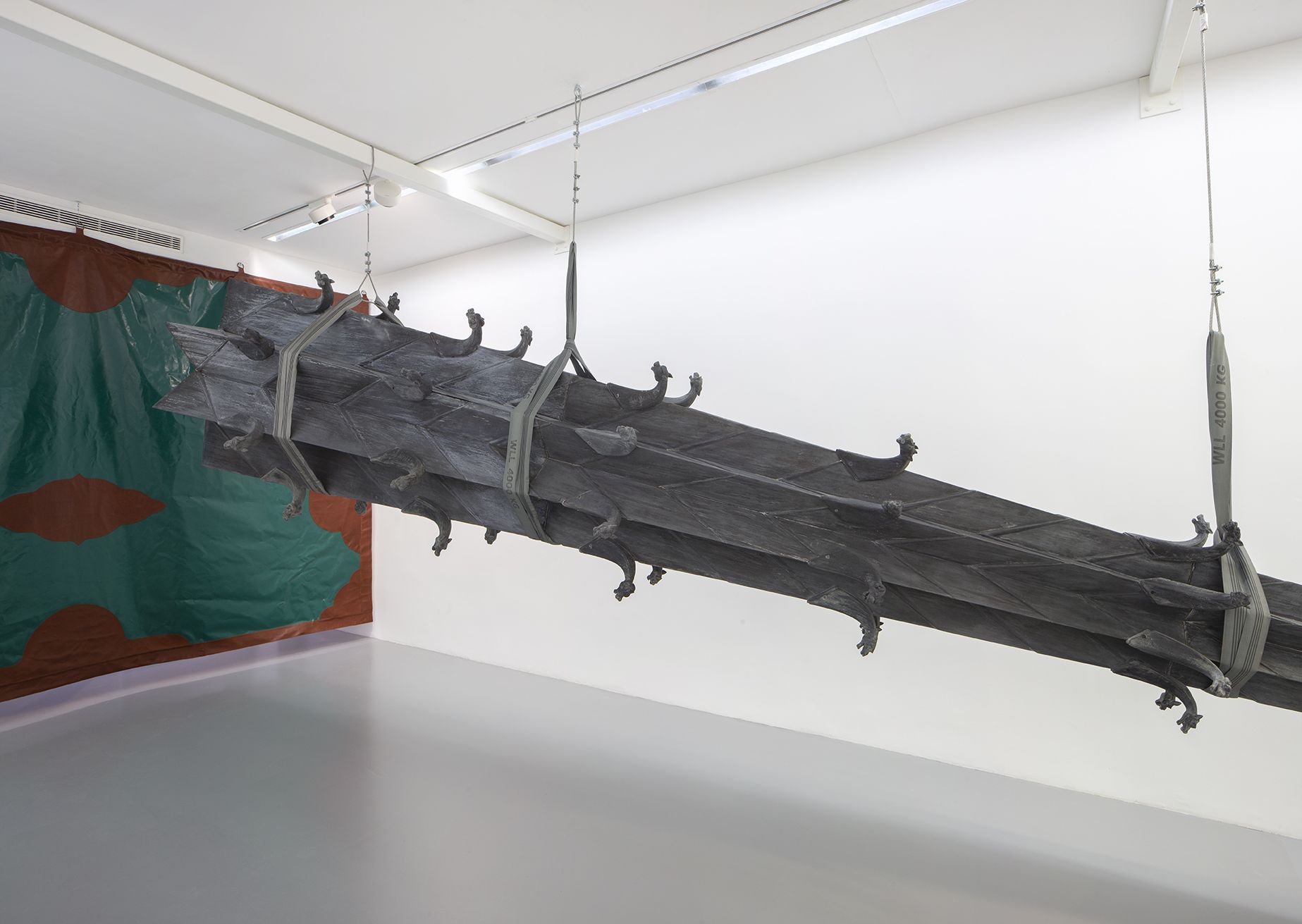
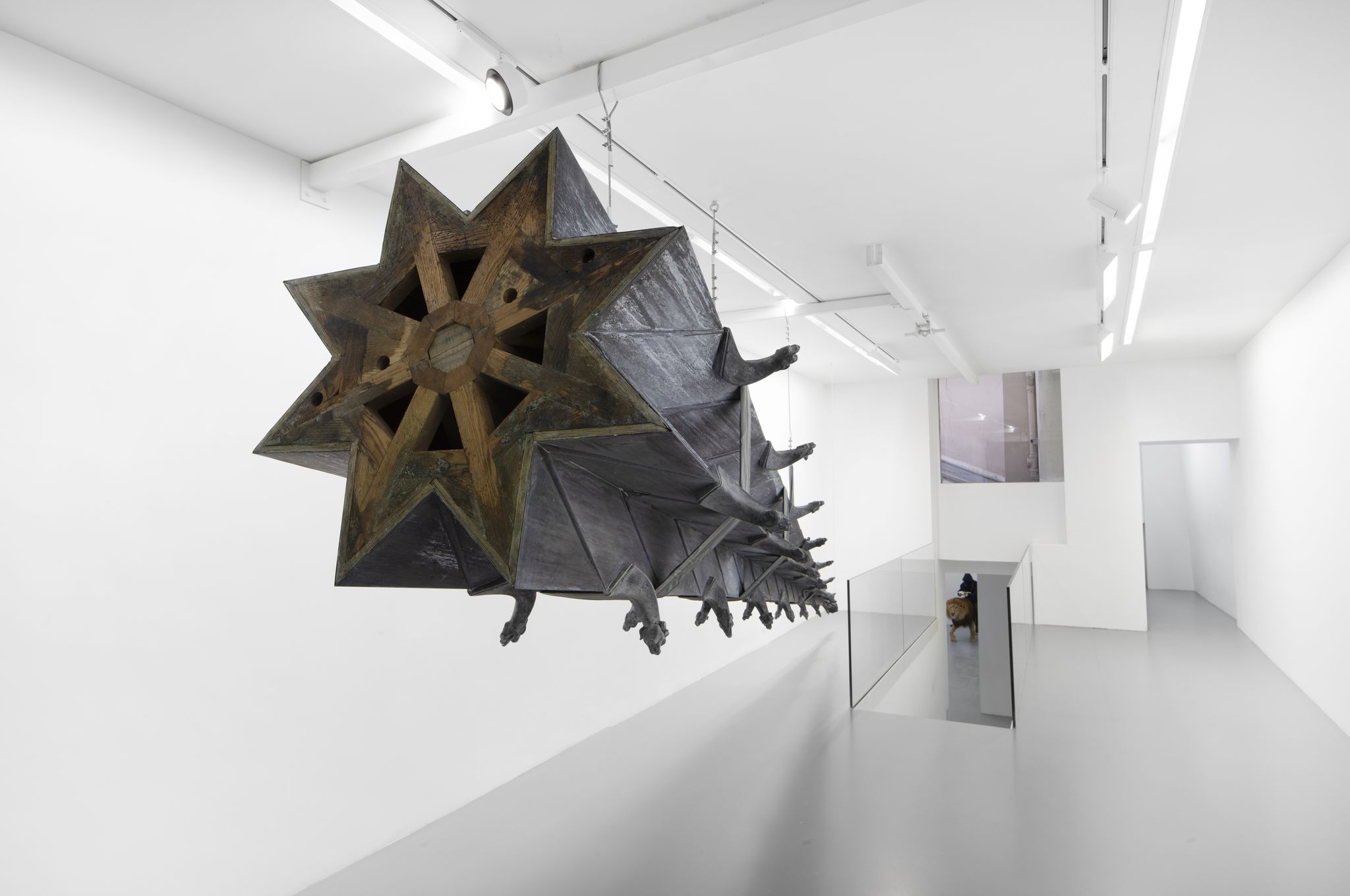
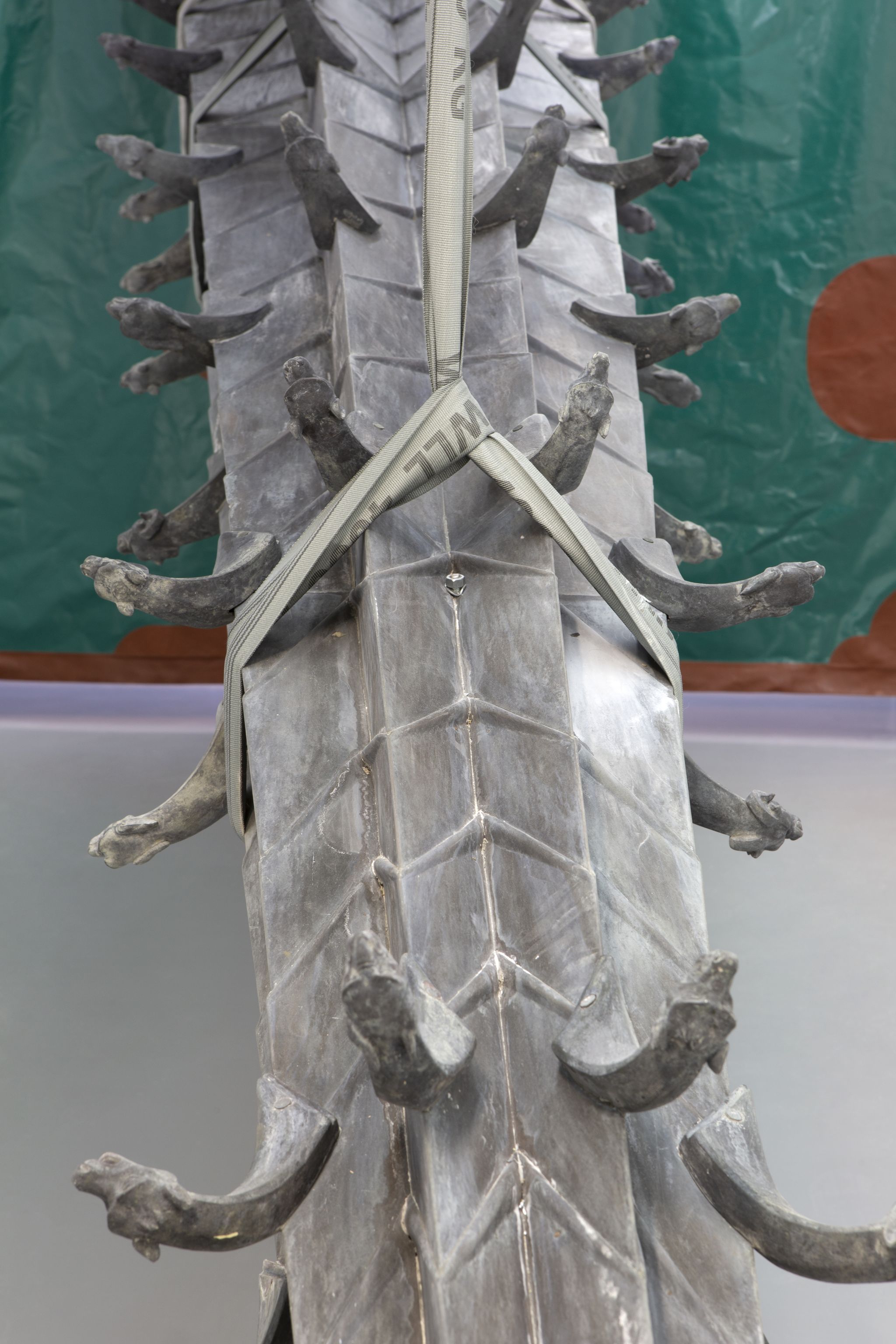
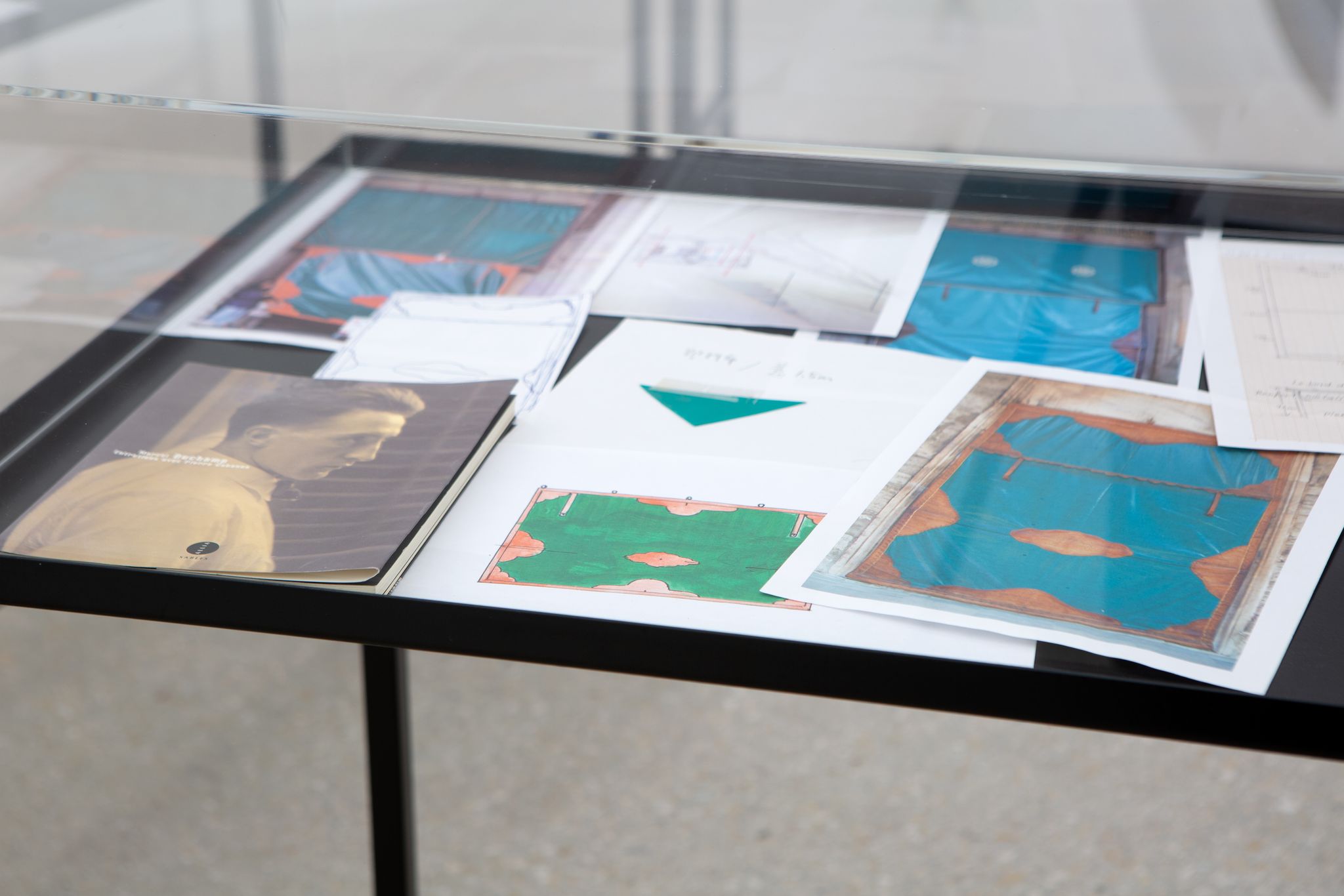
Our joint exhibition at kamel mennour gallery is entitled "Is Paris Burning? 2019". The reference to 2019 is both because this was the year we thought about the project together, and because it was the year that the fire- related events evoked in the exhibition took place. These current events crystalised in time, but their meanings are not locked in the past. Even if the dialogue between Yong Ping and I can only happen now through our work, it will never come to an end. Yong Ping chose five pieces of his for this exhibition. The first, which can be seen at the entrance to the gallery at number 6 rue du Pont de Lodi, is a big green tarpaulin, which is also the reproduction of a door hanging he saw on a mosque in Istanbul. As the visitor to the exhibition lifts the edge of the tarpaulin to enter the gallery, she is met with a feeling of displacement and disorientation. She is immediately faced with the next piece, a reproduction of the spire of Notre-Dame de Paris which was destroyed in the fire that raged through the cathedral from the 15th to the 16th of April 2019. The eight-metre-long spire is suspended from the ceiling like a sword, pointing towards the stairwell leading down to the next room. Here the key work of the exhibition is displayed, an installation entitled American Kitchen and Chinese Cockroaches, shown for the first time in the exhibition "The Coming World: Ecology as the New Politics 2030-2100", at Garage Museum in Moscow from the 28th of June to the 1st of December 2019. Yong Ping wrote the following about this piece:
"During the American National Exhibition in Moscow in 1959, the American vice-president Richard Nixon debated with the Soviet Communist Party secretary Nikita Krushchev about American kitchens. [7] In 2006, everything changed—American kitchens became a part of everyday life in China, while Chinese cockroaches spread into American kitchens."
Yong Ping uses ‘kitchens’ to talk about the recent trade war between the US and China, as well as the new geopolitical order. The fourth piece, Chevalier du XXIe siècle empaillé, is a reproduction of Yong Ping’s body, which he had moulded in plaster in 2019. ‘He’ is sitting on a lion, reading Plato’s Republic. The last piece is a flag emblazoned with the words: Puissante est ma bouche. [8] All of the works deal with religion, with the State and political regimes, themes that interested Yong Ping in the last years of his life. To recall the debate between Nixon and Krushchev about the relative advantages and disadvantages of capitalism and communism today is profoundly significant.
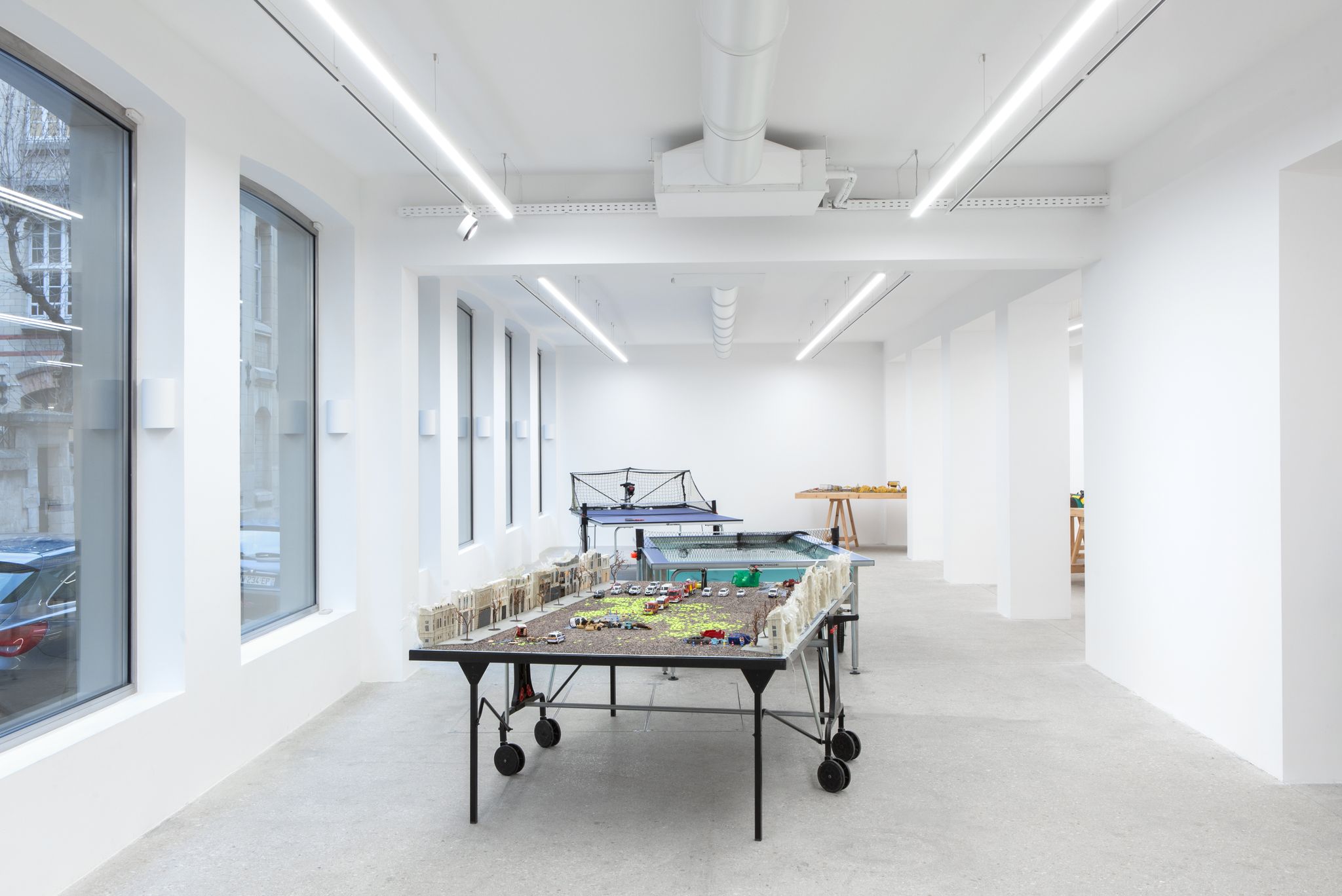
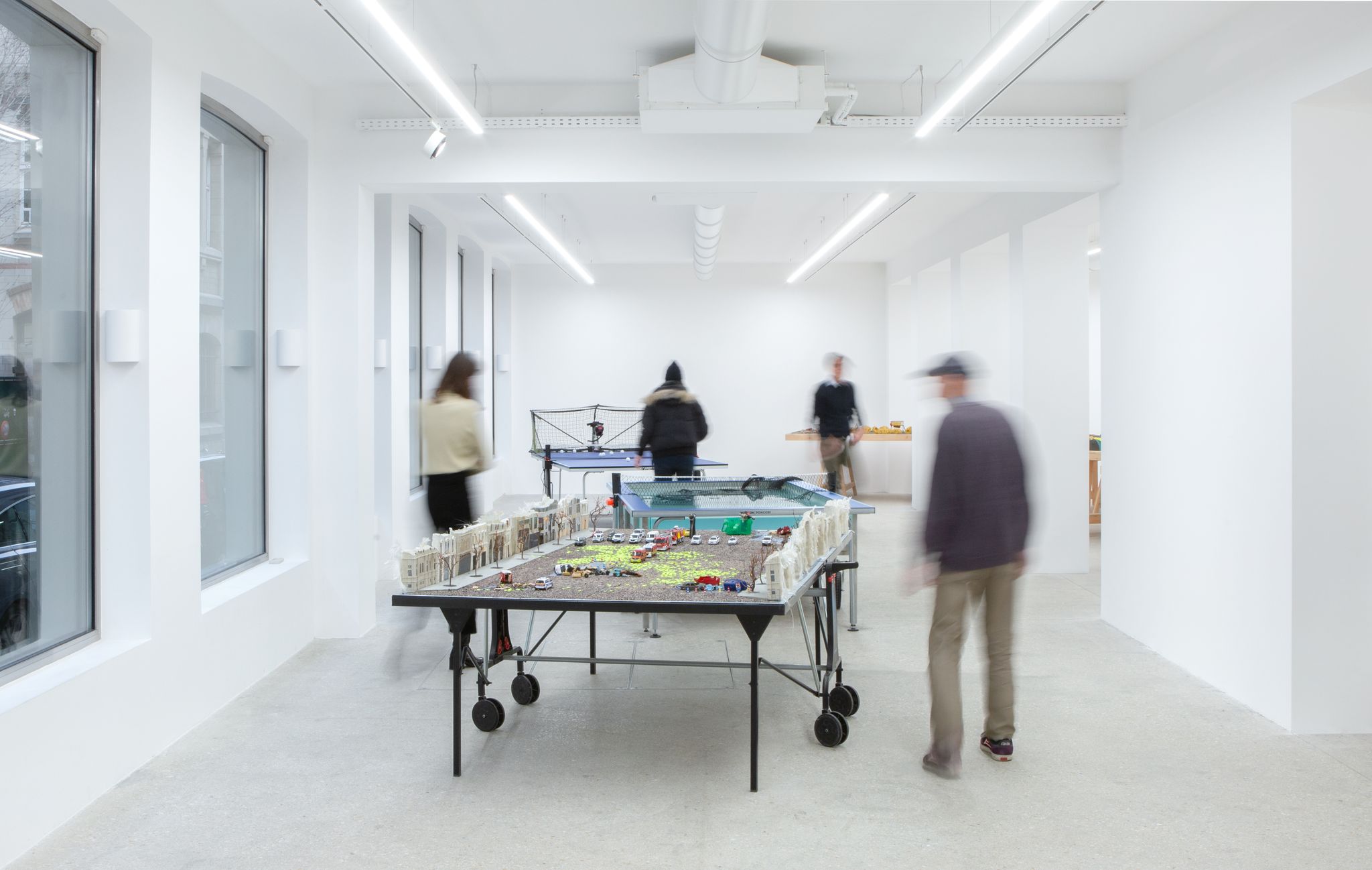
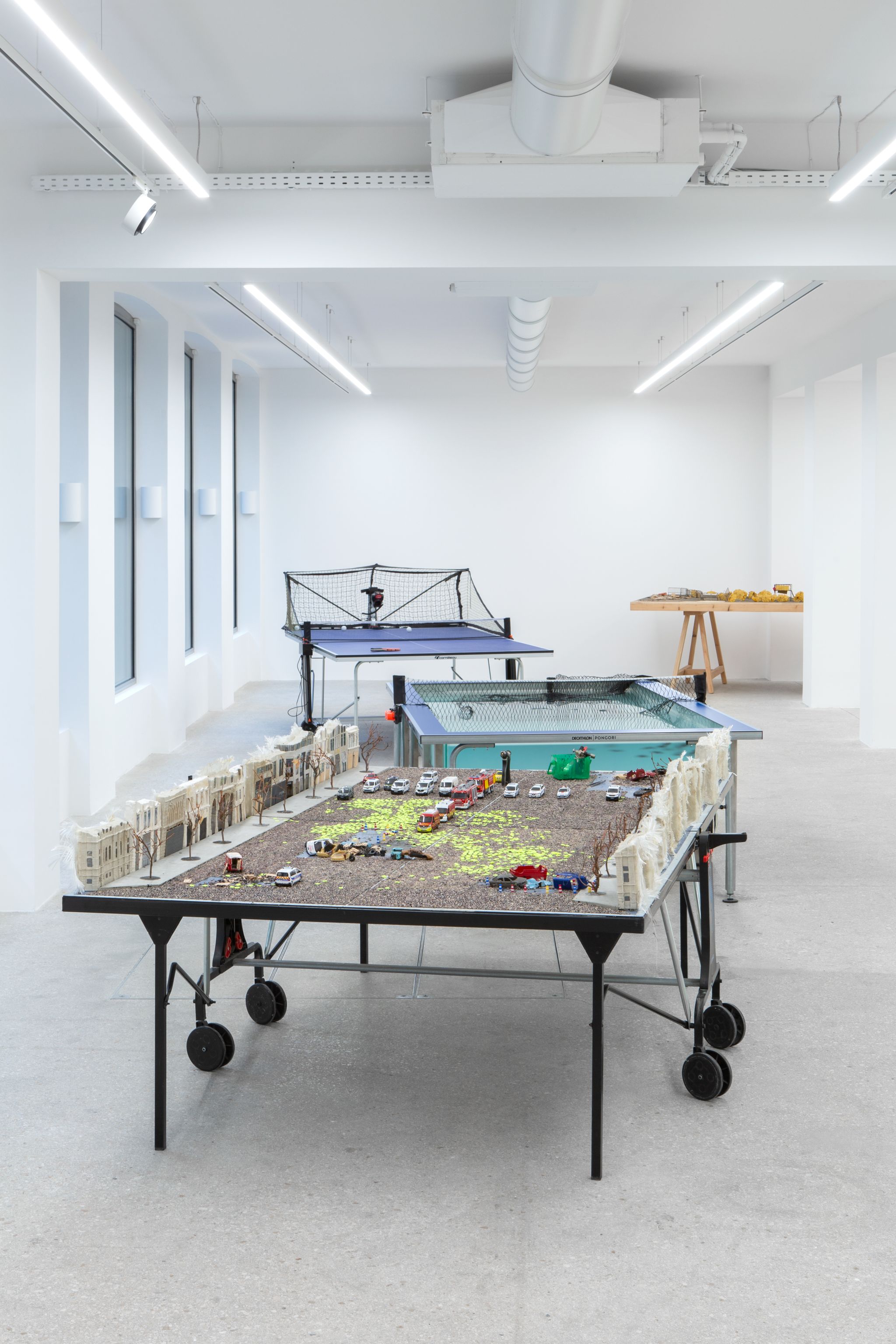
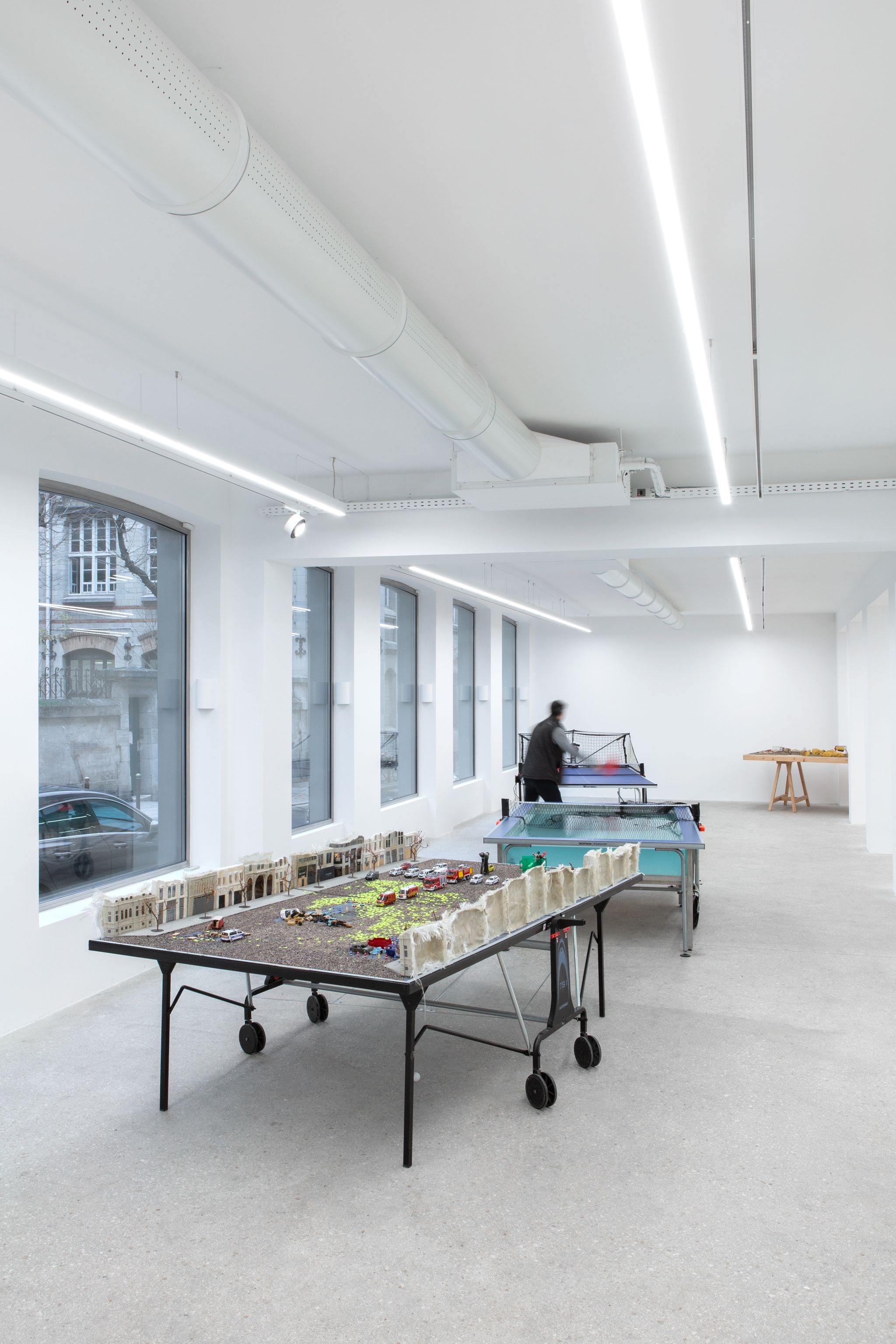
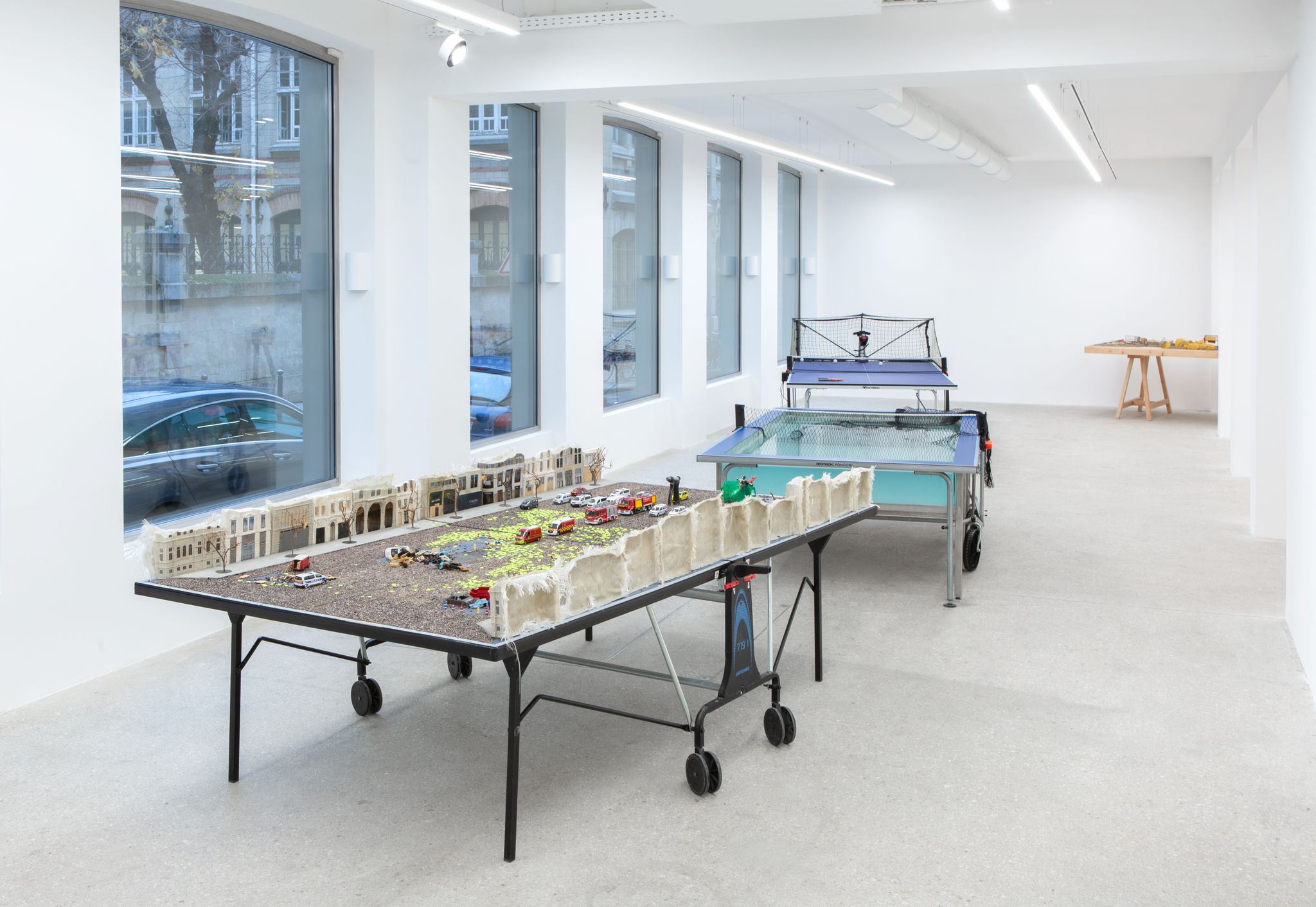
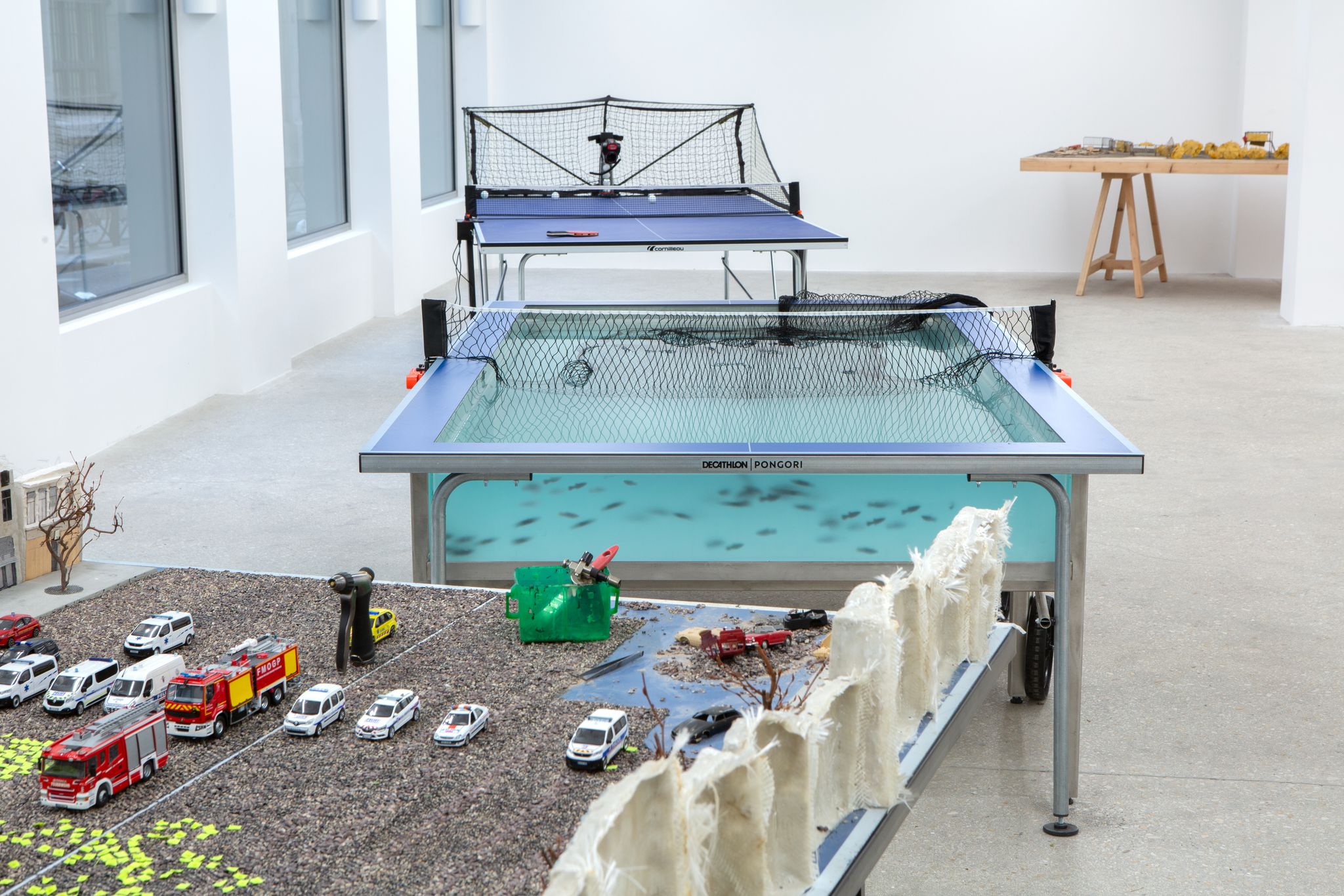
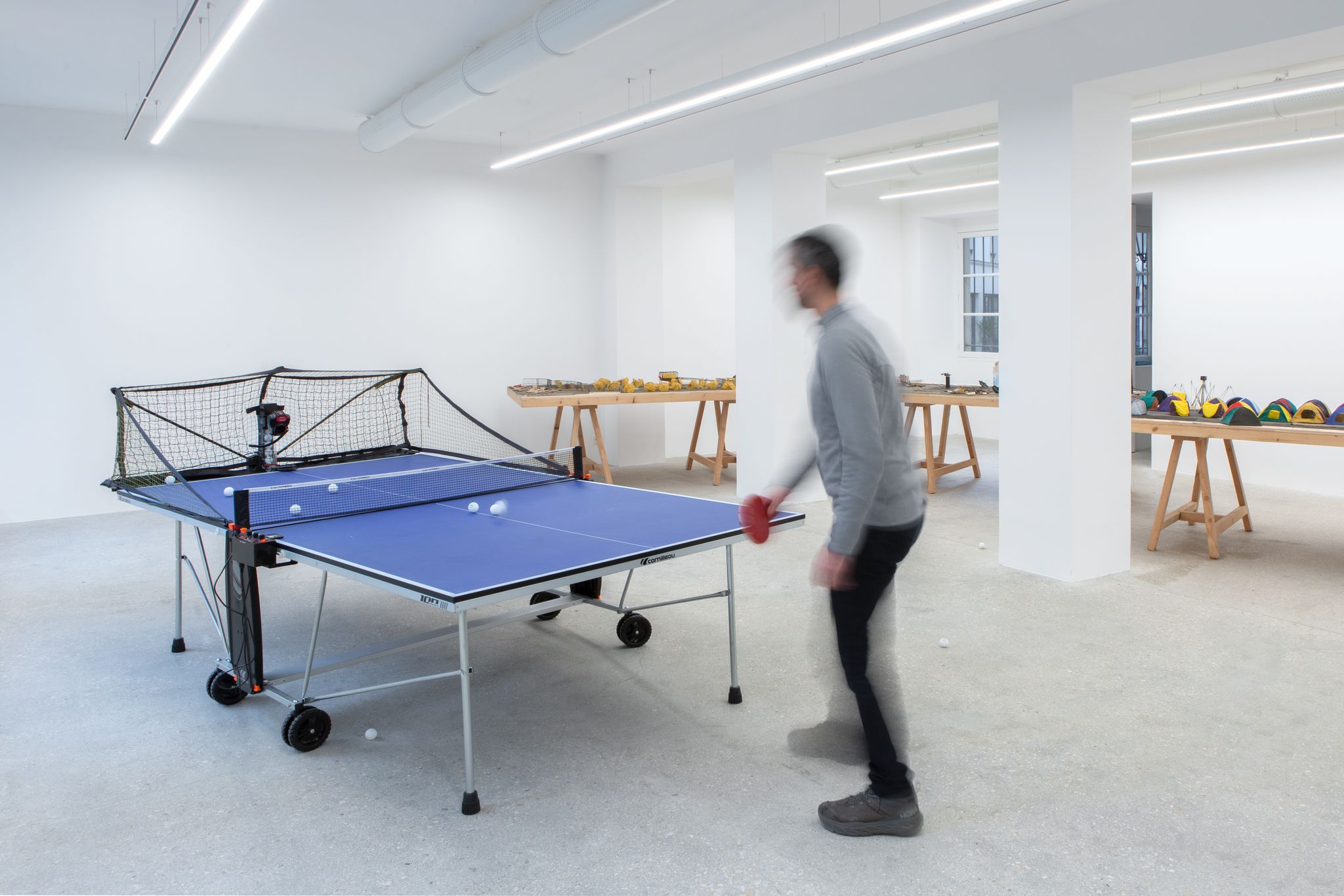
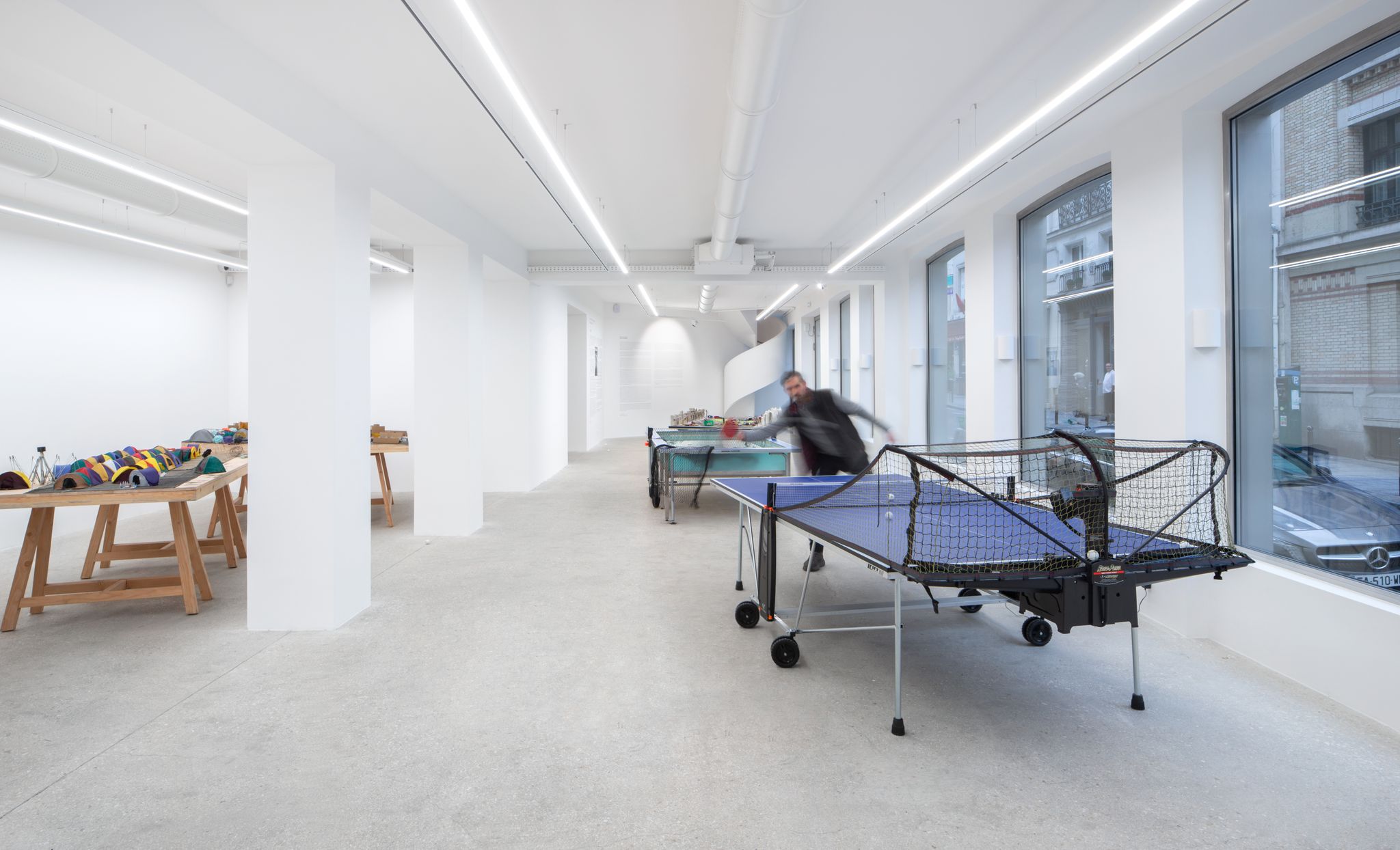
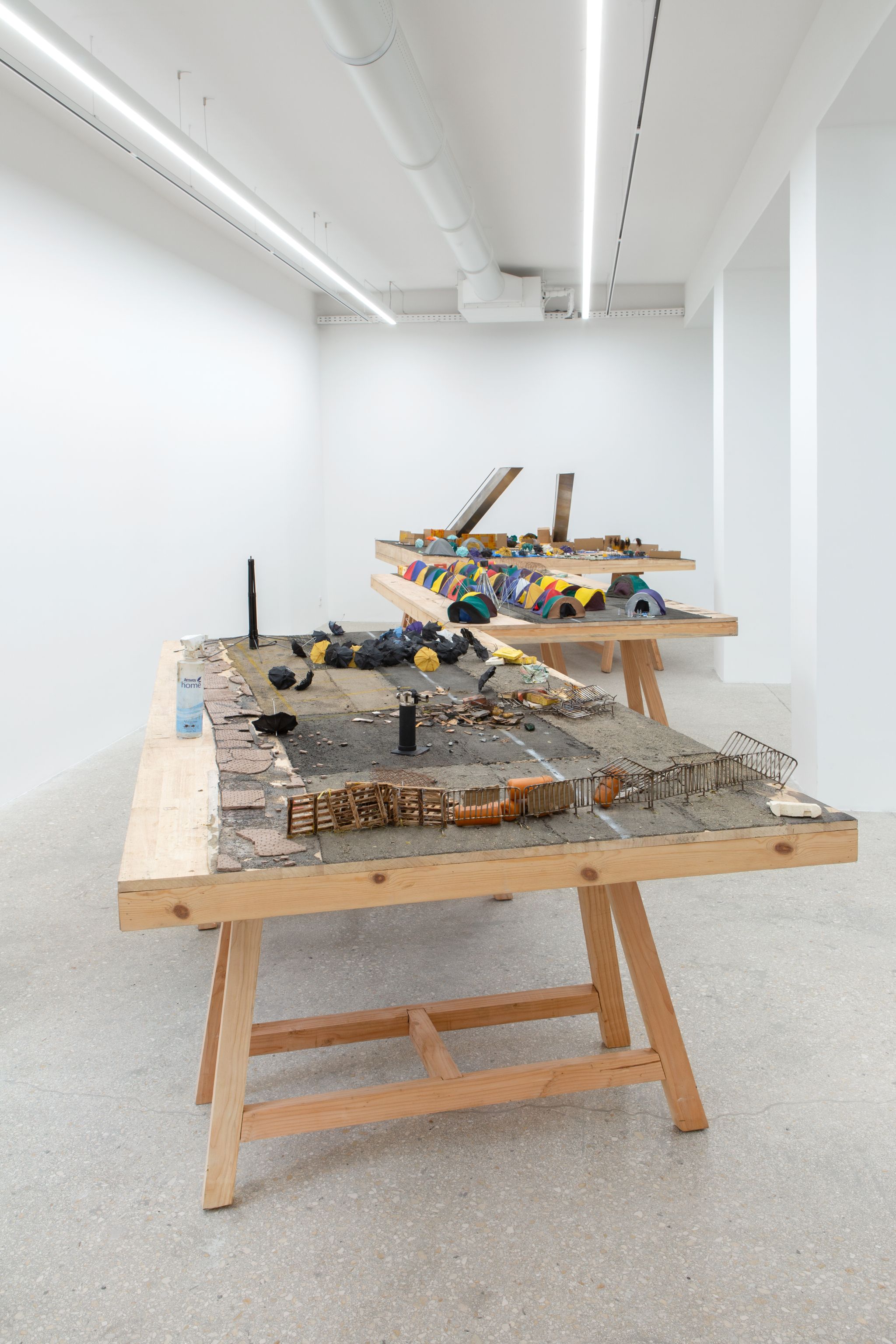
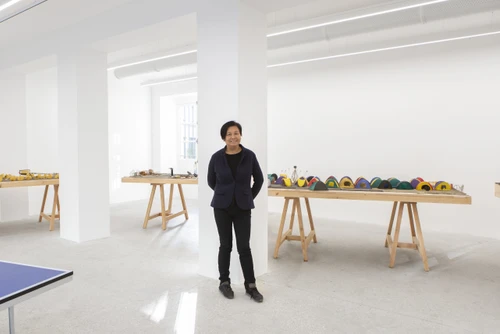
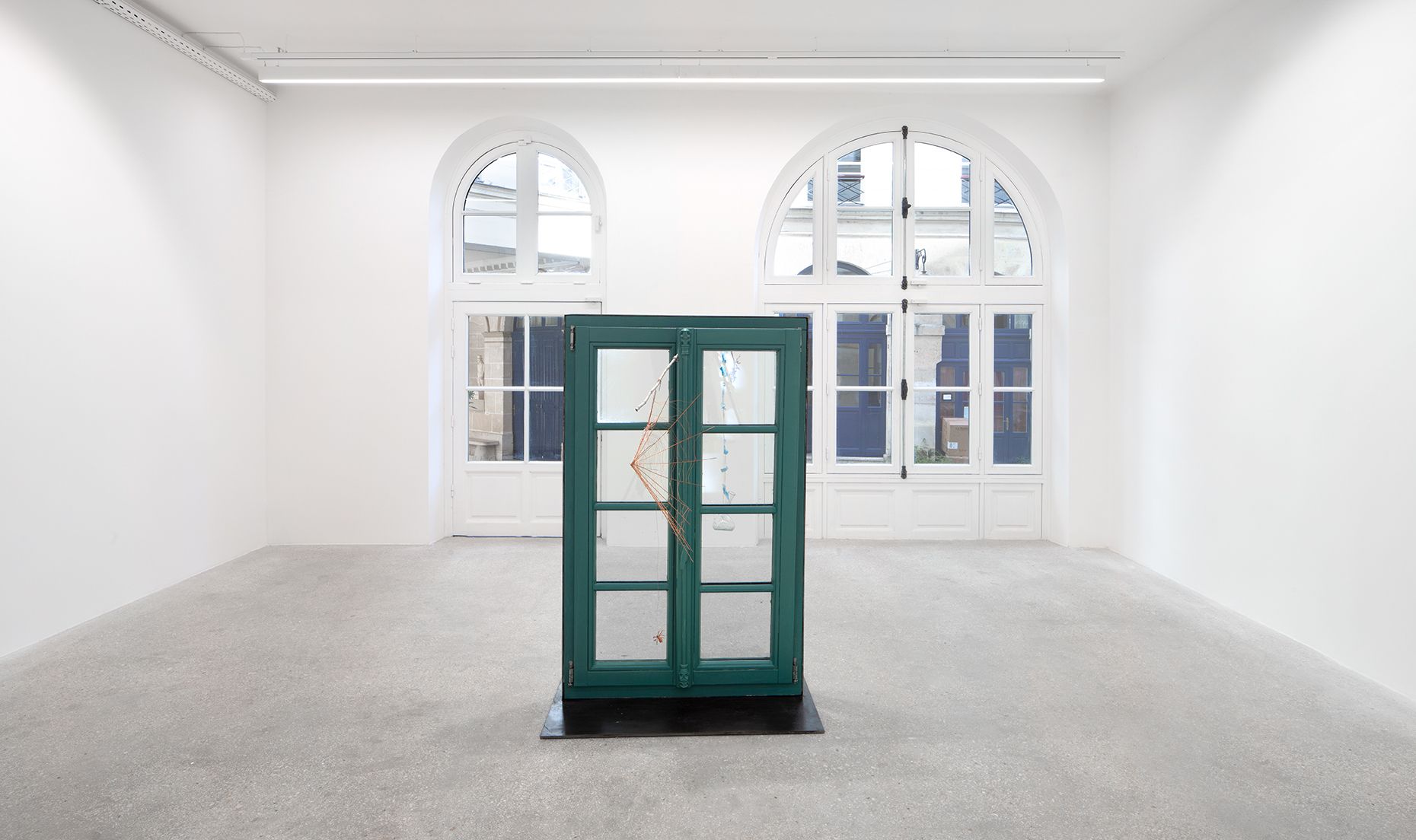
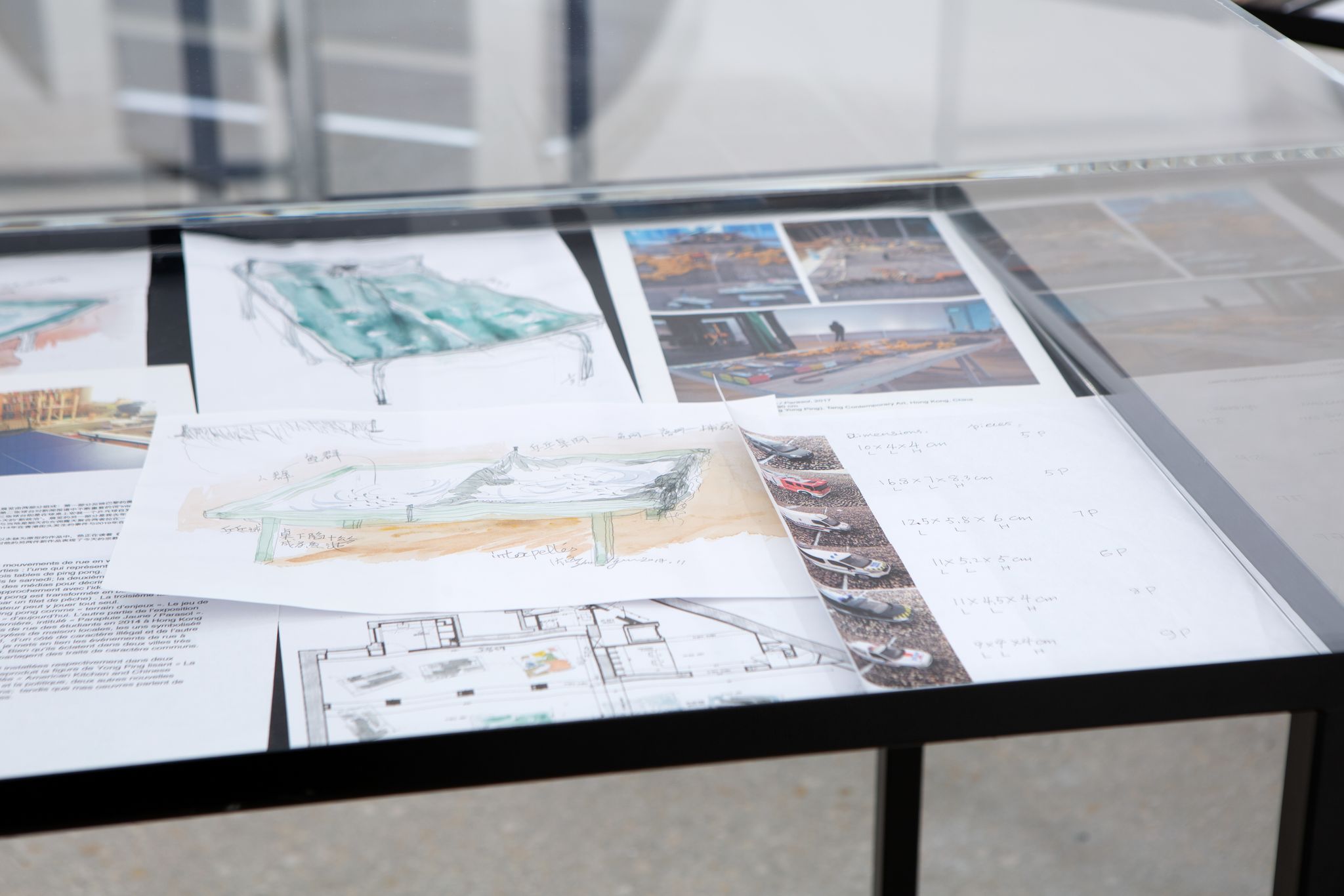
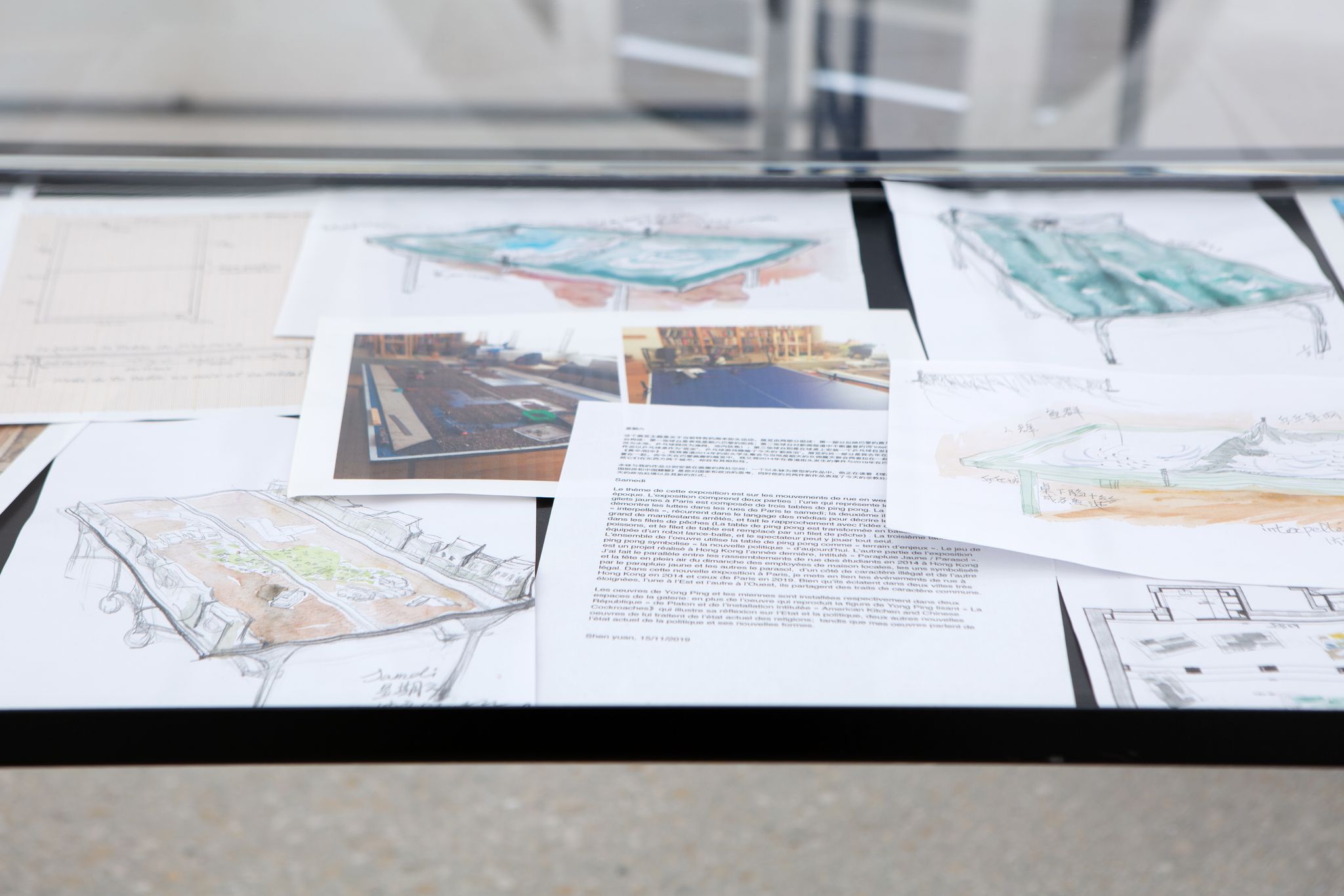
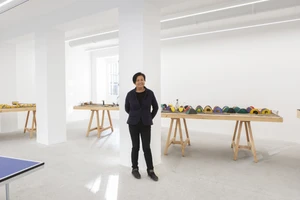
At number 5 rue du Pont de Lodi, I am showing my piece Samedi, which consists of three ping-pong tables evoking the popular uprisings that have taken place in Paris since 2018. The first table has a reconstruction of a scene from a Gilets Jaunes protest. This “scene”, a mix of fiction and reality, is presented as a model and a work in progress. It isn’t limited to the event itself and its temporality. The second table has been turned into a basin, and its net into a fishing net. Fish swim back and forth through the net. The image of fish caught in a net made me think of the term ‘interrogation’, which you always hear on TV news now. The third table is equipped with a machine for shooting ping-pong balls, which the visitors to the exhibition are invited to play with.
Standing next to each other, Yellow Umbrella/Parasol and Samedi are in a dialogue where street protests in two mutually distant territories are seen both to contrast with and echo one another. In a way, democracy is like ping-pong, it’s another kind of back-and-forth. How does a population express its burning emotions and its rage if not in petitions, complaints, and demonstrations? Fire in this case appears as the best of symbols, and situations can escalate until they catch aflame. This is why my installation has a ‘burned smell’.
2019 was an exceptional year. I remember the night that Yong Ping and I watched on TV as Notre-Dame burned, right until the last flame had been extinguished. I think this is when he had the idea to reproduce the spire, a symbol that concentrates within itself all the questions that interested him in these last years. The flames that consumed the spire rose into the sky and remained there for a long time. It was like a divine sacrifice. Still today, thinking of Paris, it’s hard to forget that fire, which makes me think that the charm of Paris and the image of fire are now inextricably intertwined.
— Shen Yuan
Paris, 17 November 2020
Special thanks for the translations of the texts: Yu Hsiao-Hwei & Evelyne Jouanno [Hou Hanru]; Axelle Blanc, Pierre-Jacques Pernuit, Sisi Yang & Hui Zhang [Shen Yuan].
—
1. COLLINS Larry, LAPIERRE Dominique, Is Paris Burning? (Chinese edition), Nanjing, Yilin Press, 2013.
2. ‘Hong Kong Foot’ was the name given by the British colonisers in the second half of the nineteenth century to a fungal foot disease they encountered for the first time in the tropical climate of Hong Kong. ‘Today, with the increasing rates of population movement and information exchange, the term “Hong Kong Foot” has taken on a new dimension—everything that has to deal with this city gets contaminated with its problems, so the territory’s “most powerful weapon” is to spread the symptoms of “Hong Kong Foot” to everything that comes into contact with it.’ (Huang Yong Ping, extract from a text accompanying the exhibition)
3. ‘To call a deer a horse’ (指鹿为马) is a Chinese expression that means to mistake the false for the true. The anecdote, which appears in Sima Quian’s Shiji (Records of the Grand Historian), written between 109 and 191, tells of the eunuch Zhao Gao who made a demonstration of his power by calling a deer a horse, maintaining this against the opinion of the emperor, and who with the backing of the court thus managed to get the monarch accused of madness and deposed.
4. The reference is to Mao Zedong’s saying, ‘All reactionaries are paper tigers’, a metaphor that has since become famous for designating what appears to be threatening but is in fact harmless.
5. The musical automaton known as Tipu’s Tiger was made for the Sultan Tipu Sahab of Mysore in 1790. The automaton, which is now kept in the Victoria and Albert Museum in London, depicts a tiger killing a British soldier.
6. In Chinese, cricket (huang) is pronounced like the colour yellow (huang). Yong Ping is referring to his work Yellow Peril (1993), for which he shut up in a container a large number of crickets (representing the people of Asia) and a few scorpions (representing the West) who killed each other over the course of the installation.
7. See the famous ‘Kitchen Debate’.
8. This is a play on words, in a reference to the documentary Qu’elle est puissante, ma patrie. When one empties out the centre of the Chinese character 国, which means ‘country/nation’, it becomes the character for mouth: 口

Featured Artists
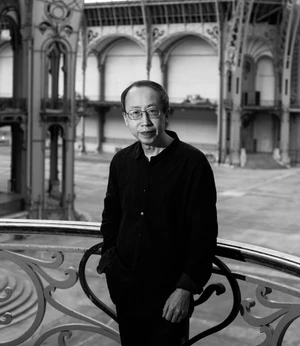
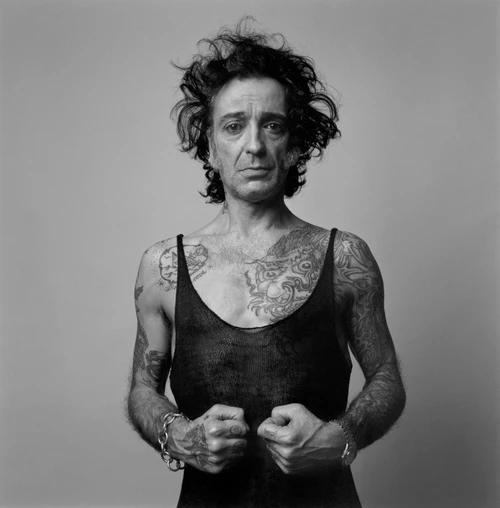
Huang Yong Ping
Lived in Paris until his death in 2019
Shen Yuan
Lives and works in Paris, France