



Christodoulos Panayiotou
Friday, 3rd of February 1525
Oct 15 - Nov 24, 2018
Mennour, 6 Rue du Pont de Lodi
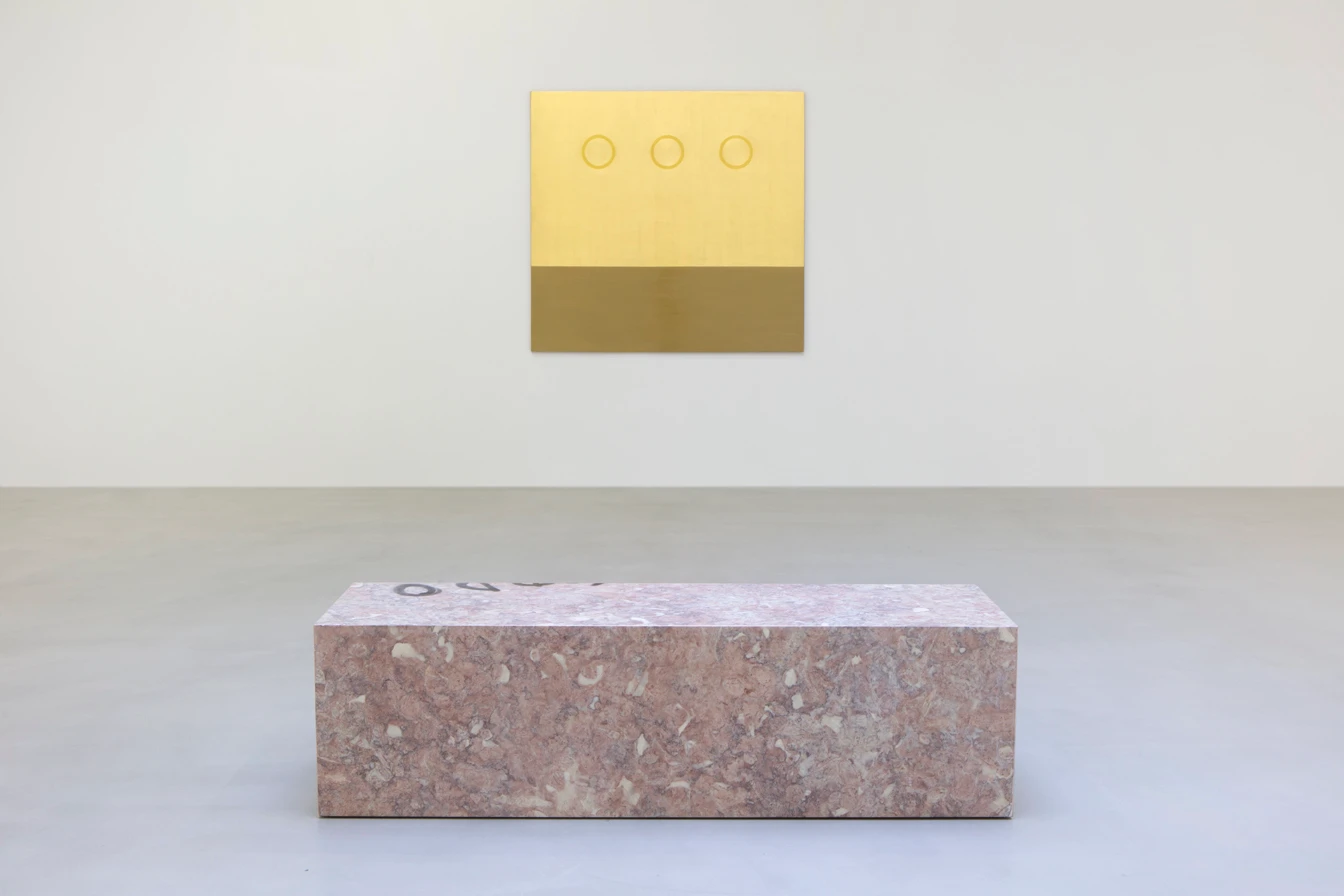
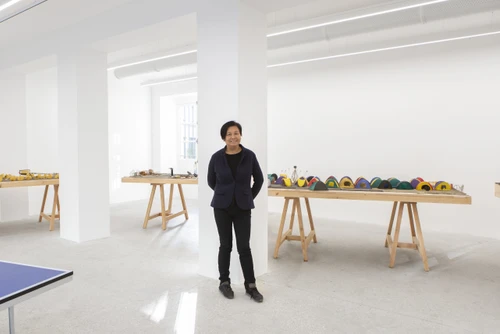
Christodoulos Panayiotou doubly withholds the material of his works both from forms that would valorise its specific qualities and attitudes that would make it exploitable, subject to the expression of an idea. This material is not a vehicle for expressing the authenticity of a form, image, or idea, but rather conveys images, forms, and ideas connected to the economic, artisanal, artistic, archaeological, and theological practices and knowledges that make use of them. The works that make up "Friday, 3rd of February 1525" together evoke concealed representations, forming a dynamic repertory of gestures of erosion, solidification, covering over, and diluting, all of which affirm the absence inherent to the emergence of the image.
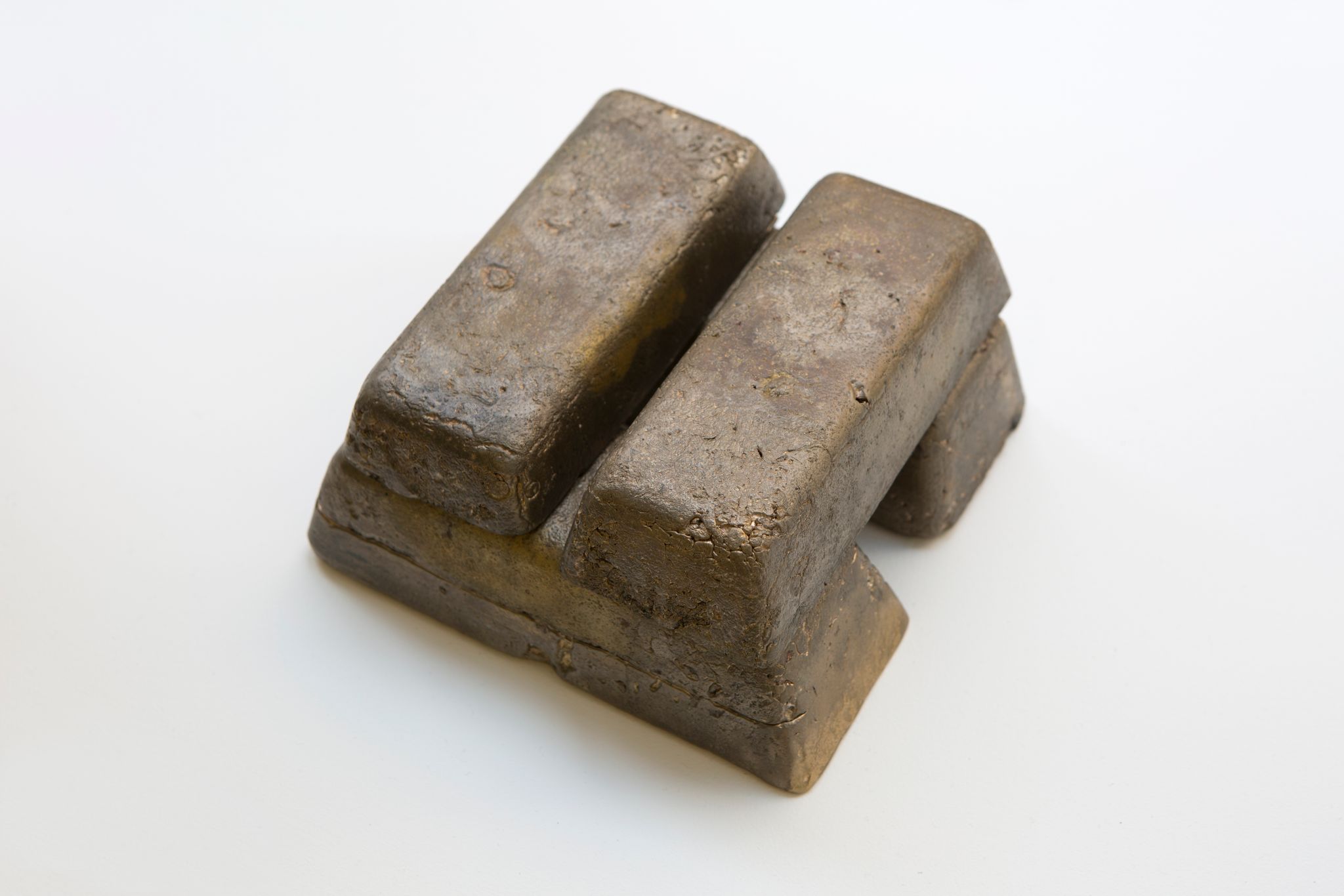
The ingots placed at the entrance to the exhibition have been made with melted down euro coins taken from "Light Up Caravaggio", an apparatus installed in the Vatican basilica Santa Maria Del Popolo designed for illuminating The Conversion of Saint Paul, a scene of bedazzlement. With this apparatus, which adds to the saintly conversion that of money into electricity, the eternal light is placed in competition with its worldly counterpart, blinding the artwork for a timed interval. At once an image of gold ingots and a fraudulent object, with its seductive, muddy colour, the ingots materialise this dubious supplement of light of which currency has made itself the agent.
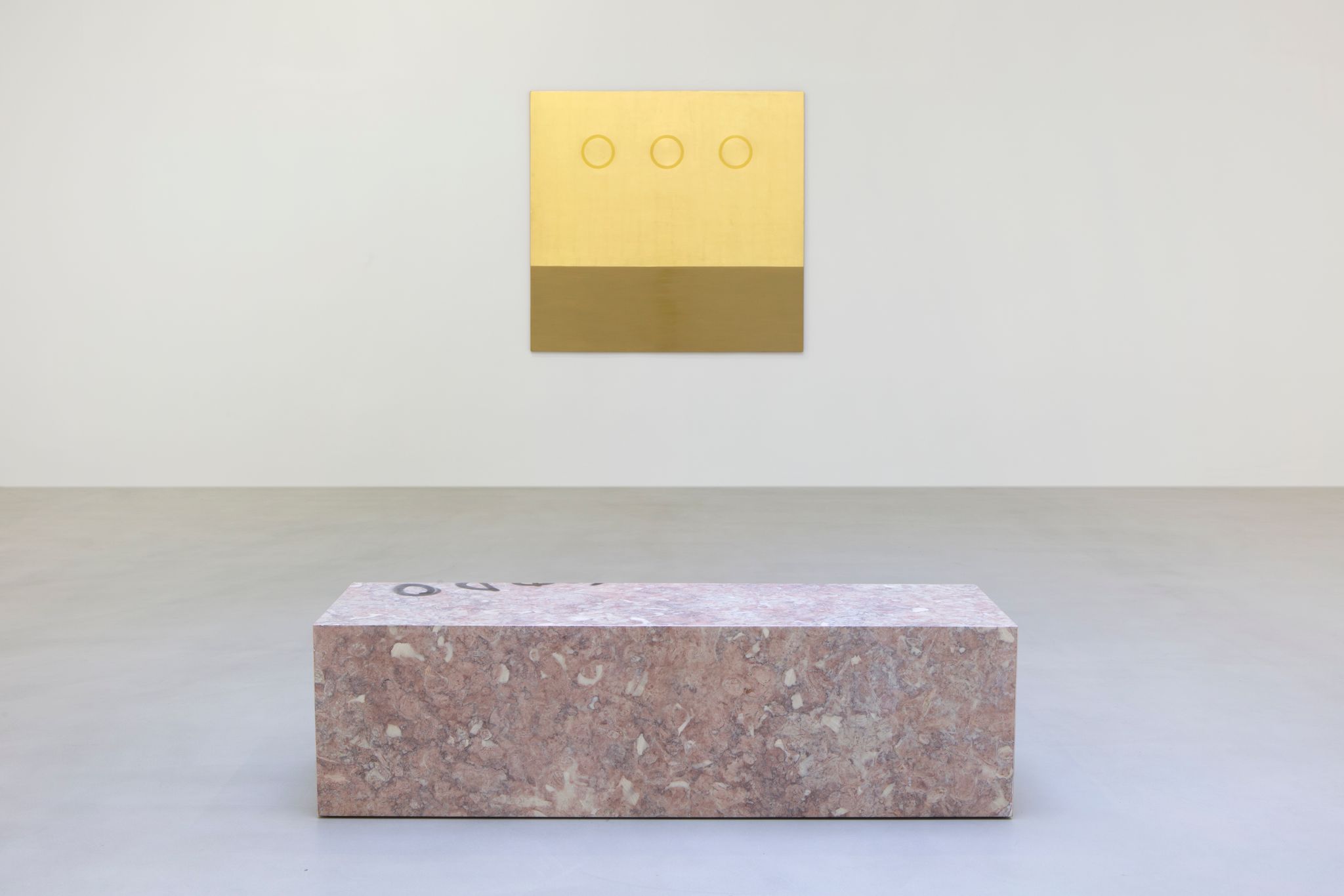
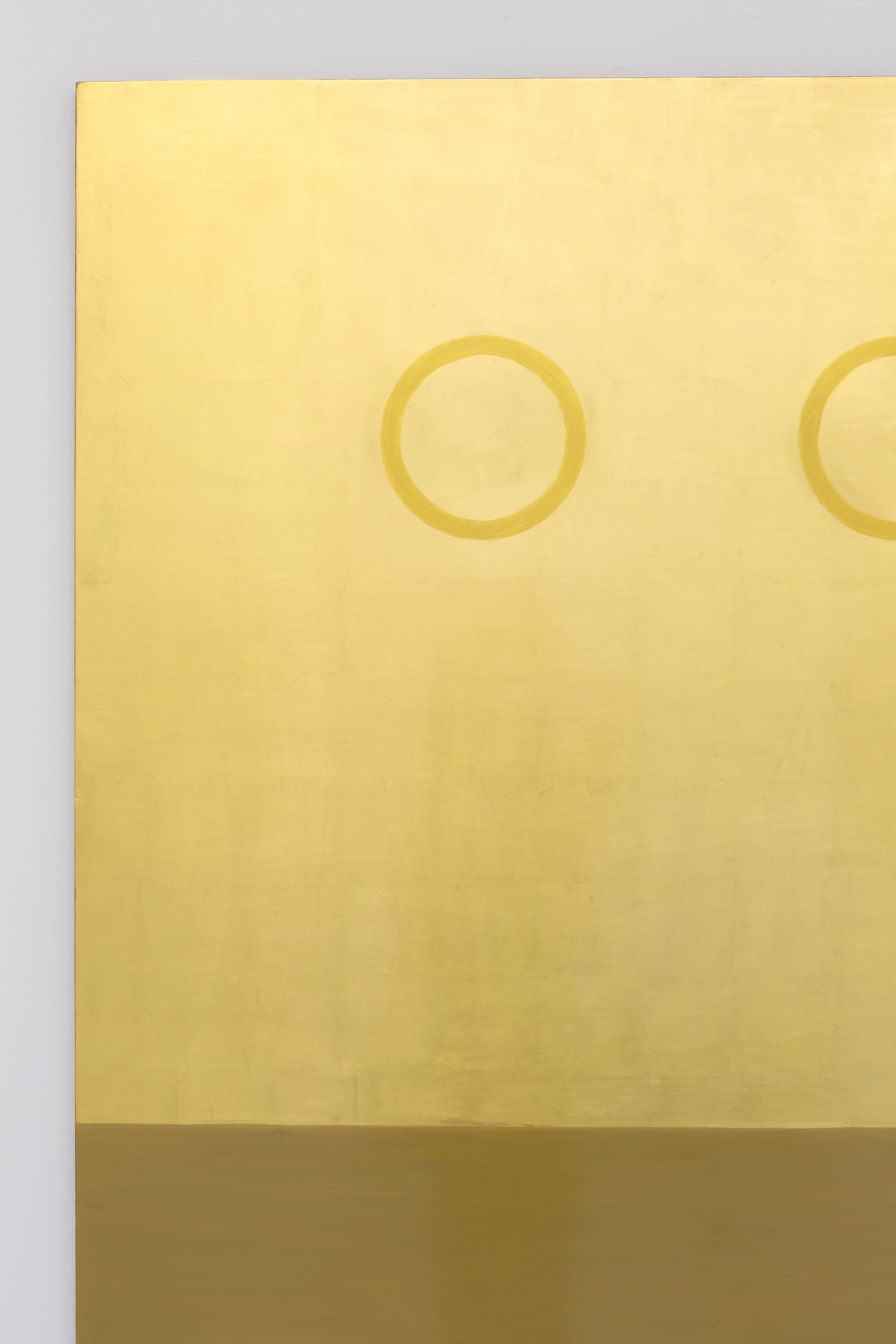
Untitled, an egg tempura made together with gold leaf, takes the small number of elements of its composition from the three rays painted by Antoniazzo Romano to depict the halos of San Vincenzo, Santa Caterina di Alessandria, e Antonio da Padova. This untitled, uninhabited surface is the result of cancelling a stage in its production agreed upon between the artist and the iconographer (whose economy consists in commissions and reproductions of saints’ portraits), who agreed to stop his work before the point of figuration. Although the circles seem to make manifest the absence of the body in the presence of the aura, their diametres and their scansion’s regular distribution are so equal that they evoke a disembodied, serial space. This site of a beginning and then abandonment of figuration makes present in a sin-gle argument the iconoclastic ban on representation and an objectivist strain in minimalist painting, both postulating that the material of a work epitomises and expresses it. Panayiotou ties his relationship with sight to another conception of the icon, one that ‘links the visible and the invisible without making concessions to realism but without disparaging materiality’ (1)
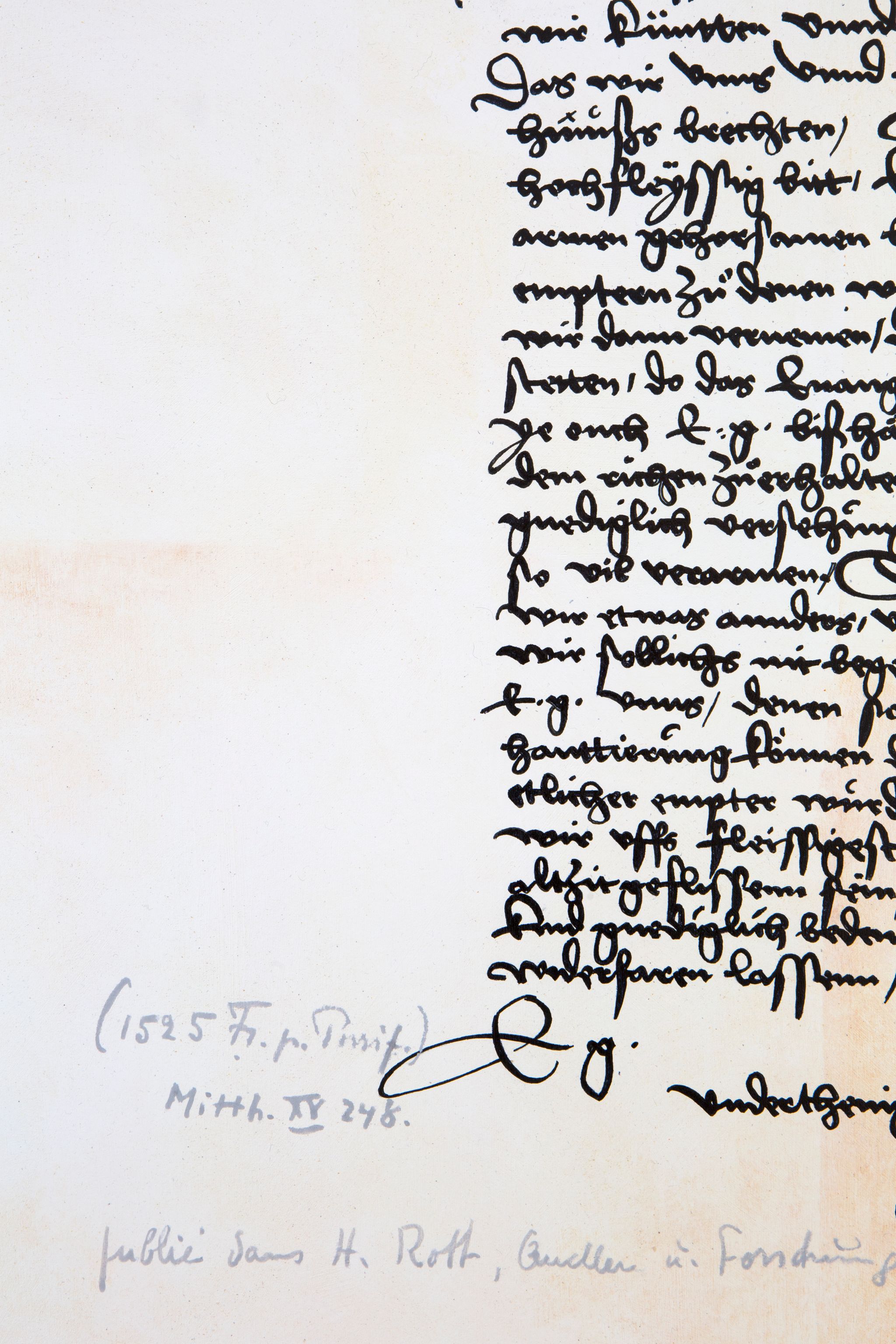
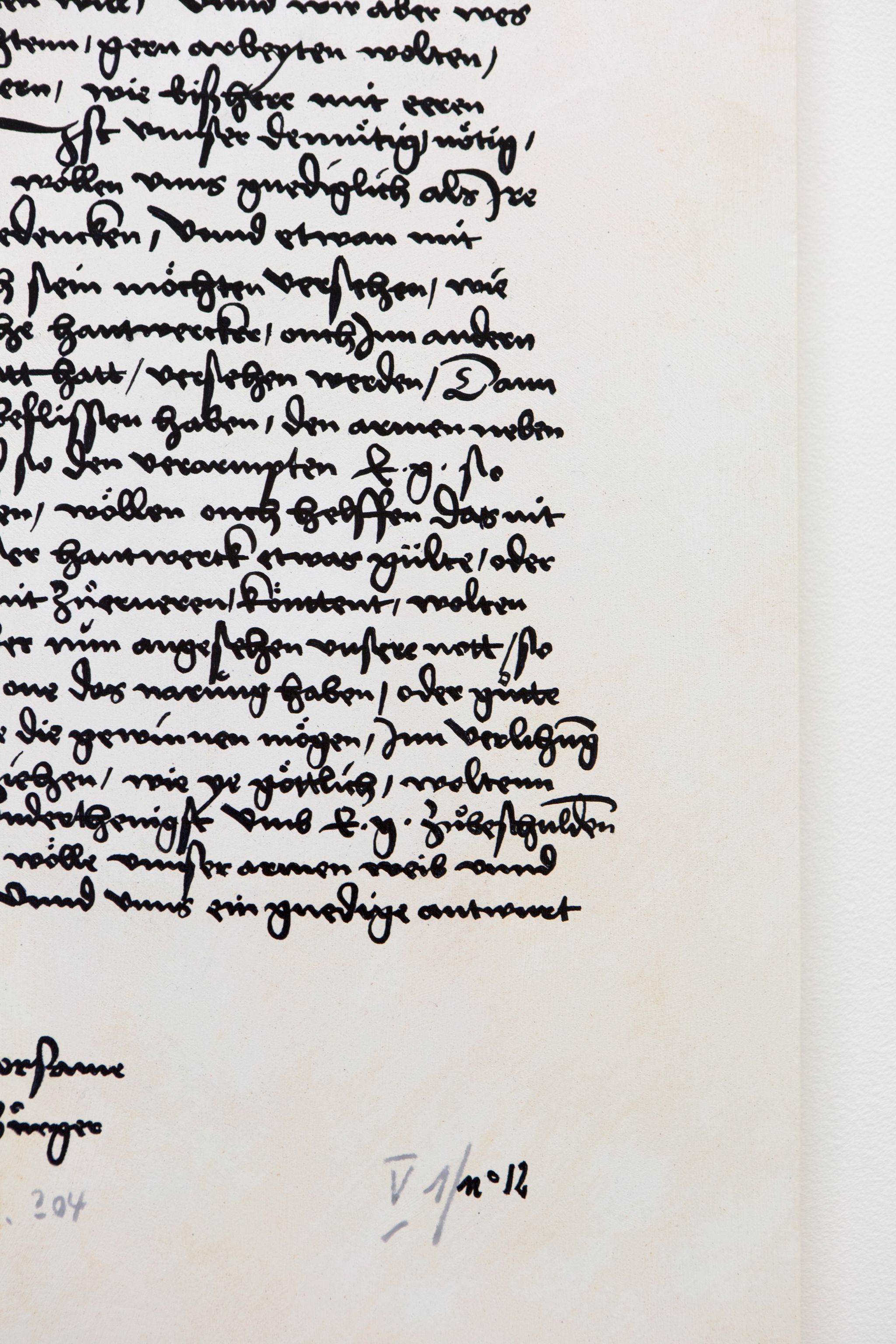
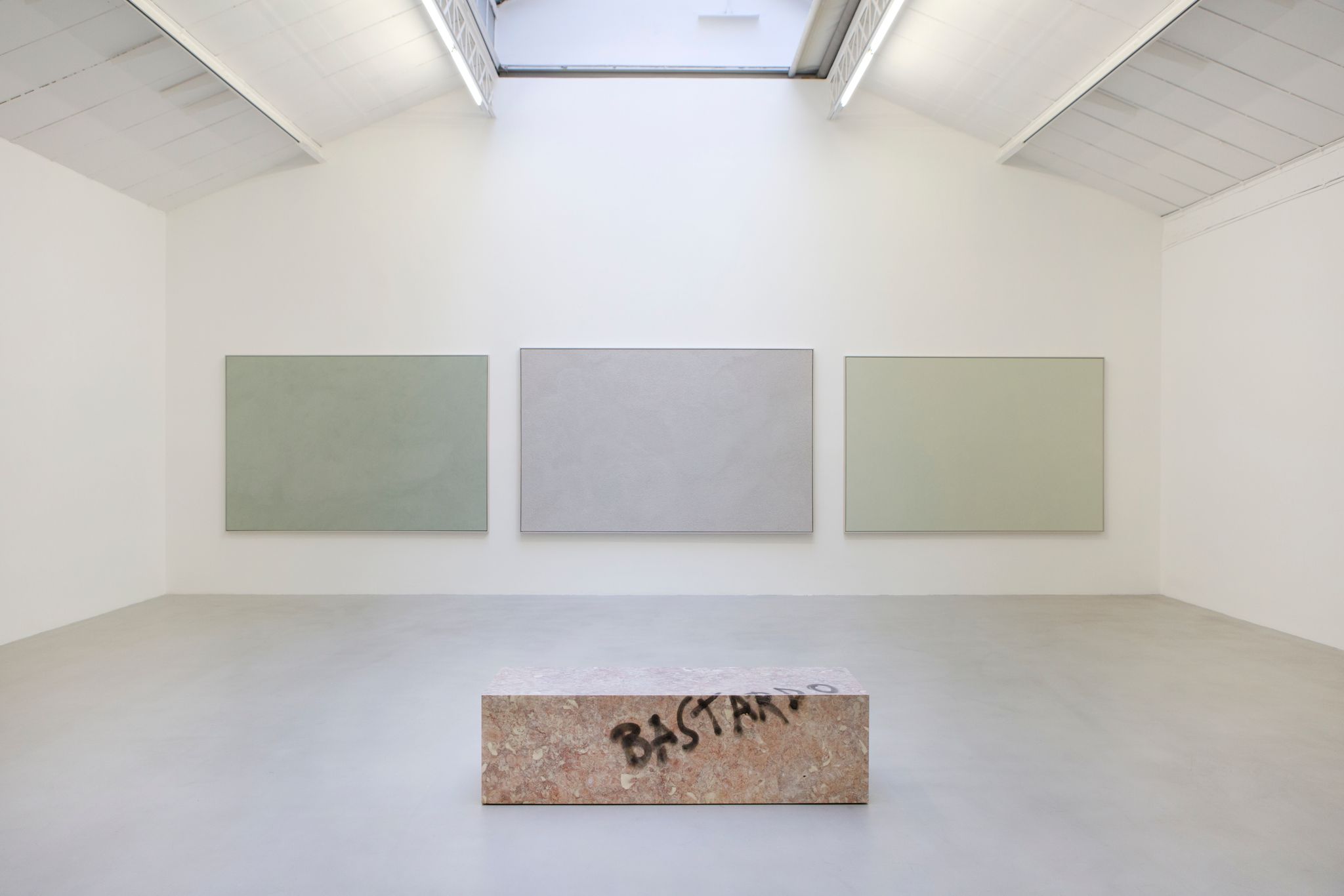
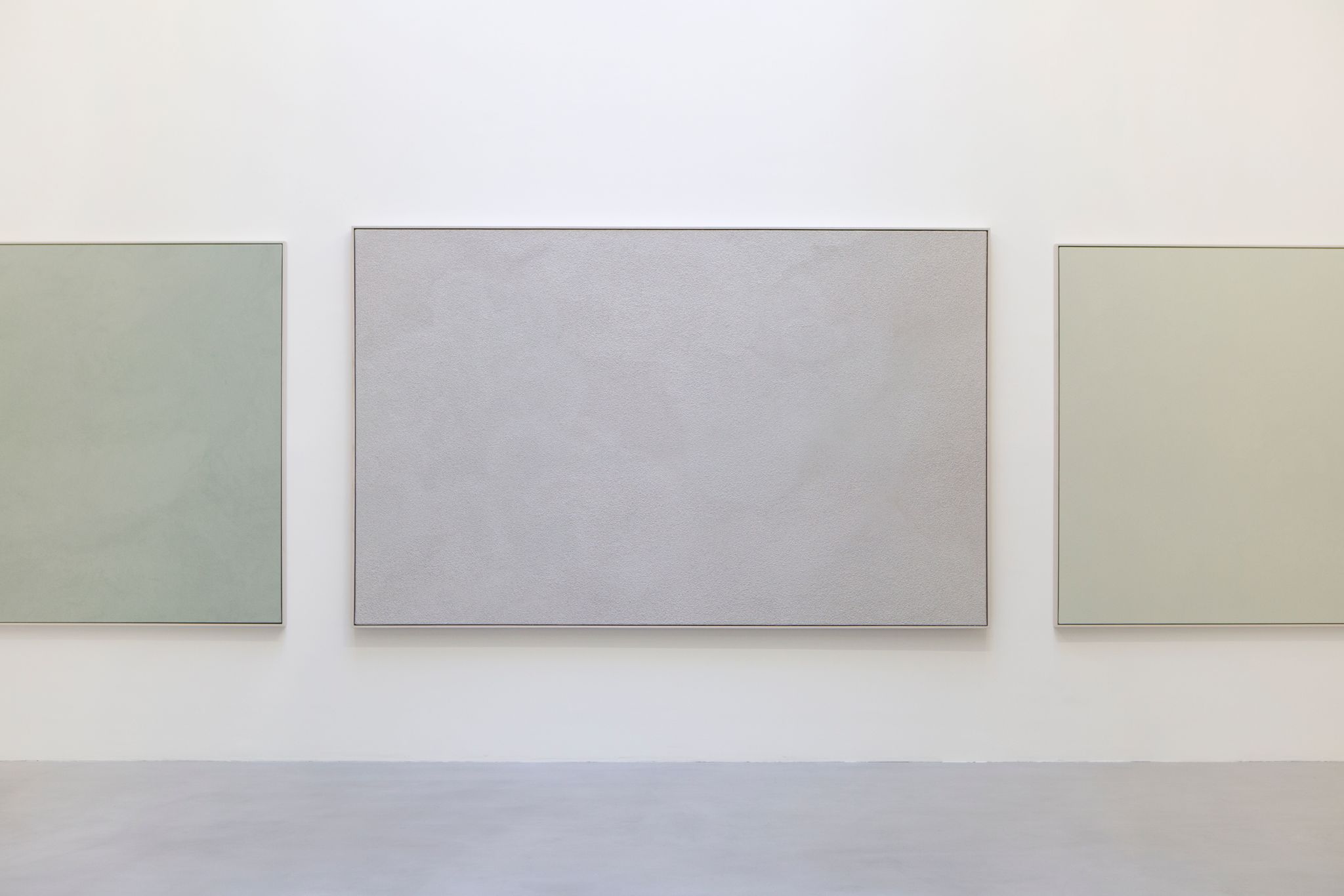
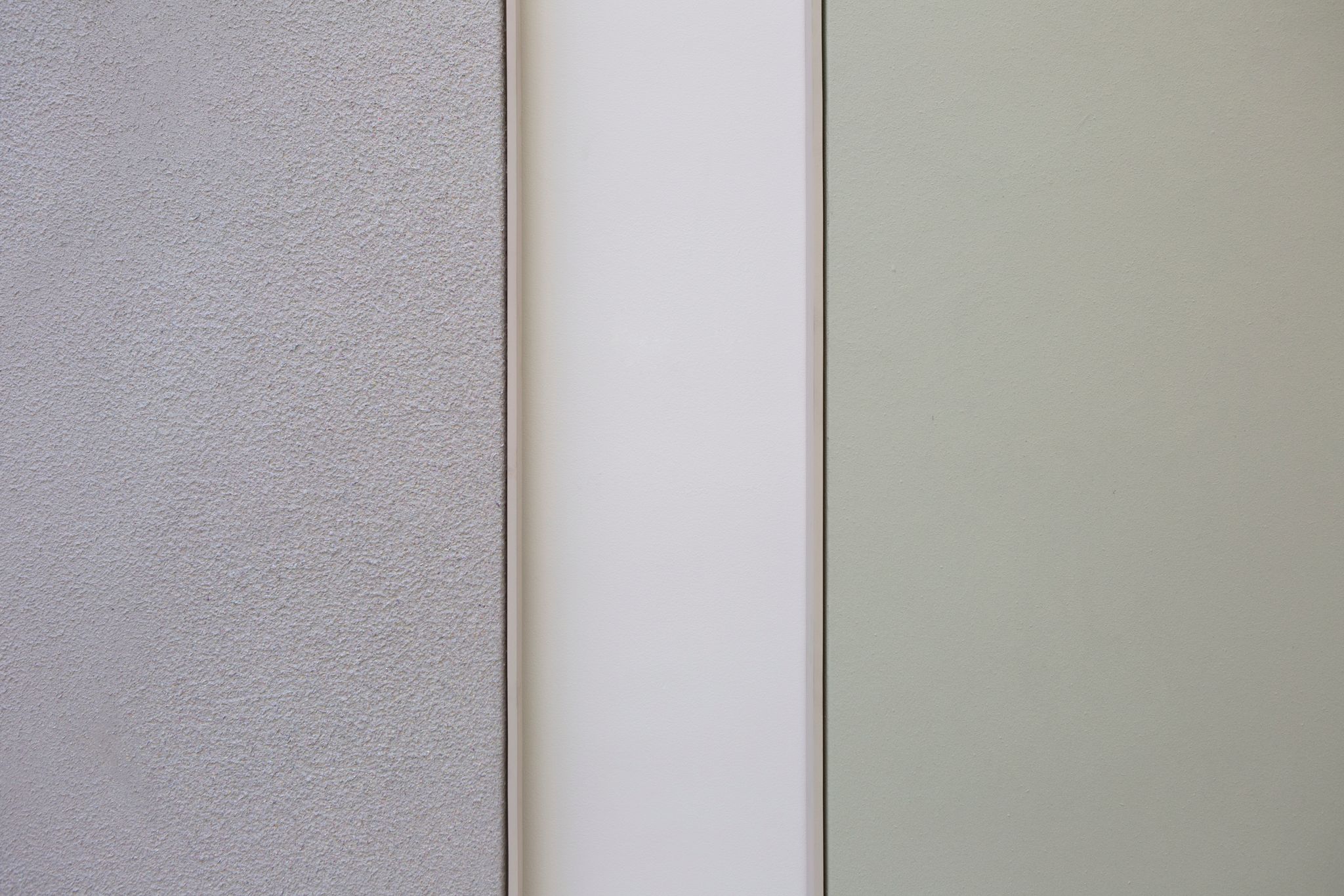
1525, Freitag post Purificationem, a manifesto piece in an exhibition that simulates the desertion of the image, refers to an episode of the Protestant Reformation when, in 1525, a group of Strasburg artists petitioned the city authorities to give them work, at a moment when the condemnation of the visual had given the order for an aural transmission of the word of God: "The respect for images had noticeably fallen away through the word of god" (2). The letter has been reproduced here as a large-scale canvas by a scenic painting studio, inviting the viewer into the regime of the image even as its content relates its disappearance. Following a process of mechanical and chemical alterations that removed at different stages paper pulp from their surfaces, the forms and figures once visible on the dollar bills in the series Untitled, another set of banished representations, absent themselves from the ‘realist’ regime of economic visibility. The iconography of the dollar itself represented a zone of synthesis for a faith distributed between the ephemeral faces of worldly power and the textual permanence of spiritual power. In 1971, when Nixon floated the US dollar, declaring an end to its convertibility into gold, the banknote was no longer subject to a physical entity, dematerialising at the same time as the artistic debates about the capacity for conceptual art to circulate independently of a contingent, solid base. The smooth surface of Forgery Painting (obtained from a substance used to create the holographic bands that authenticate the euro banknote), providing a counterpoint to this process, reflects and counterfeits forms, turning them into ghosts. Concluding a motif that begun in 2016 with the Pulp Paintings (a series of monochrome canvases made from demonetised euros), here Panayiotou completes a gesture of derealising solidification, in an exhibition that invites three figurative artistic traditions—theology, theatre, and industry—to decreate the image.
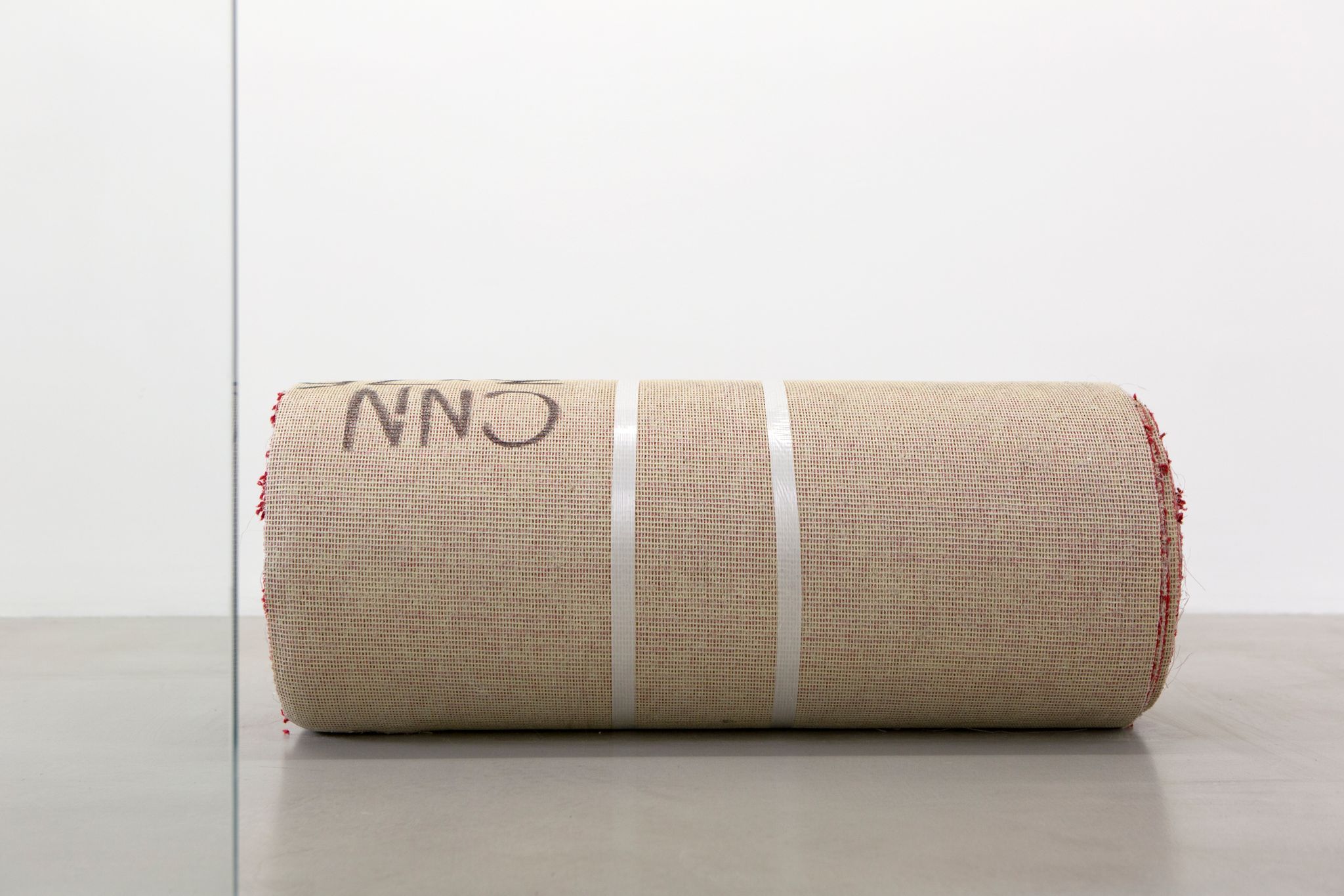
Opération Serenade, a red carpet recuperated by the artist after its use for cinematic ceremonies in Hollywood, now rolled up and abandoned in the space, re-enacts, against the movements of adhesion, the hiding of colour in a volume that contains an extension. This chromoclastic operation, which has its own history in the Reformation (3), sums up the troubled journey of the image within the current horizon of an economy coloured by devotion. In his previous exhibition, the floor of Sectile objectivised the qualities of the marble slabs by leav-ing them inscribed with information pertaining to their commercialisation. Now unquantifiable, this material in perpetual motion evokes the memory of a visit to Carrara as told by the artist, where he describes the feeling of bodily assimilating the surrounding marble dust: ‘these tiny, modest particles of the precious marble mixed with the cells of our skin, insinuating itself into our breath. We were reforming it. (4)’
— Jean Capeille
(1) Marie José Mondzain, Image, Icône, Economie : les sources byzantines de l’imaginaire contemporain, Paris, Editions du seuil, 1996, p. 113. [Available in English as Image, Icon, Economy, Trans. Rico Frans-es, Stanford University Press, 2004]
(2) Quoted in Hans Belting, Likeness and Presence: A History of the Image Before the Era of Art, Chicago, University of Chicago Press, 1994, p. 465
(3) Michel Pastoureau, « Morales de la couleur : le chromoclasme de la Réforme » in La Couleur. Regards croisés sur la couleur du Moyen Âge au XXe siècle, Paris, Cahiers du Léopard d'Or n° 4, 1994.
(4) From a letter to Juan Gaitan, read in the Corderie Dell’Arsenale on 28/09/2014.

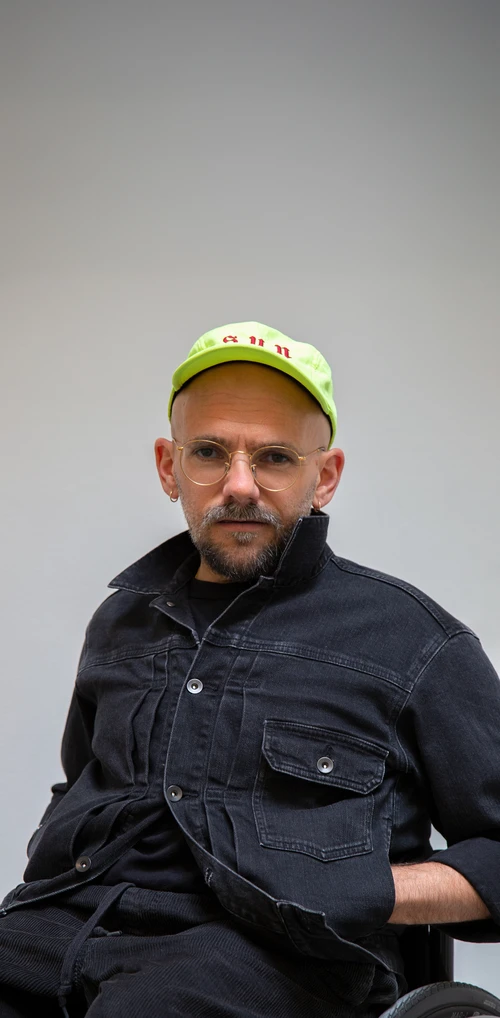
Christodoulos Panayiotou
Lives and works between Limassol and Paris