





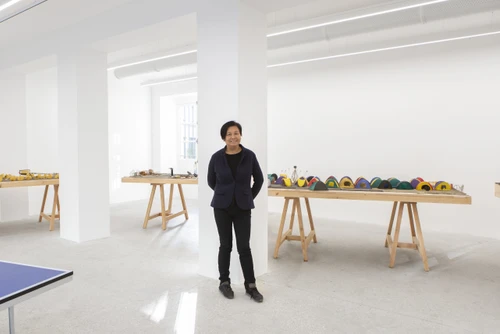
Sidival Fila
A Rose is a rose is a rose
Sep 7 - Oct 5, 2024
Mennour, 6 Rue du Pont de Lodi
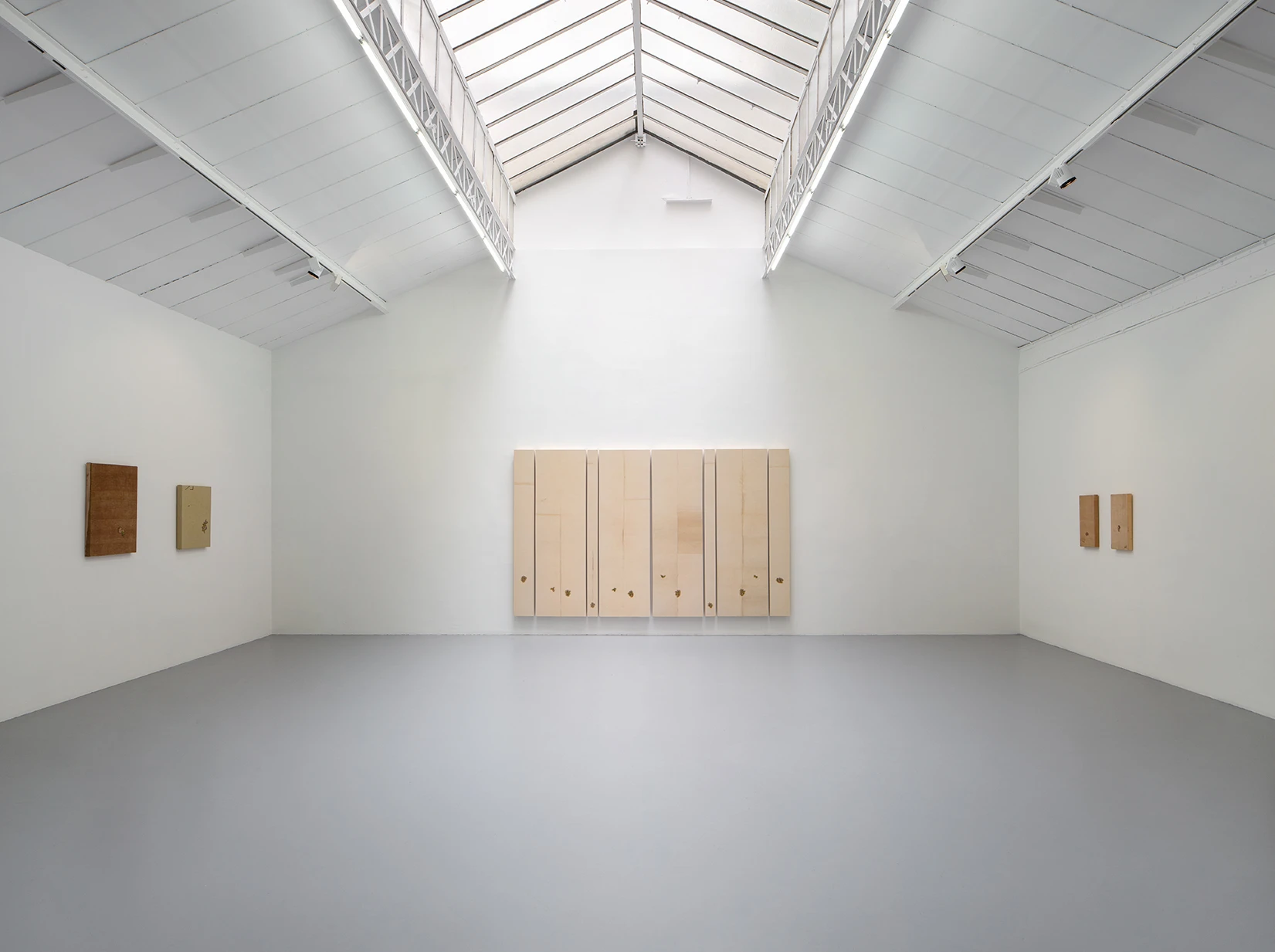
For his first exhibition at Mennour, Sidival Fila presents a series of recent works in linen, cotton and/or silk stretched on a frame, dotted with old flowers looking like fragments from a Garden of Eden.
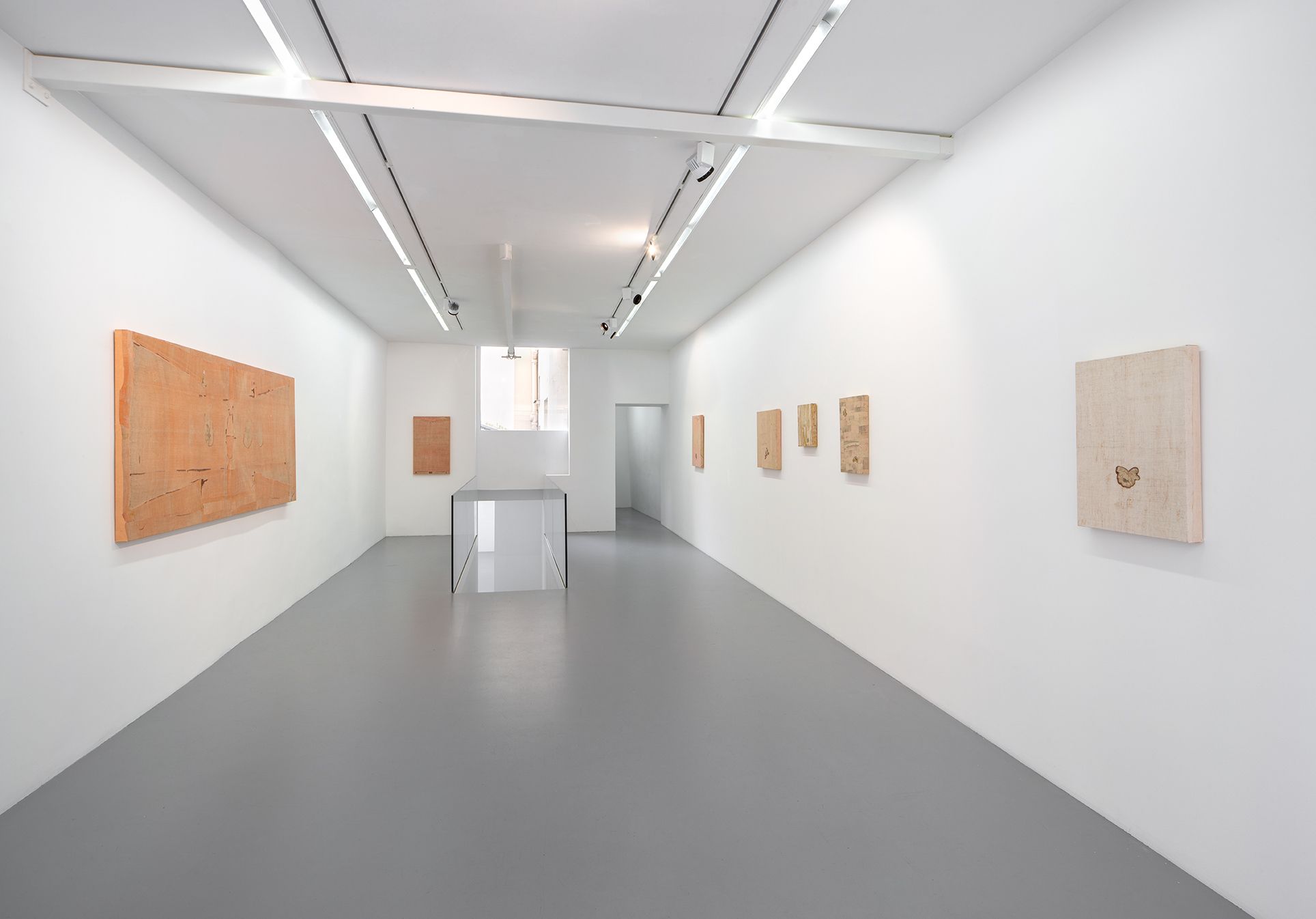
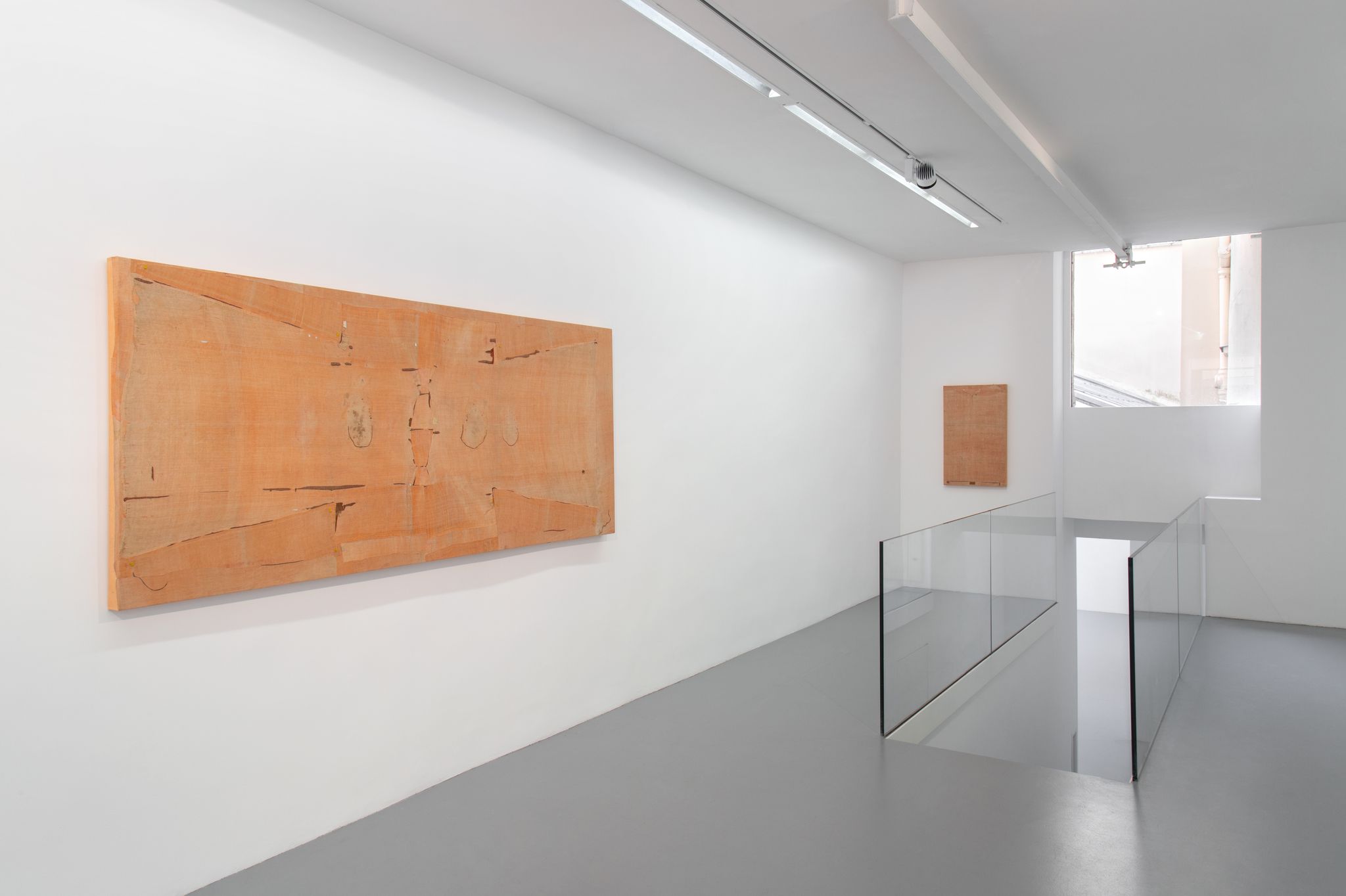
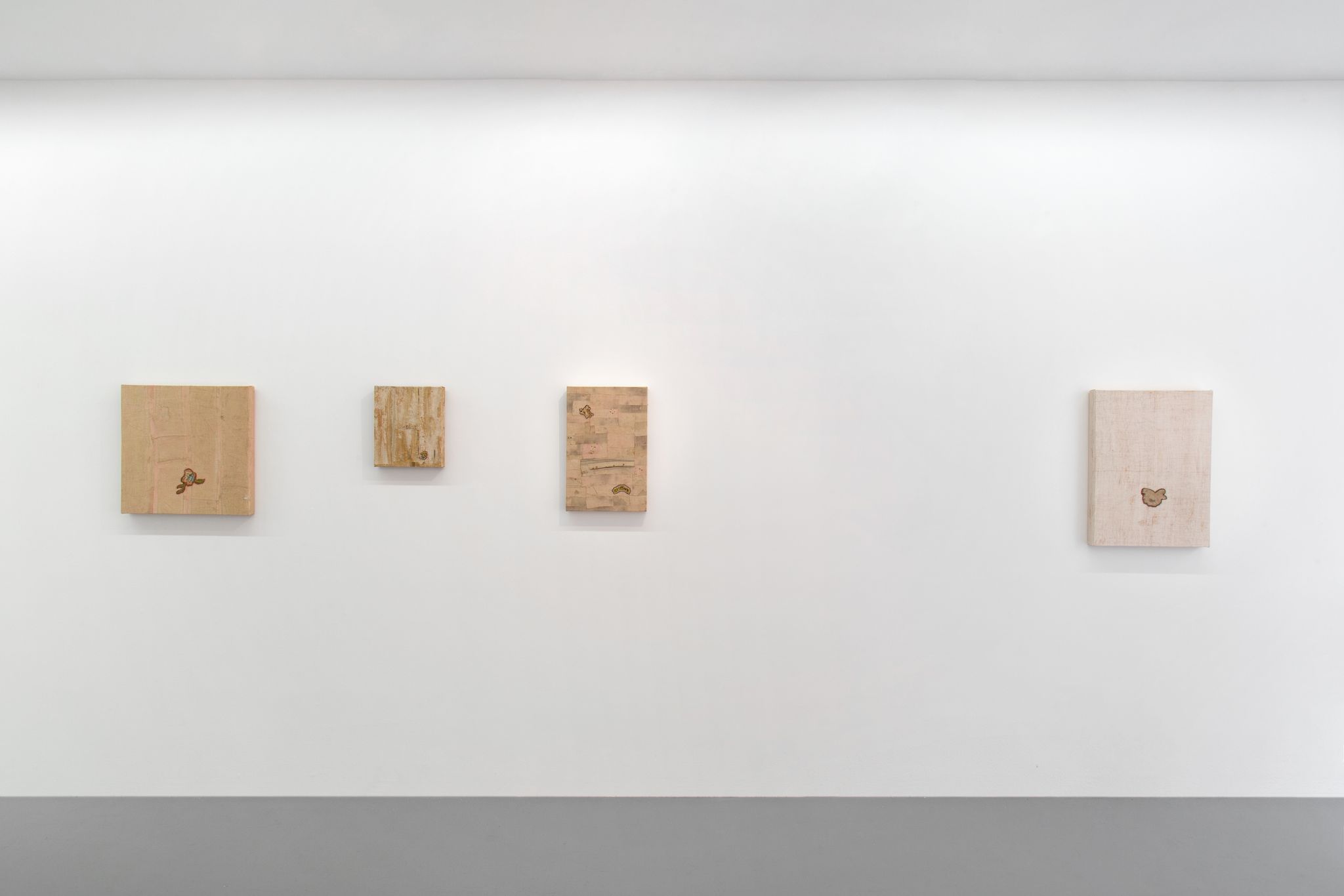
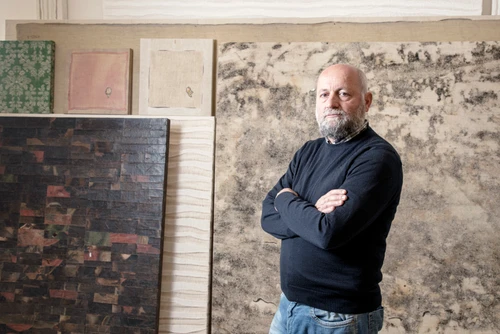
On the Palatine Hill, overlooking Rome’s Colosseum, Brother Sidival divides his time between living as a Franciscan brother and working as an artist, paying homage to old paintings with a clever use of pleating, embroidery and patchwork.
Pieces of fabric left aside, abandoned, made shiny by the patina of time and kept in storerooms are given a new life in the hands of the artist who, in a meticulous work of sewing, magnifies the accidents that are printed on the surface of the canvases. Between Arte Povera and Informal Art, Sidival Fila’s practice maps out its poetic and personal path in the wake of all those paintings without paint that operated outside the limits of the canvas.
In 1410, a French artist had the original idea of painting a Madonna with angel on a linen canvas — as opposed to a wooden panel as done at the time — a process that was quickly adopted and popularised by many of his fellow Italian artists.
In the middle of the 1980s, a Brazilian painter decided to abandon oil painting in favour of concentrating on the canvas support medium. Since then Sidival Fila invents, mends, arranges, places in tension pieces coming as much from liturgical garments as from precious cloths and ordinary bedsheets. With the same care, he metamorphoses the fabrics and draws, by repeatedly adding threads and crowns around the existing or sewn on patterns — spots or flowers — to draw better attention to them.
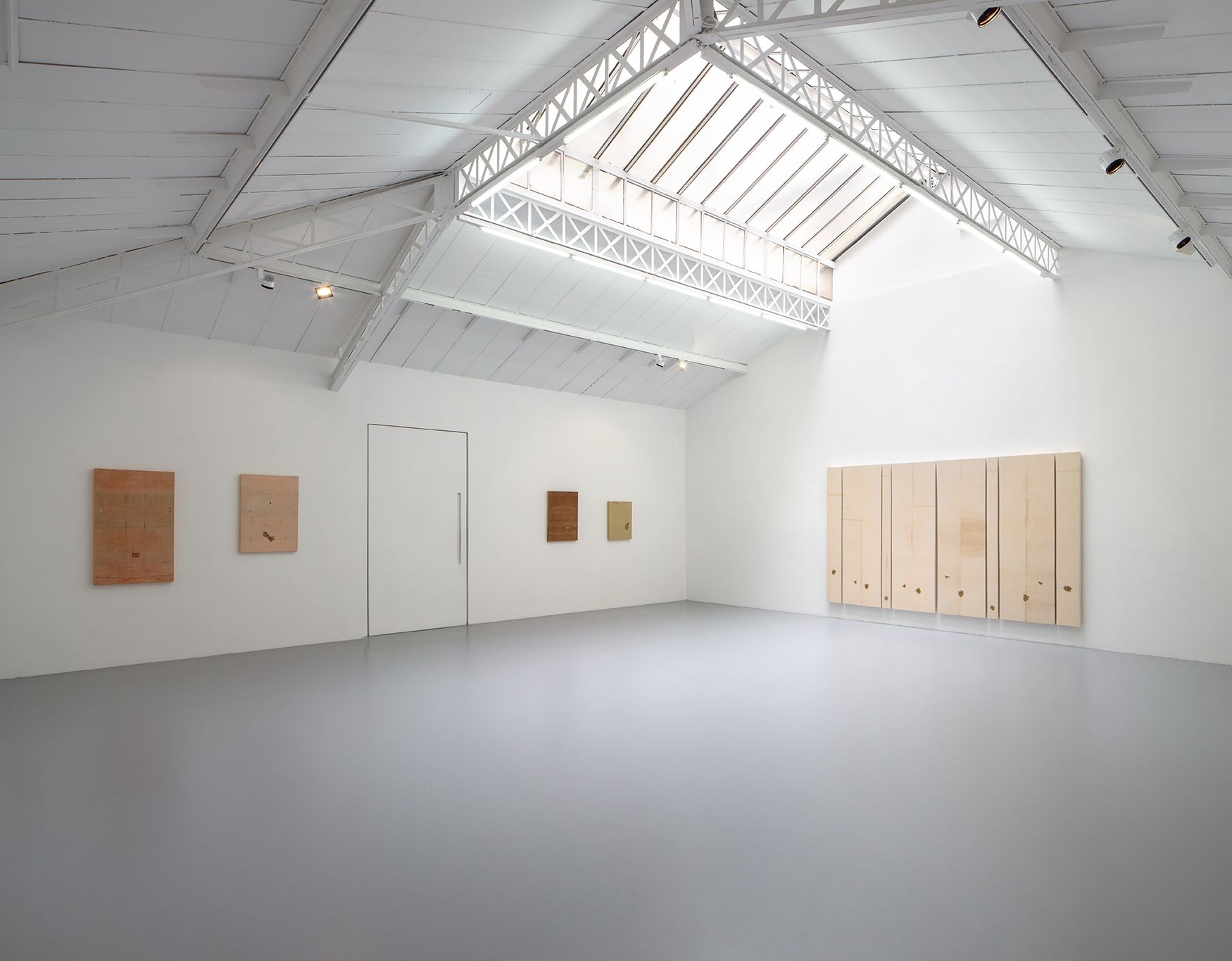
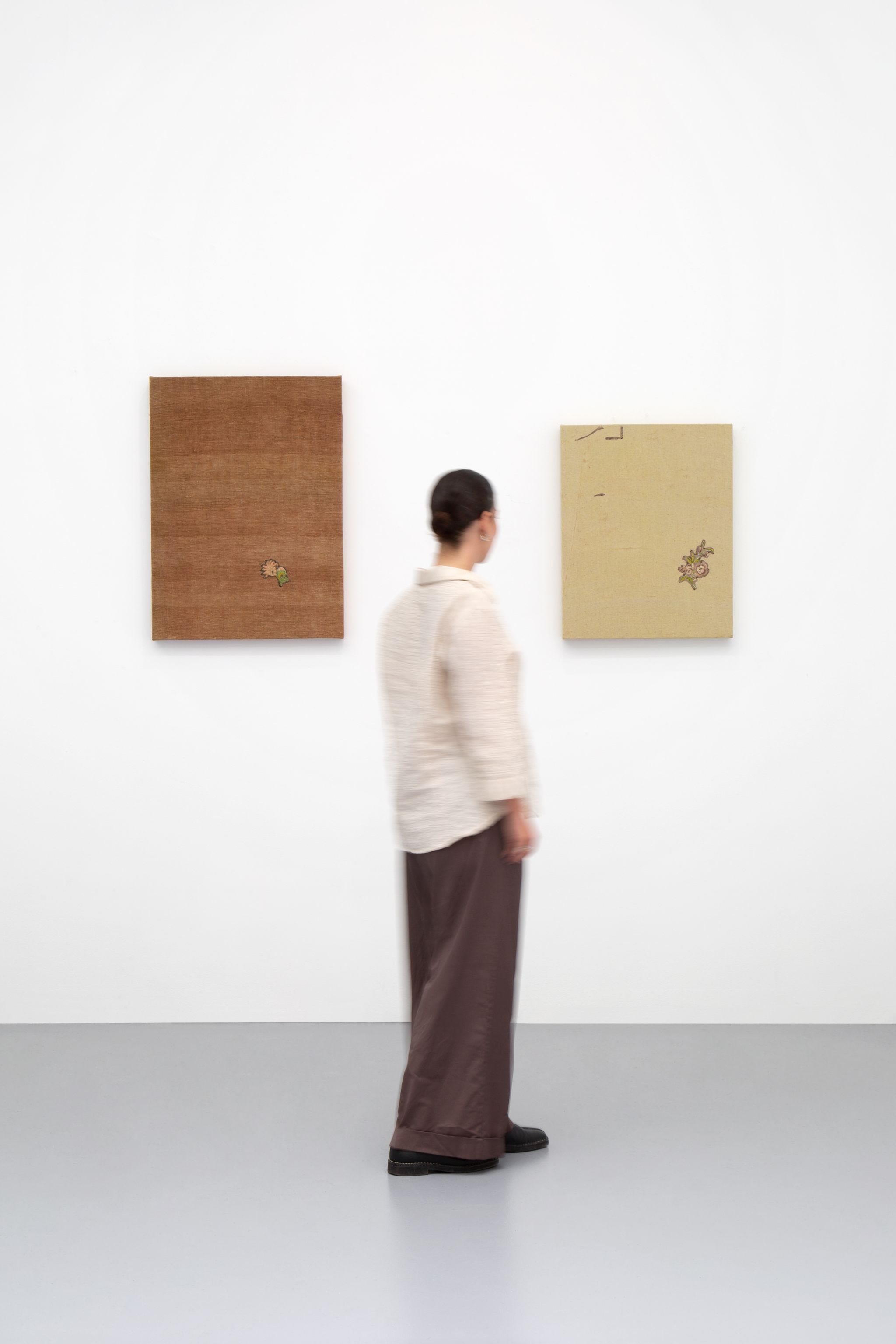
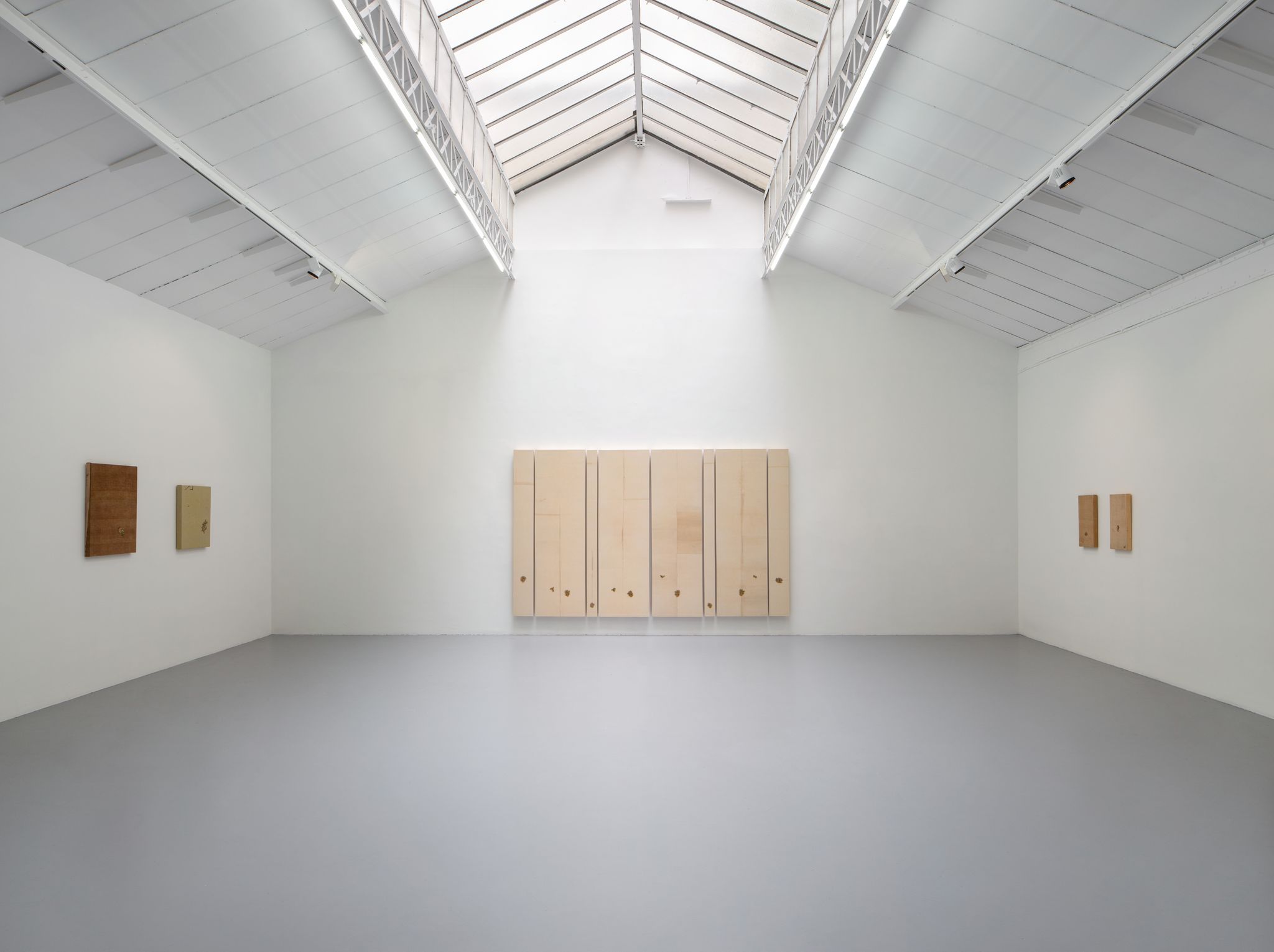
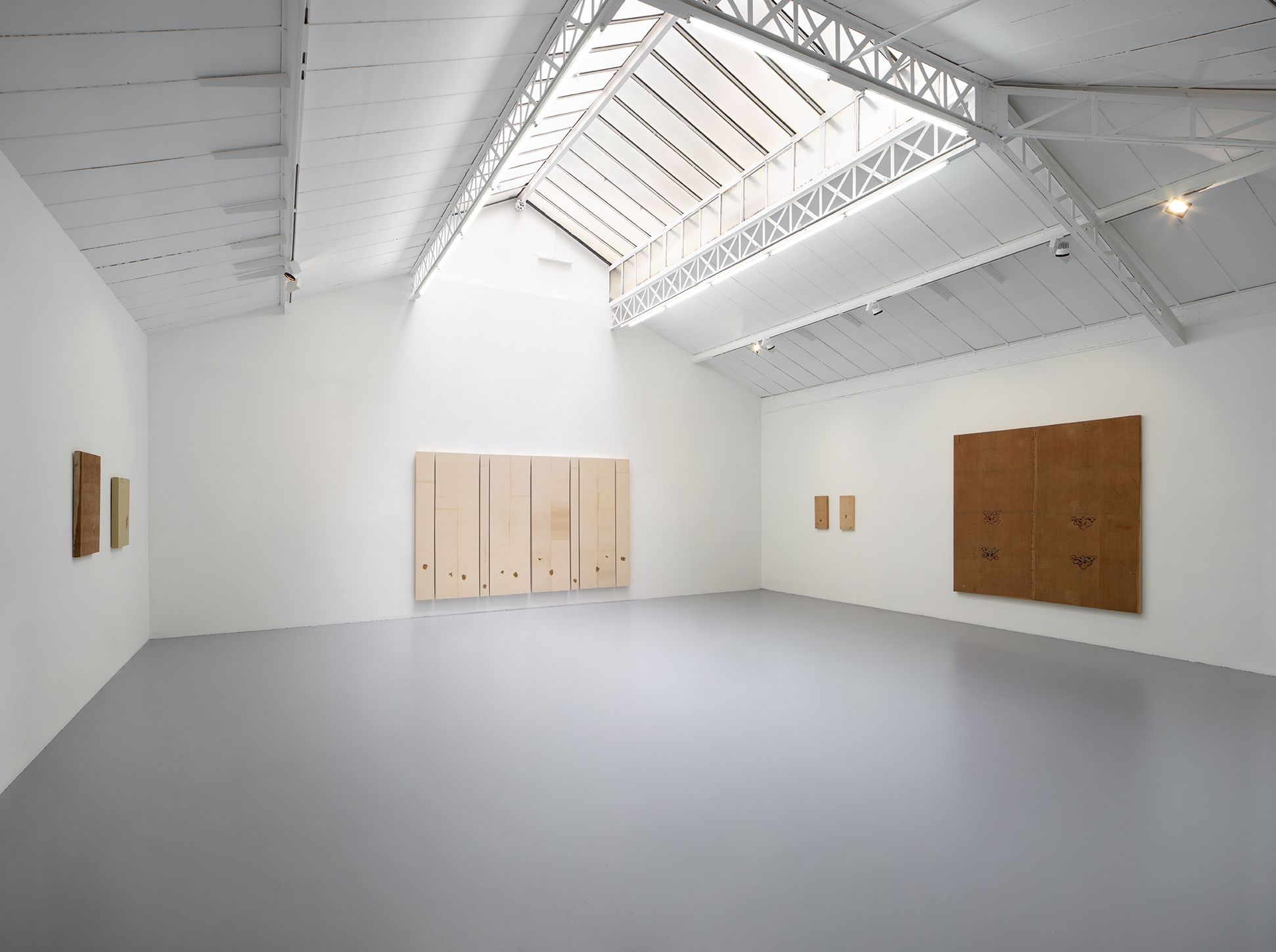
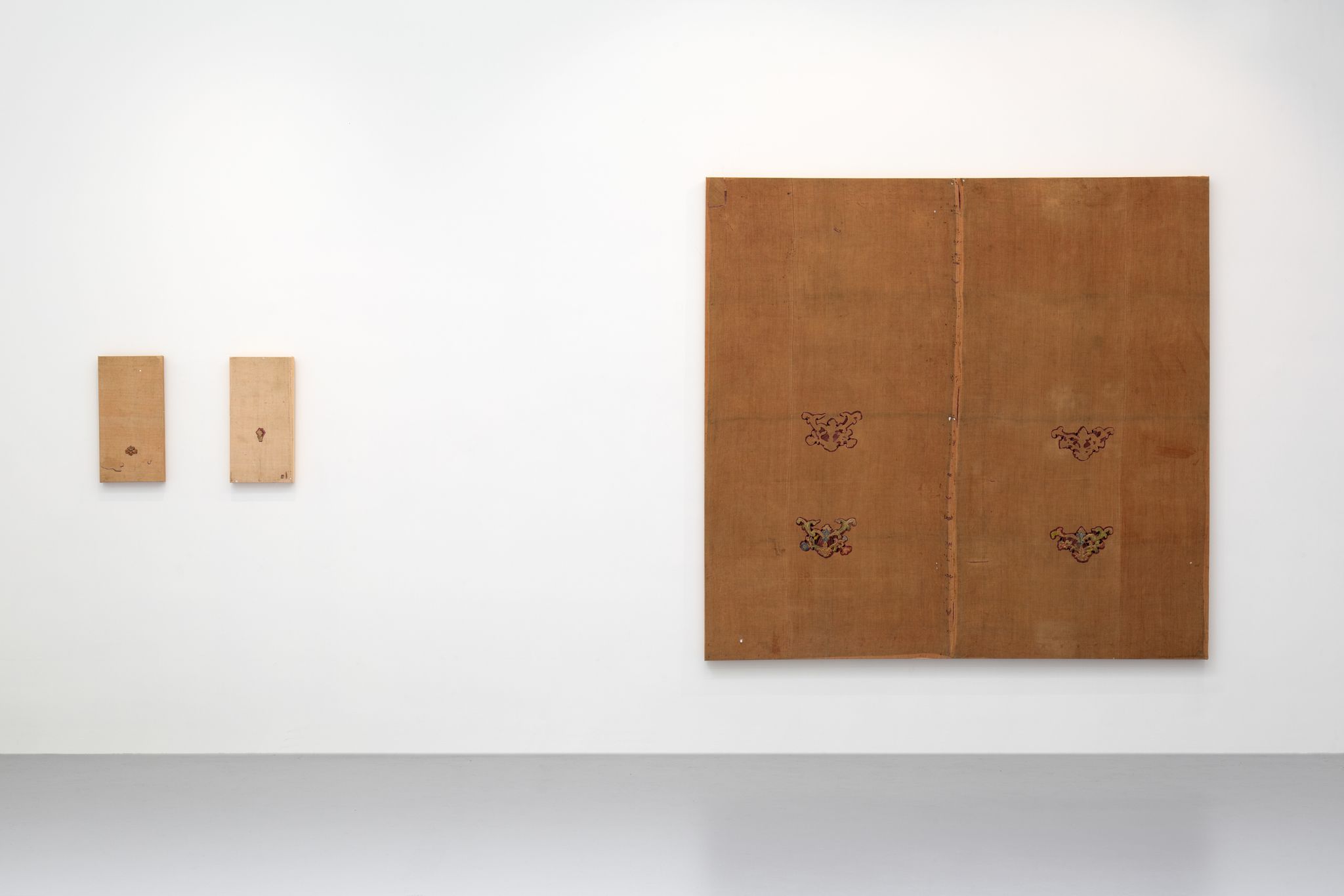
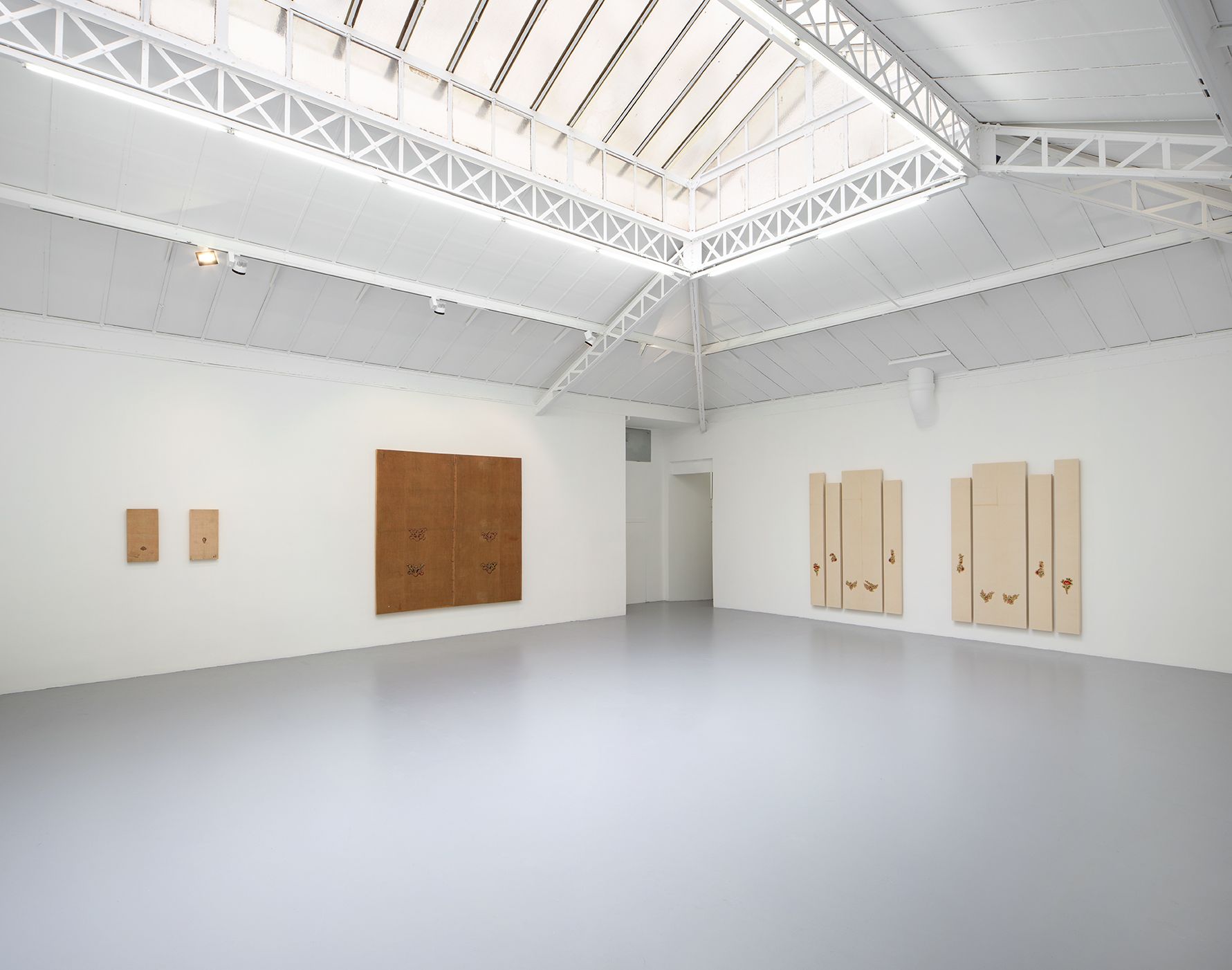
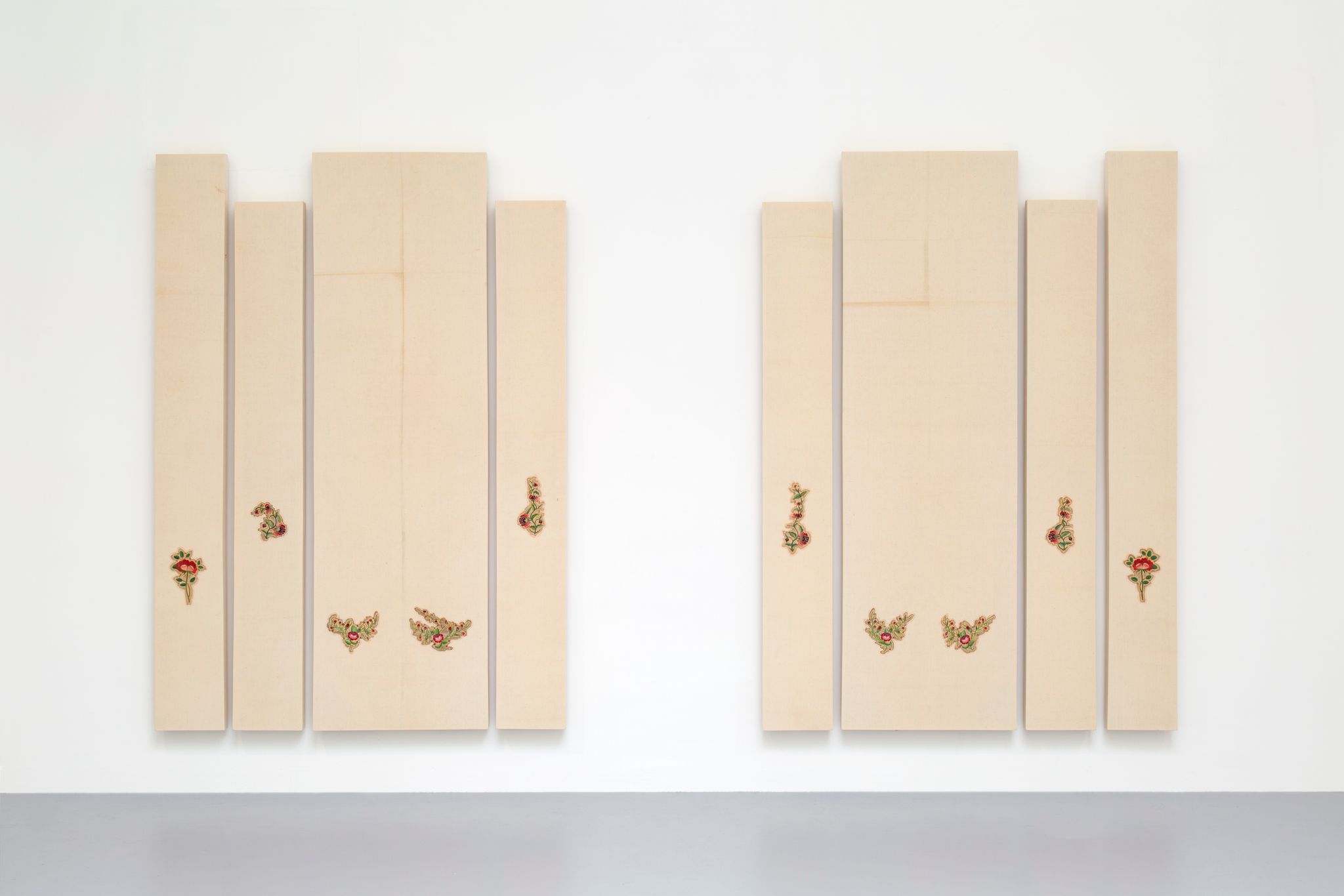
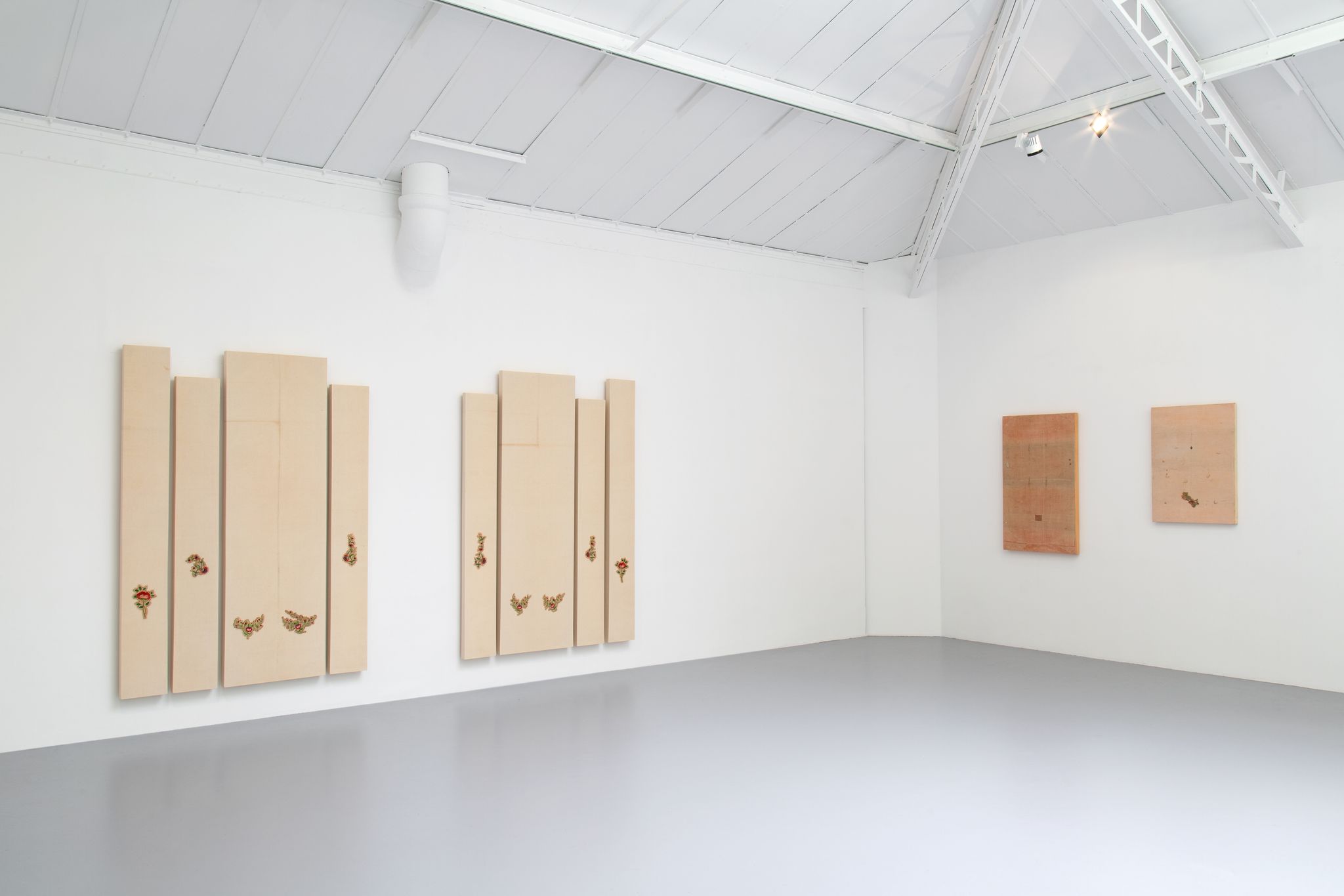
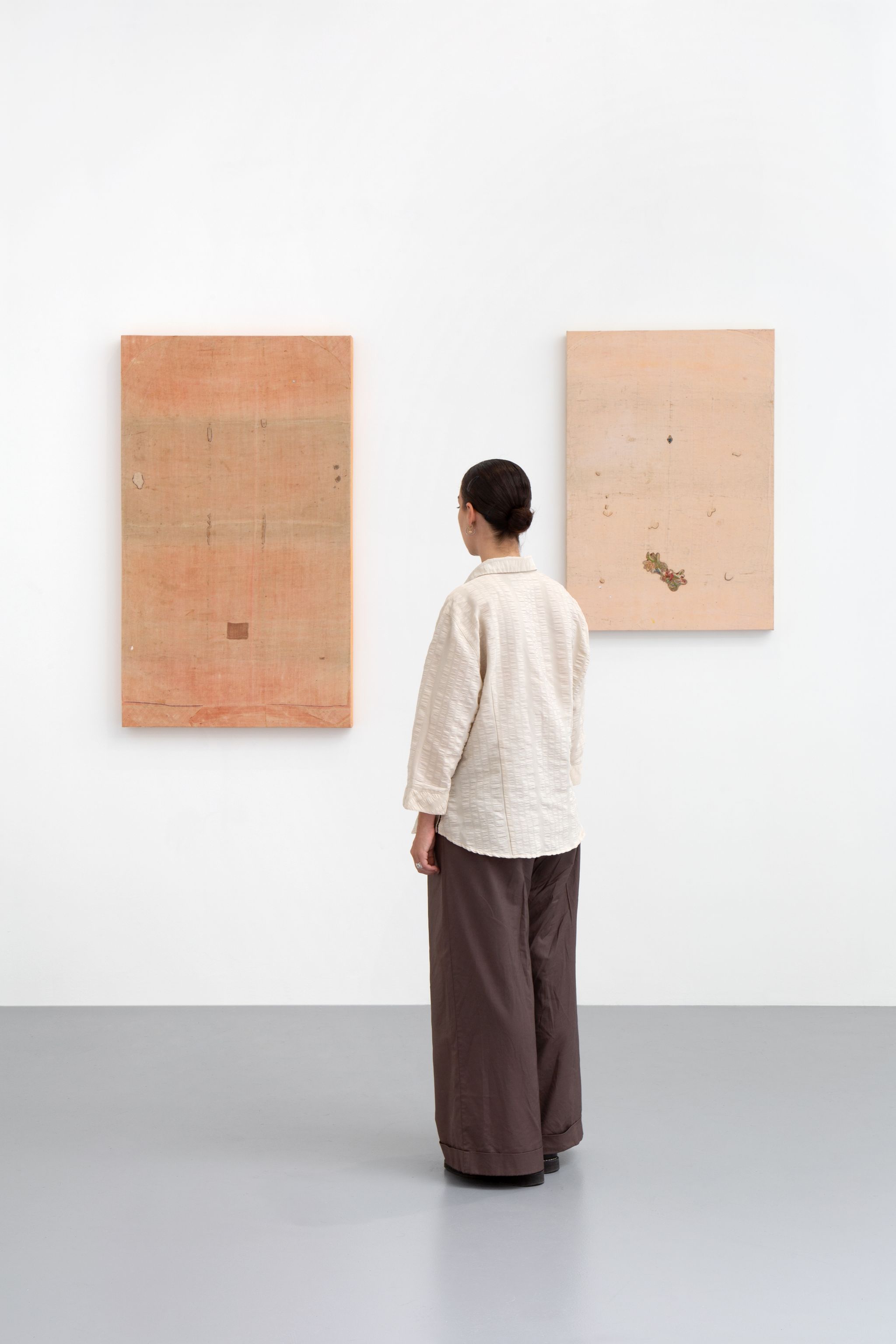
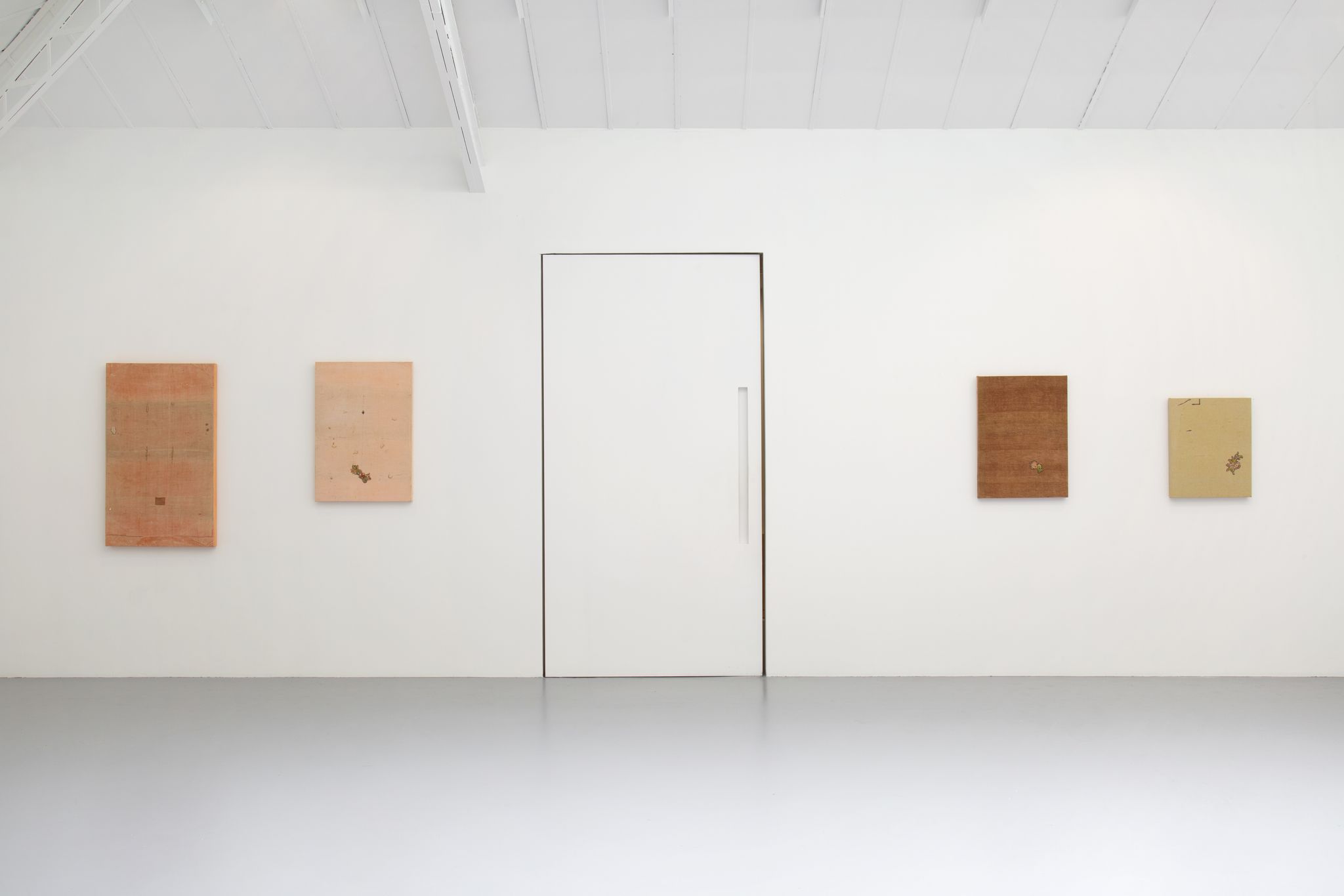
He spends days embroidering those openworks1 like a surgeon stitching up wounds, repairing the lesions in the material. The countless incisions and cuts that punctuate those shrouds are reminiscent of open wounds partly stitched up. A way for the artist to take care, to draw our attention to the stigmata, to make a halo around the indelible signs of the time, zones of folds and connections, those of all the foreign bodies and of the lights that have one day left an imprint on those pieces of fabric.
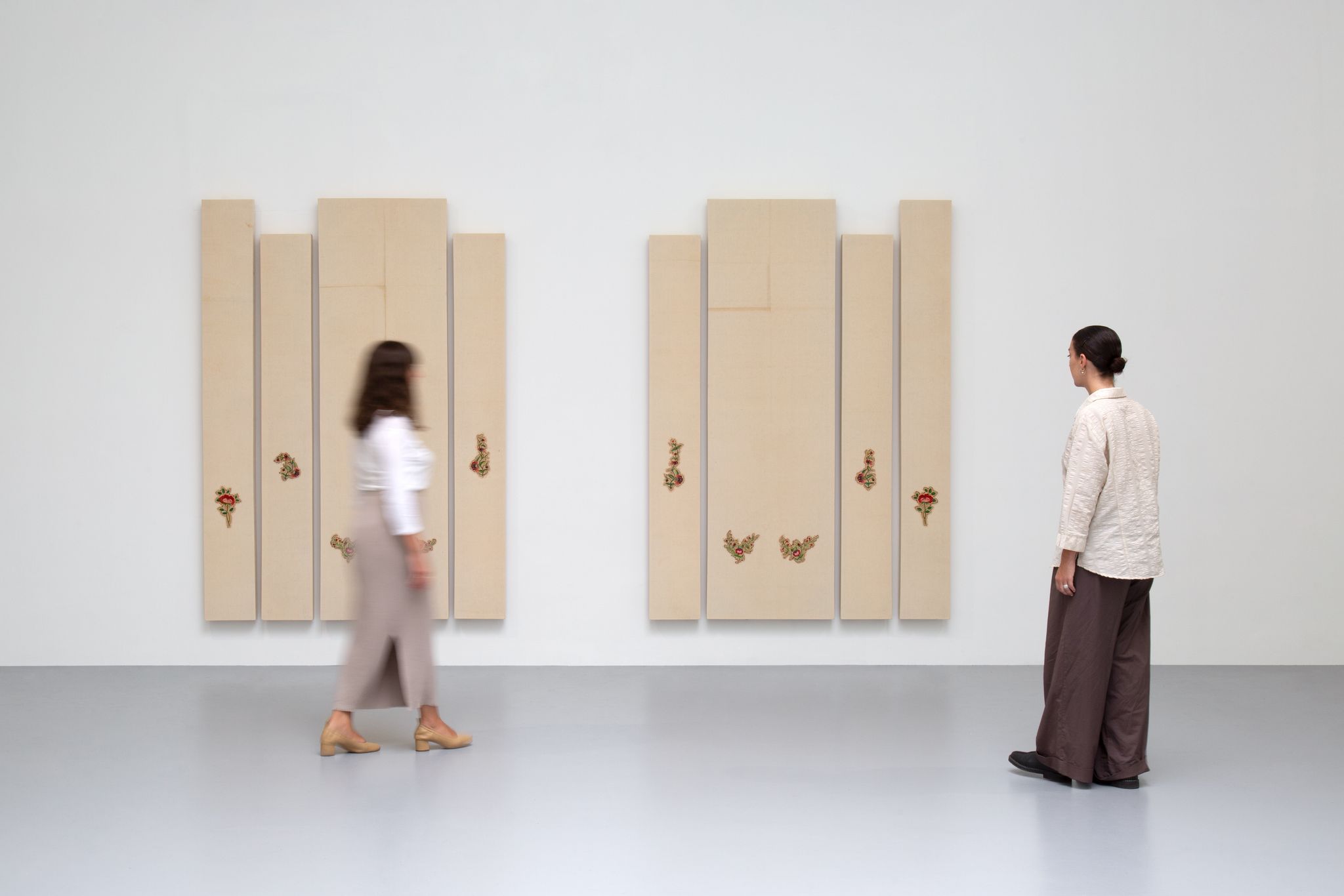
As ascetic as they are baroque, these meditative gestures, repeated ad infinitum, of making incisions, cutting and mending give birth to new canvases that transcend their textile origin to become works of art. On the surface of the works, embroidered flowers gathered on precious fabrics blossom in order to confirm better the co-existence between the prosaic and the sublime. They enter into a dialogue which echoes from one canvas to the other, creating a random rhythm recalling the perfection of an imperfect nature, falsely symmetrical like those big polyptychs — exhibited here — that seem to reflect one another like a mirror image.
A rose is a rose is a rose, Gertrude Stein repeated in that poem chanted like a litany — with that evidence that a rose would be both identical to another and yet so different — , like a reverence for the endless cycles of life and desire.
— Christian Alandete & Emma-Charlotte Gobry-Laurencin, curators
—
1. Openwork is the space created in a piece of fabric by removing some threads and then embroidering on the remaining threads to make decorative motifs.
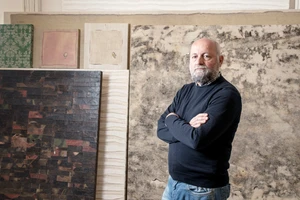
Sidival Fila
Lives and works in Rome, Italy