
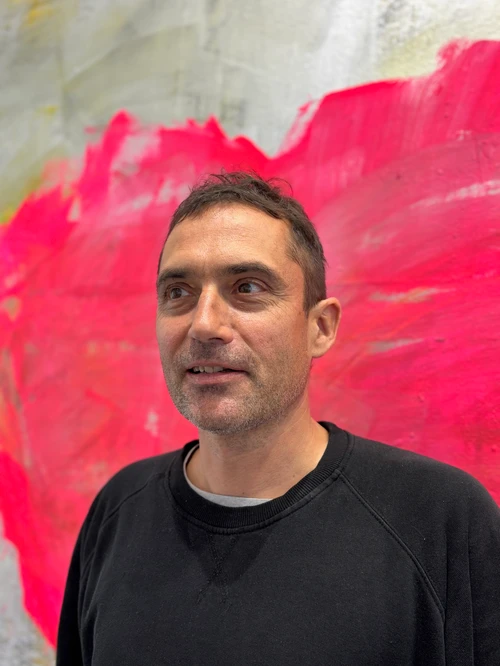
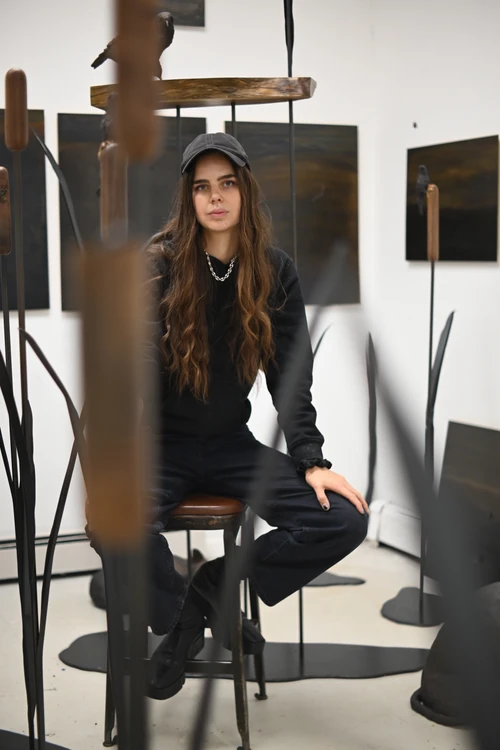
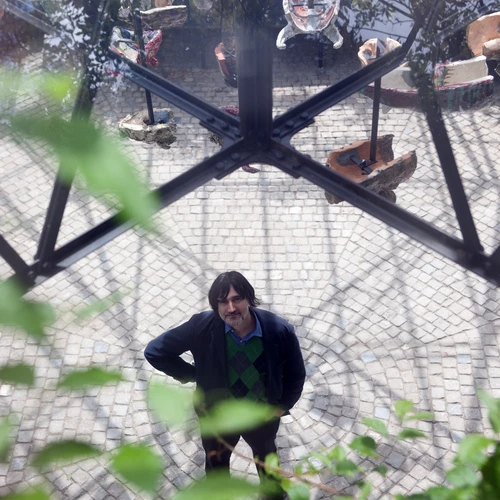
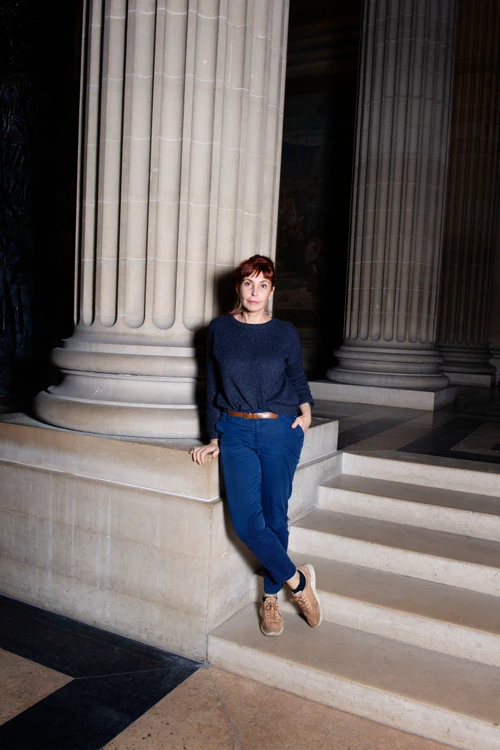





Tadashi Kawamata
Destruction
Nov 28, 2019 - Jan 18, 2020
Mennour, 6 Rue du Pont de Lodi
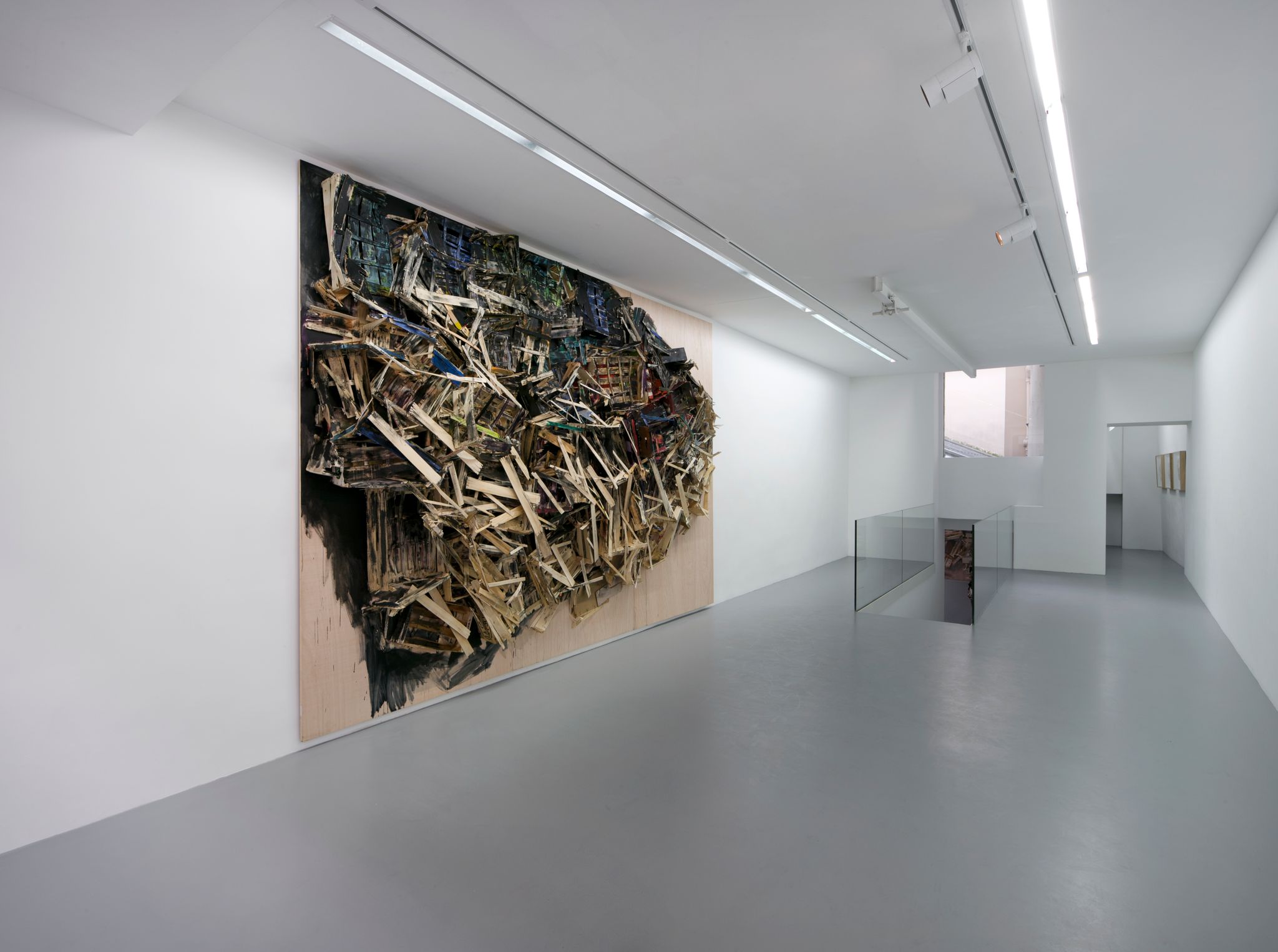
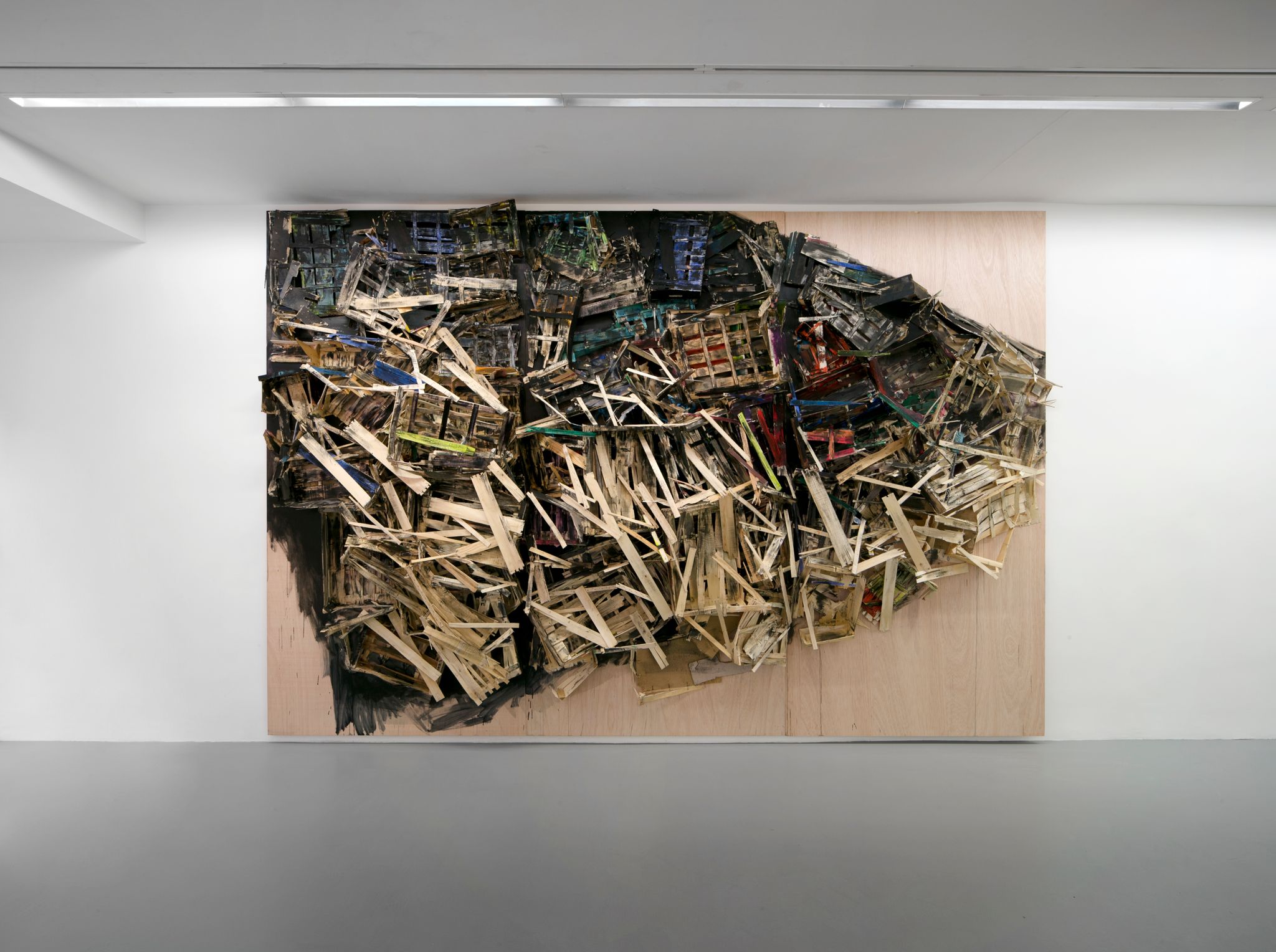
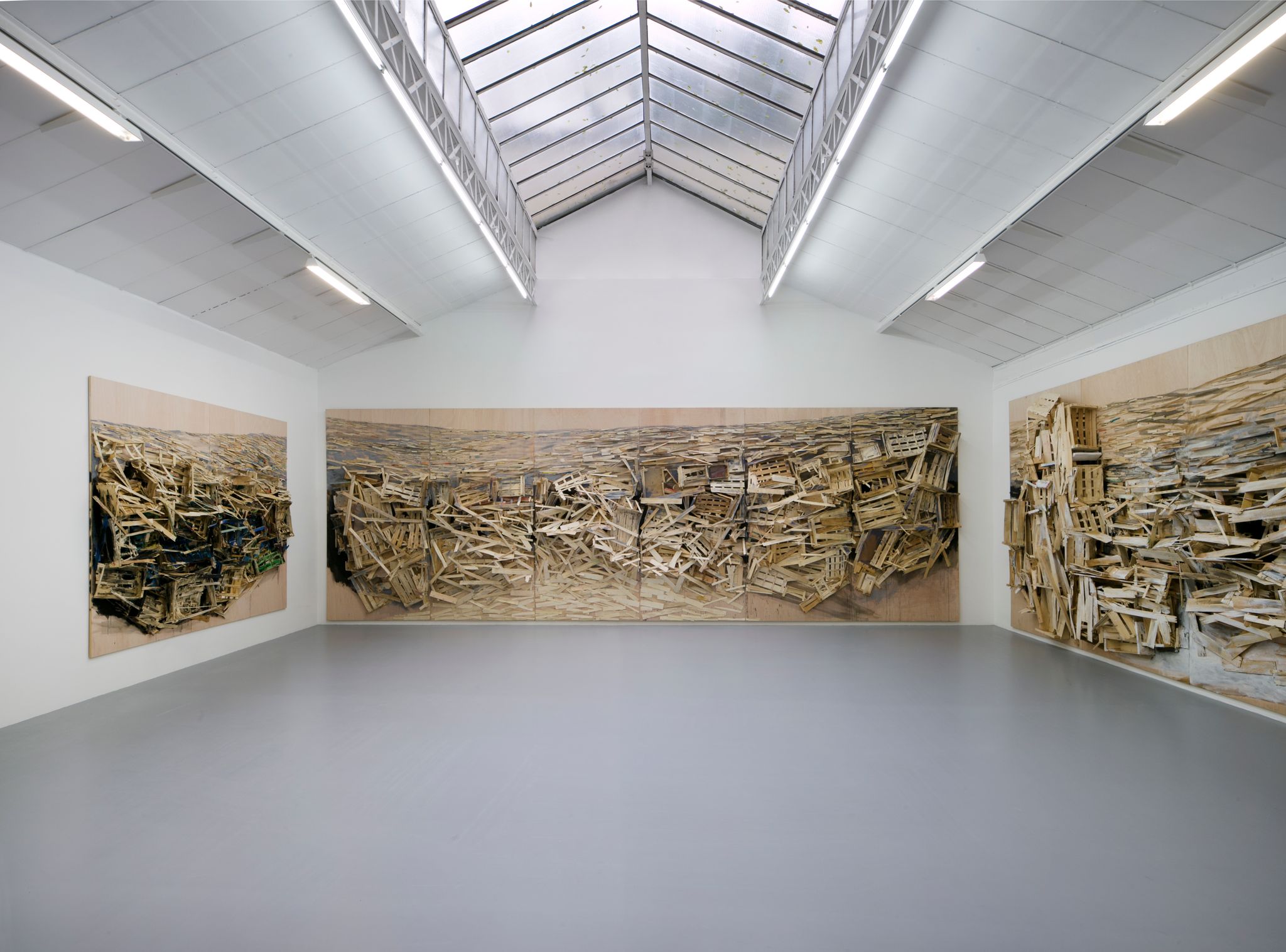
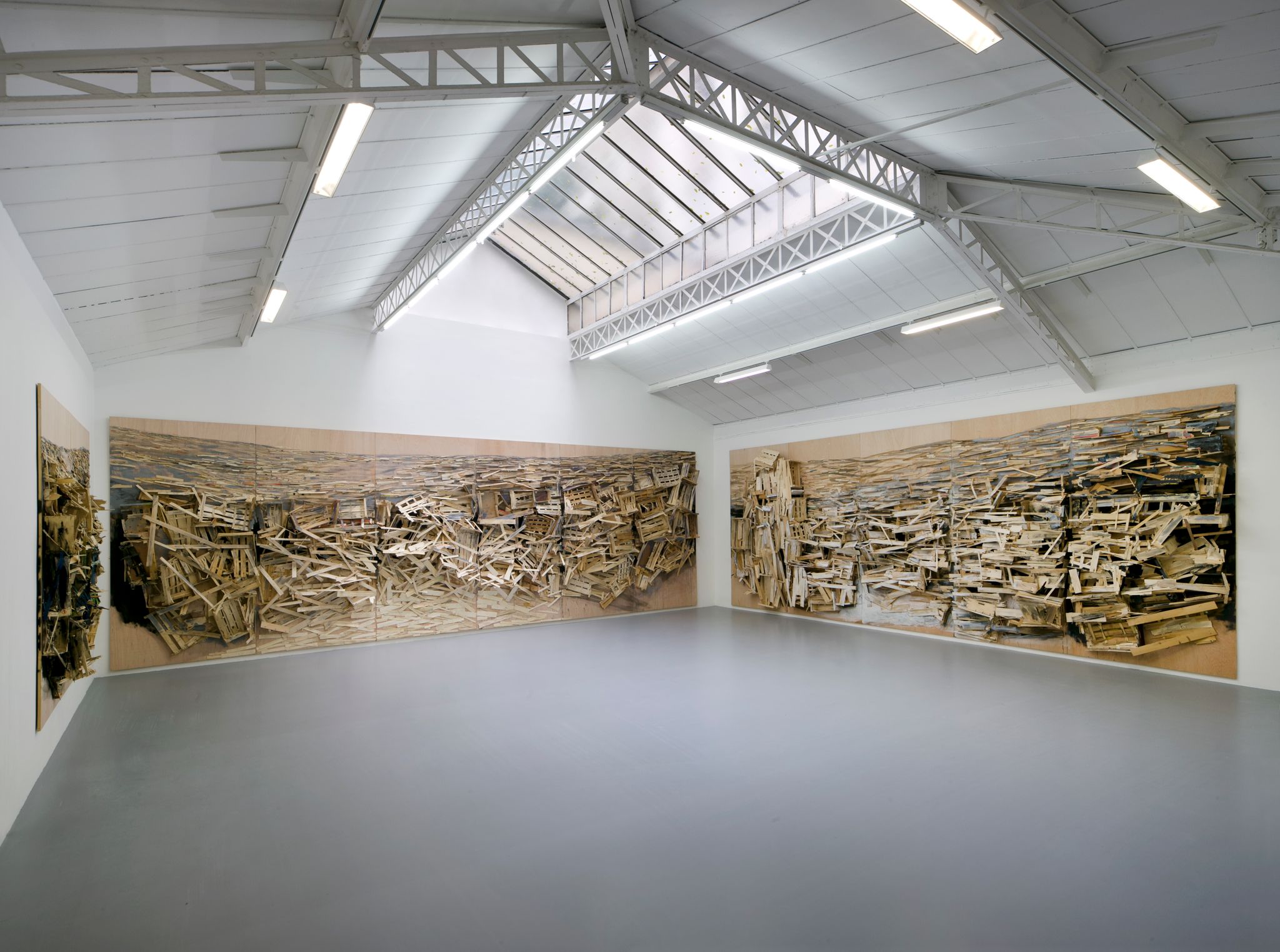
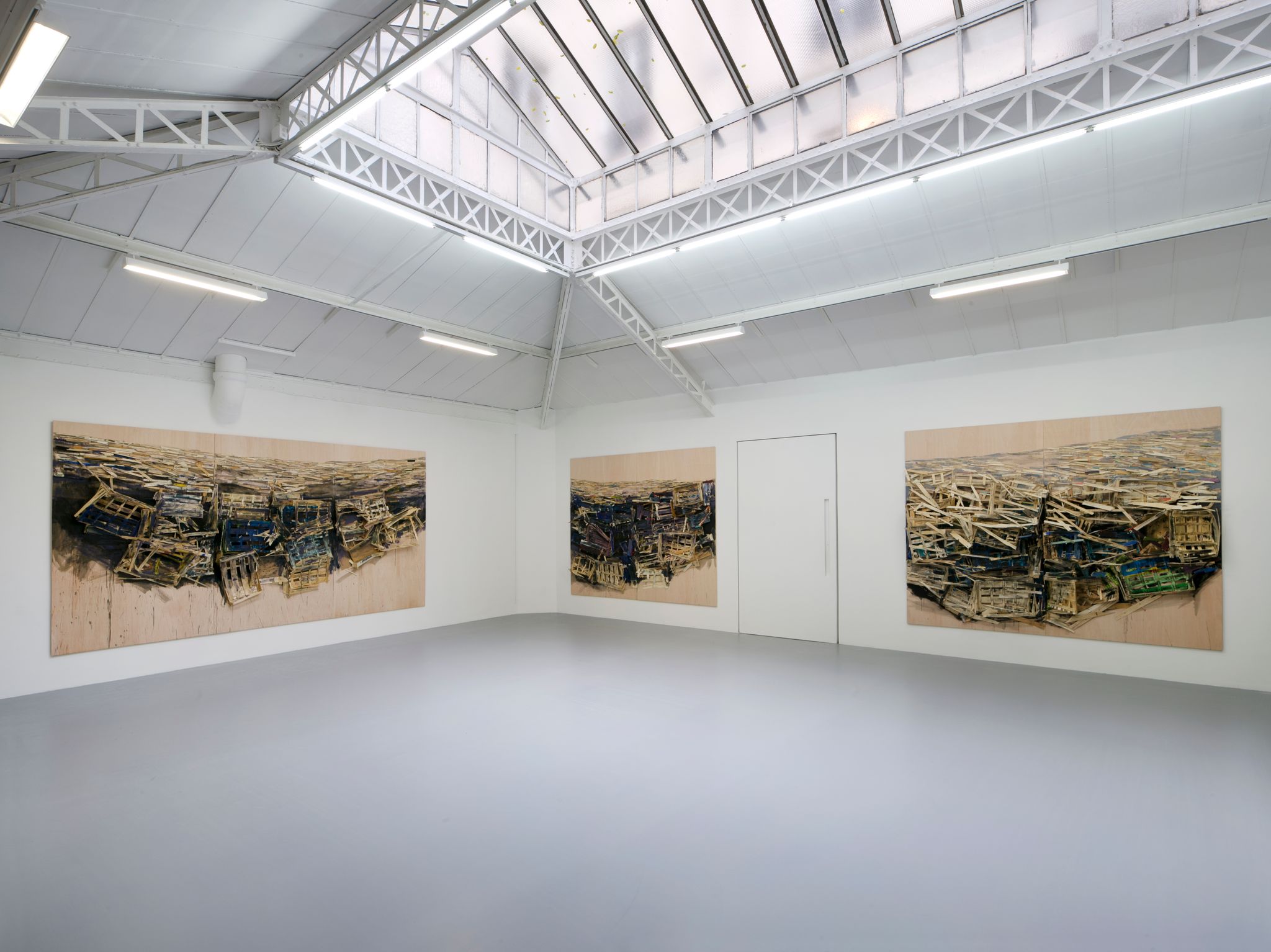
Early anthropological studies considered landscape to be a container of social and cultural actions, to be a representative of nature, as opposed to civilisation. Later, landscape was defined as a field of co- existence between the aesthetic appearance of territorial, vegetal, and archaeological forms, and their interaction with human-built forms. Lately landscape has been understood as humans’ perception of their surrounding context, as a cognitive and symbolic construction of space. Tim Ingold proposes a definition of landscape as an archive of past generations dwelling in space, through which humans define their identity[1] . The notion of landscape has crystallised as ecological in its essence—a balance between the individual and her environment.
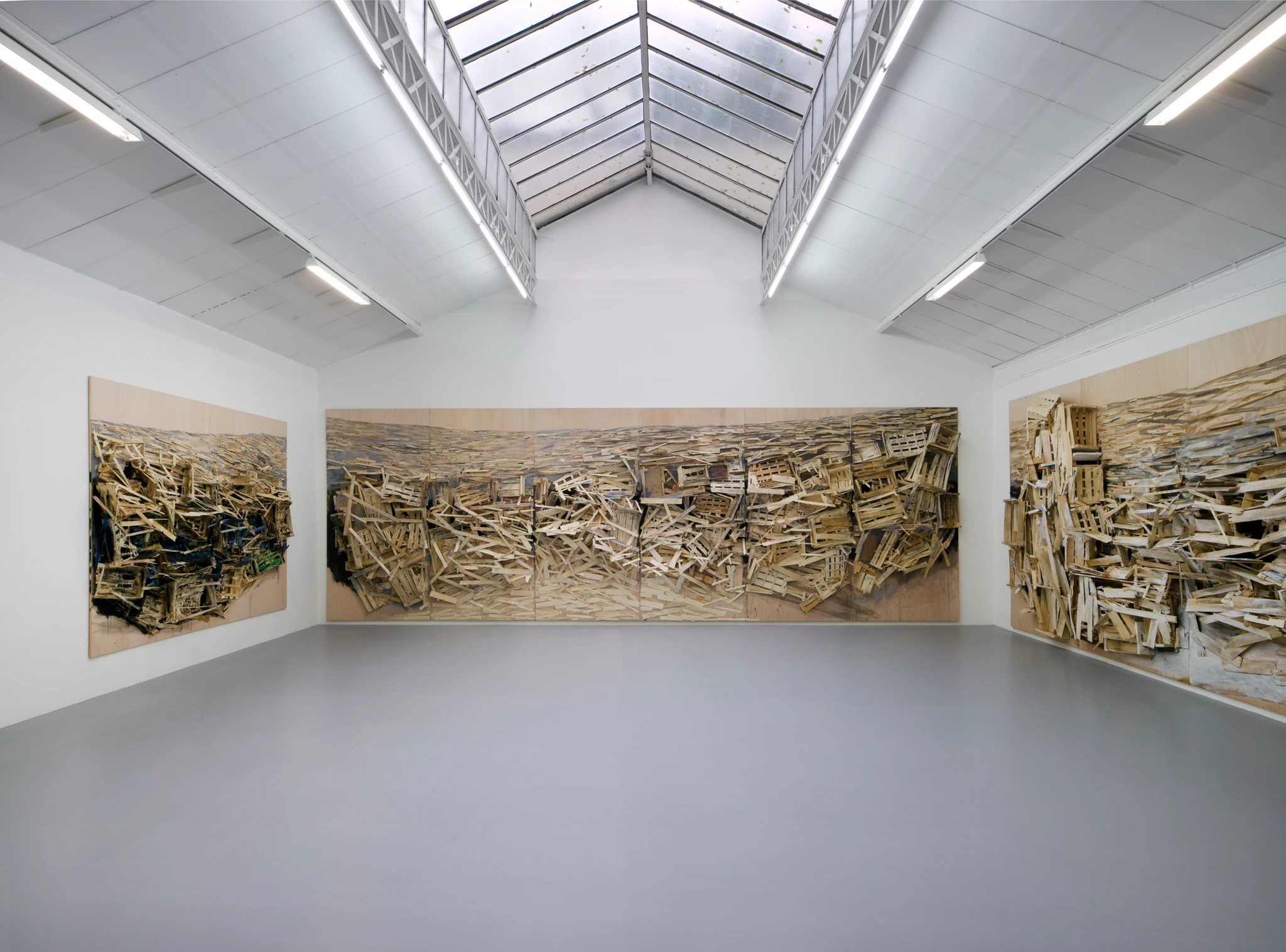
The immersive wall-sized panels by Tadashi Kawamata exhibited at kamel mennour (6 rue du Pont de Lodi) can be also seen as landscapearchives: devices for reading the layered history of interactions between humans and their environment. In the other gallery space (28 avenue Matignon), Kawamata is showing a selection of small conceptual ‘drawings’, chosen from among over 300 previously unexhibited works made over the last 10 years. These mixed media collages transmit the quintessence of the artist’s thinking on place—space marked by human presence.
In a conversation about this exhibition, Tadashi Kawamata says that these two types of works are autonomous models that don’t function as preliminary sketches to future installations, but rather what he calls ‘visions’. They record a bird’s eye view of prototypes of built and natural elements—universal typologies without scale.
Whether miniature or colossal, they fuse together in a spacetime without reference. As the artist explains, for him this is a means of maintaining ‘the critical distance’: to observe and understand a global perspective by also giving importance to details.
The meditative nature of the large panels transmits something of the persistence of landscape (through both living beings and built structures) but also the transitory elements of landscape, such as winds, earthquakes, and moving waters. The panels unfold vast panoramas of destruction, caused by a collision between human and natural agents. These abstract landscapes of ruins evoke an ancestral sedimentation of lived and consumed existences—the accumulation that collective identity represents. They can also be seen as desolate environments immersed in chaos— the consequence of unforeseen catastrophes that have extinguished an entire civilisation in seconds—reminding us of the bombed-out cities we are so often tragically confronted with in these of times of war.
But Tadashi Kawamata also sees them as recurring moments that make space for renovation and creation, in the spirit of Paul Virilio’s ‘Museum of Accidents’.[2] For Kawamata, it would be possible to write a history of mistakes, misunderstandings, and failures that would belong to a cycle of disappearance and renewal that never finishes and that attracts the energy of innovation.
We learn from these panels that there is a permanent tension between the powerful force of landscape and our both vulnerable and destructive civilisation. Tadashi Kawamata also mentions that the human need for permanence in spite of the forces of nature has ecologically fatal consequences and that architecture is the most durable agent in the pollution of landscape.
Watching these cinematic situations, we are confronted with the capacity of landscape to transform within the two-dimensional field of the ‘panoramas’—a performative presence that generates transmutation and that tells a story about belonging to historic eras that are either ending or belong to the future.
— Marta Jecu
—
1. Tim Ingold, 1993, The Temporality of the Landscape, World Archaeology. Conceptions of Time and Ancient Society
2. Paul Virilio, The Museum of Accidents, originally published in Art Press no. 102 (April 1986): p. 13-14, online under: https://public.journals.yorku.ca/index.php/public/article/view/29787/27371
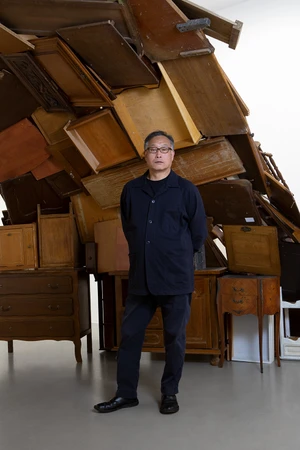
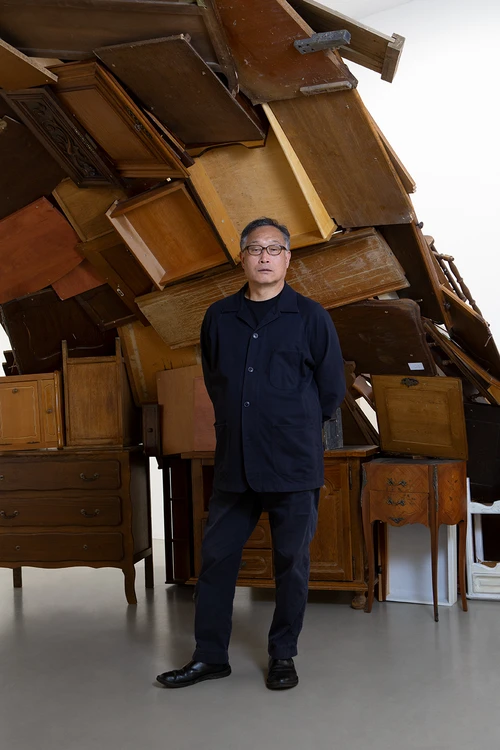
Tadashi Kawamata
Lives and works in Tokyo and Paris