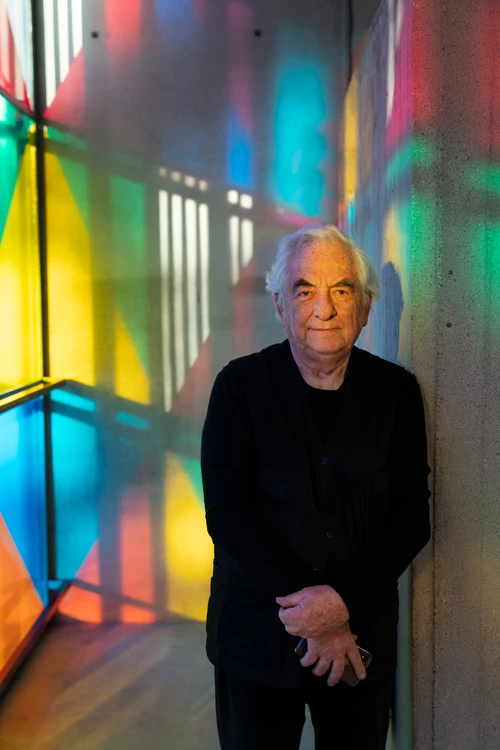



Daniel Buren
Peinture aux formes variables, 1966
Dec 10, 2020 - Mar 6, 2021
Mennour, 28 avenue Matignon
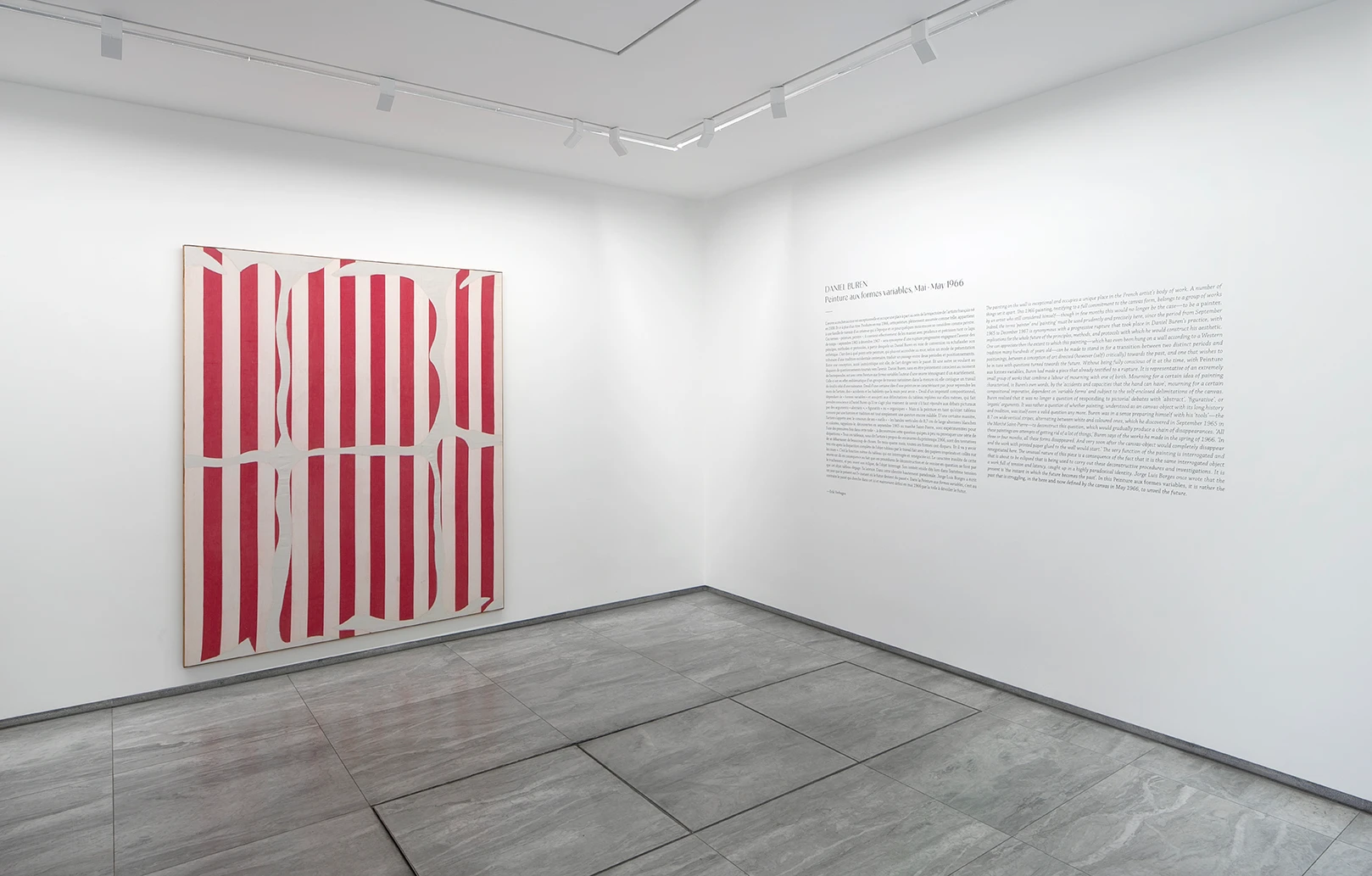
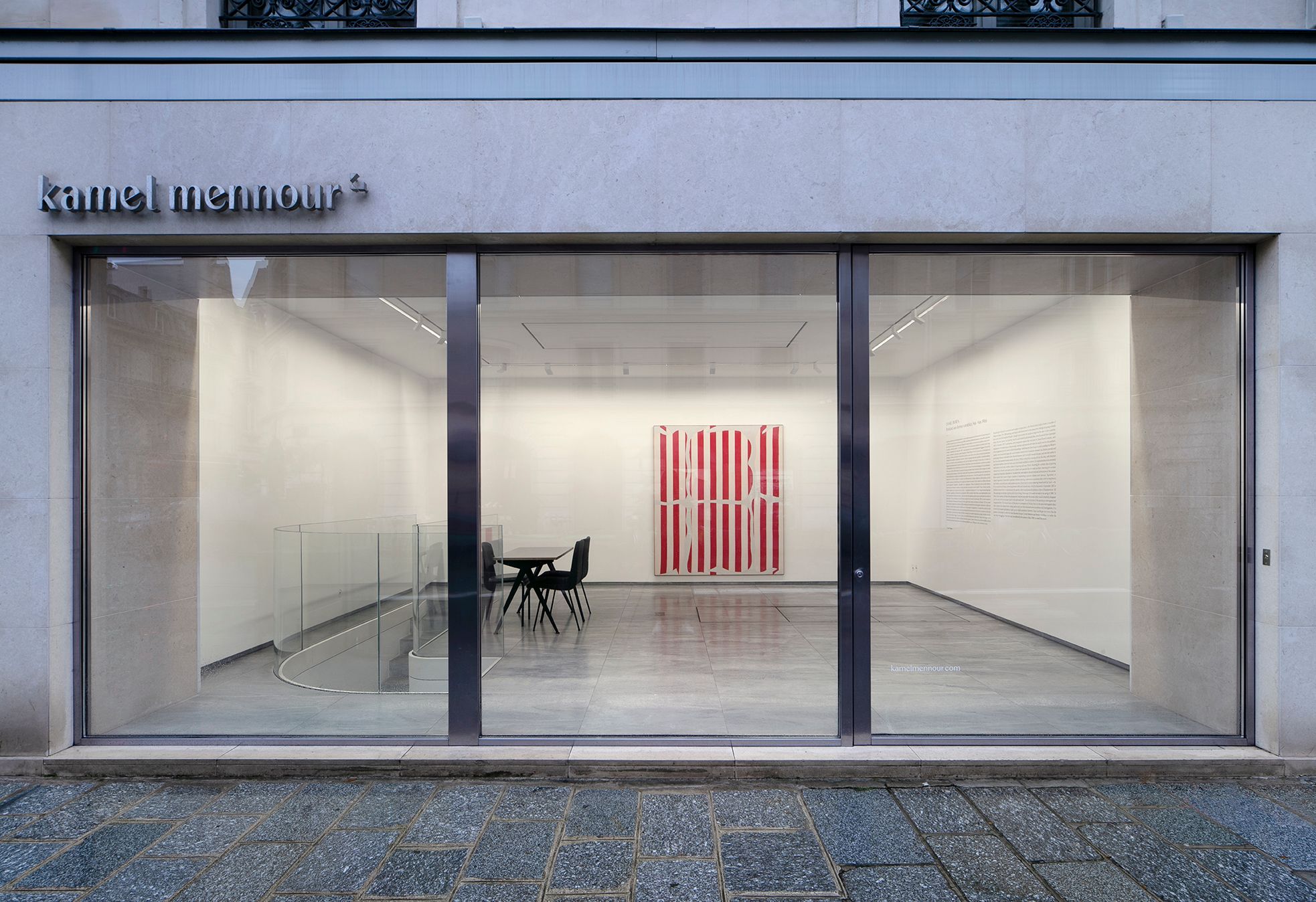
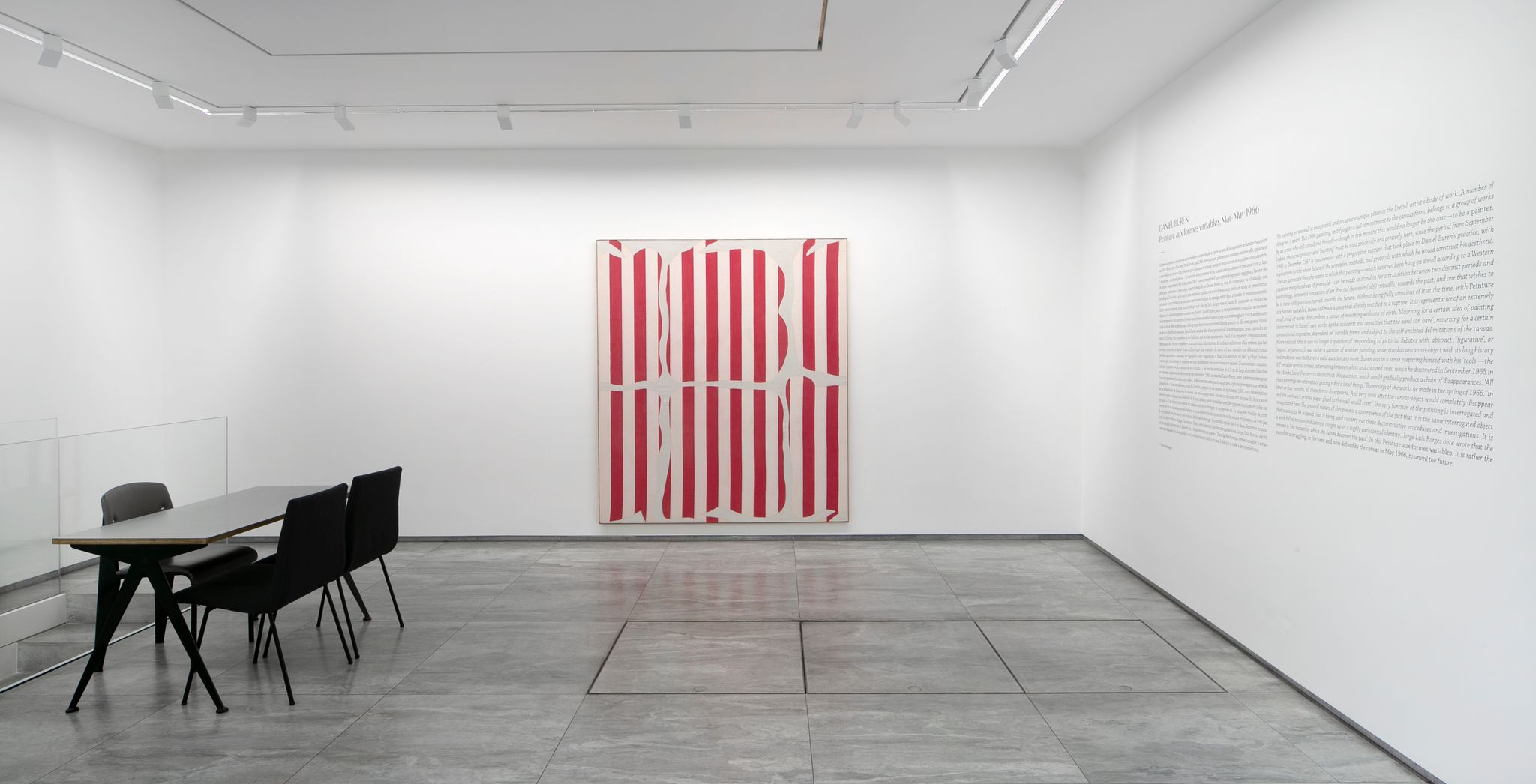
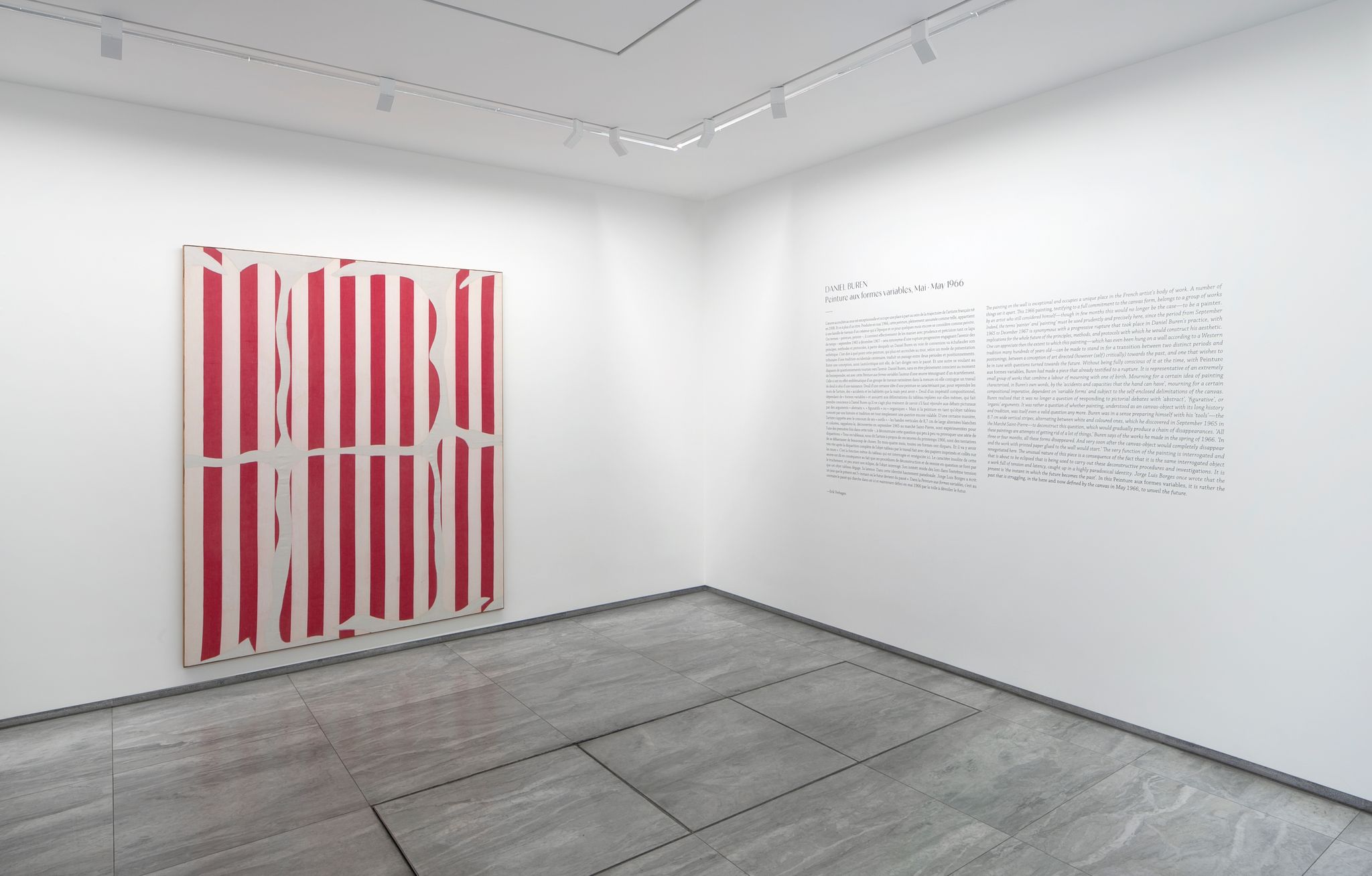
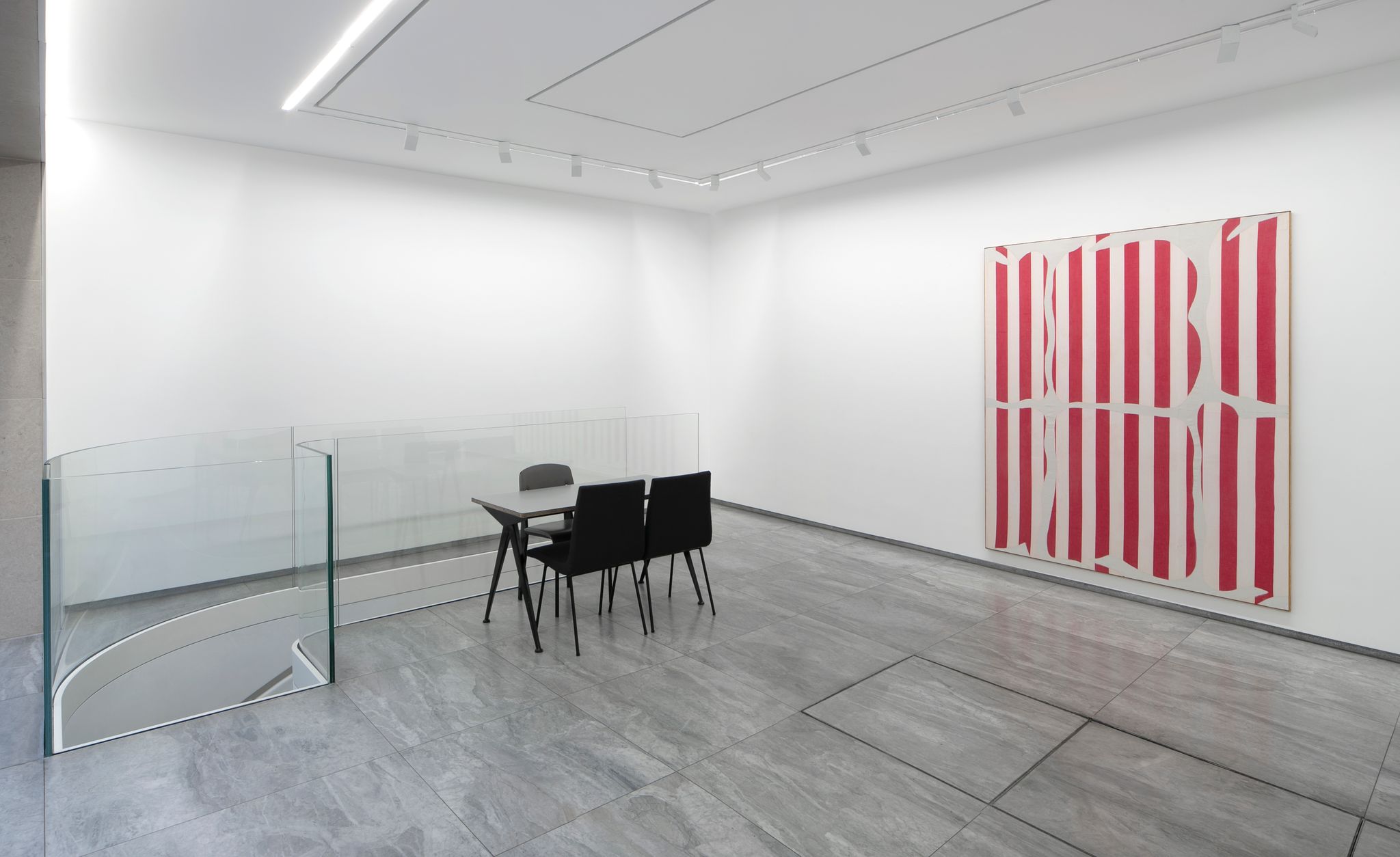
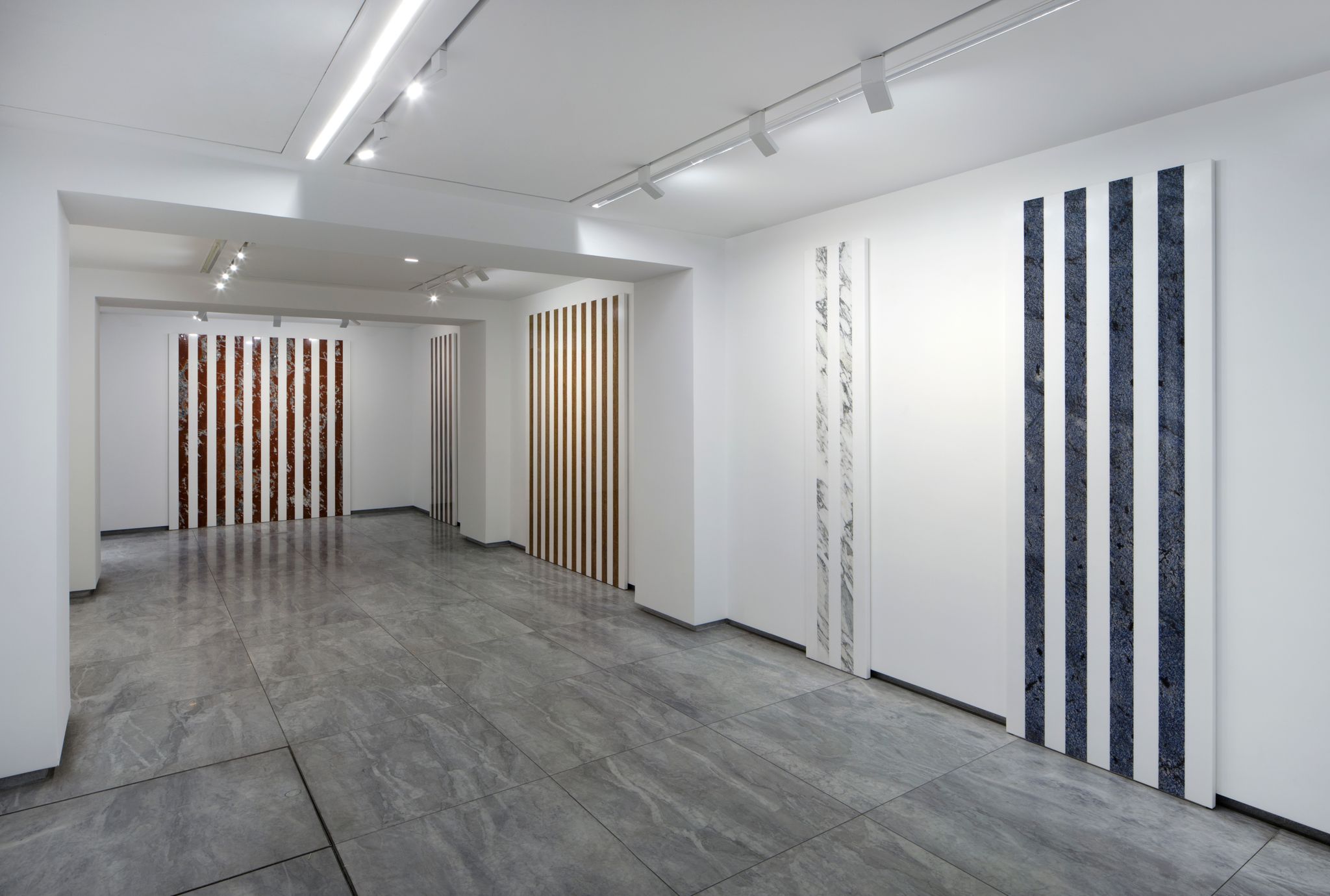
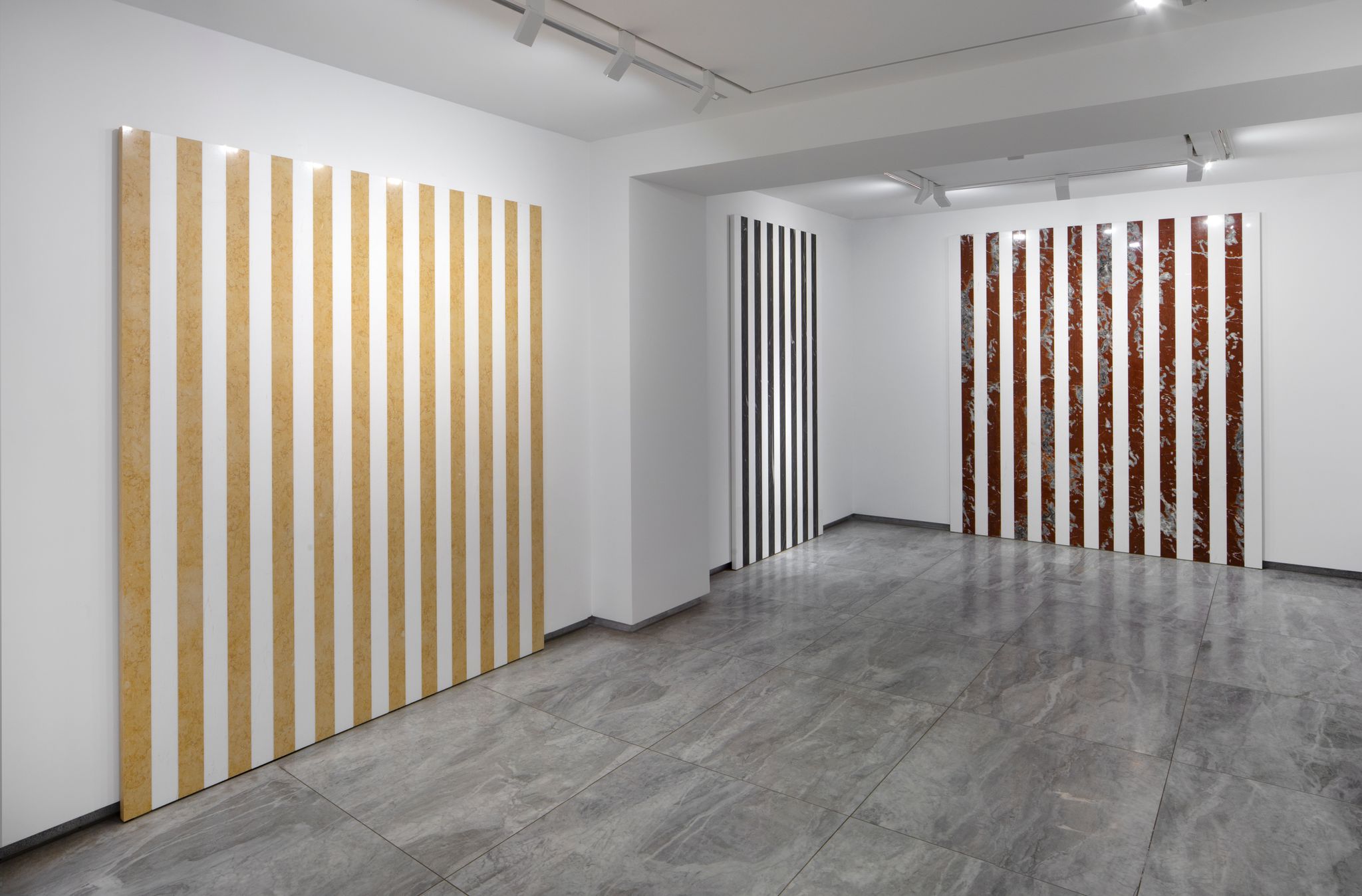
The painting on the wall is exceptional and occupies a unique place in the French artist’s body of work. A number of things set it apart. This 1966 painting, testifying to a full commitment to the canvas form, belongs to a group of works by an artist who still considered himself—though in few months this would no longer be the case— to be a painter. Indeed, the terms ‘painter’ and ‘painting’ must be used prudently andp recisely here, since the period from September 1965 to December 1967 is synonymous with a progressive rupture that took place in Daniel Buren’s practice, with implications for the whole future of the principles, methods, and protocols with which he would construct his aesthetic. One can appreciate then the extent to which this painting—which has even been hung on a wall according to a Western tradition many hundreds of years old—can be made to stand in for a transition between two distinct periods and positionings, between a conception of art directed (however (self) critically) towards the past, and one that wishes to be in tune with questions turned towards the future. Without being fully conscious of it at the time, with Peinture aux formes variables, Buren had made a piece that already testified to a rupture. It is representative of an extremely small group of works that combine a labour of mourning with one of birth. Mourning for a certain idea of painting characterised, in Buren’s own words, by the ‘accidents and capacities that the hand can have’, mourning for a certain compositional imperative, dependent on ‘variable forms’ and subject to the self-enclosed delimitations of the canvas. Buren realised that it was no longer a question of responding to pictorial debates with ‘abstract’, ‘figurative’, or ‘organic’ arguments. It was rather a question of whether painting, understood as an canvas- object with its long history and tradition, was itself even a valid question any more. Buren was in a sense preparing himself with his ‘tools’—the 8.7 cm wide vertical stripes, alternating between white and coloured ones, discovered in September 1965 at the marché Saint-Pierre—to deconstruct this question, which would gradually produce a chain of disappearances. ‘All these paintings are attempts of getting rid of a lot of things,’ Buren says of the works he made in the spring of 1966. ‘In three or four months, all these forms disappeared. And very soon after the canvas-object would completely disappear and the work with printed paper glued to the wall would start.’ The very function of the painting is interrogated and renegotiated here. The unusual nature of this piece is a consequence of the fact that it is the same interrogated object that is about to be eclipsed that is being used to carry out these deconstructive procedures and investigations. It is a work full of tension and latency, caught up in a highly paradoxical identity. Jorge Luis Borges once wrote that the present is ‘the instant in which the future becomes the past’. In this Peinture aux formes variables, it is rather the past that is struggling, in the here and now defined by the canvas in May 1966, to unveil the future.
— Erik Verhagen
Daniel Buren
Born in 1938 in Boulogne-Billancourt, France
Lives and works in situ